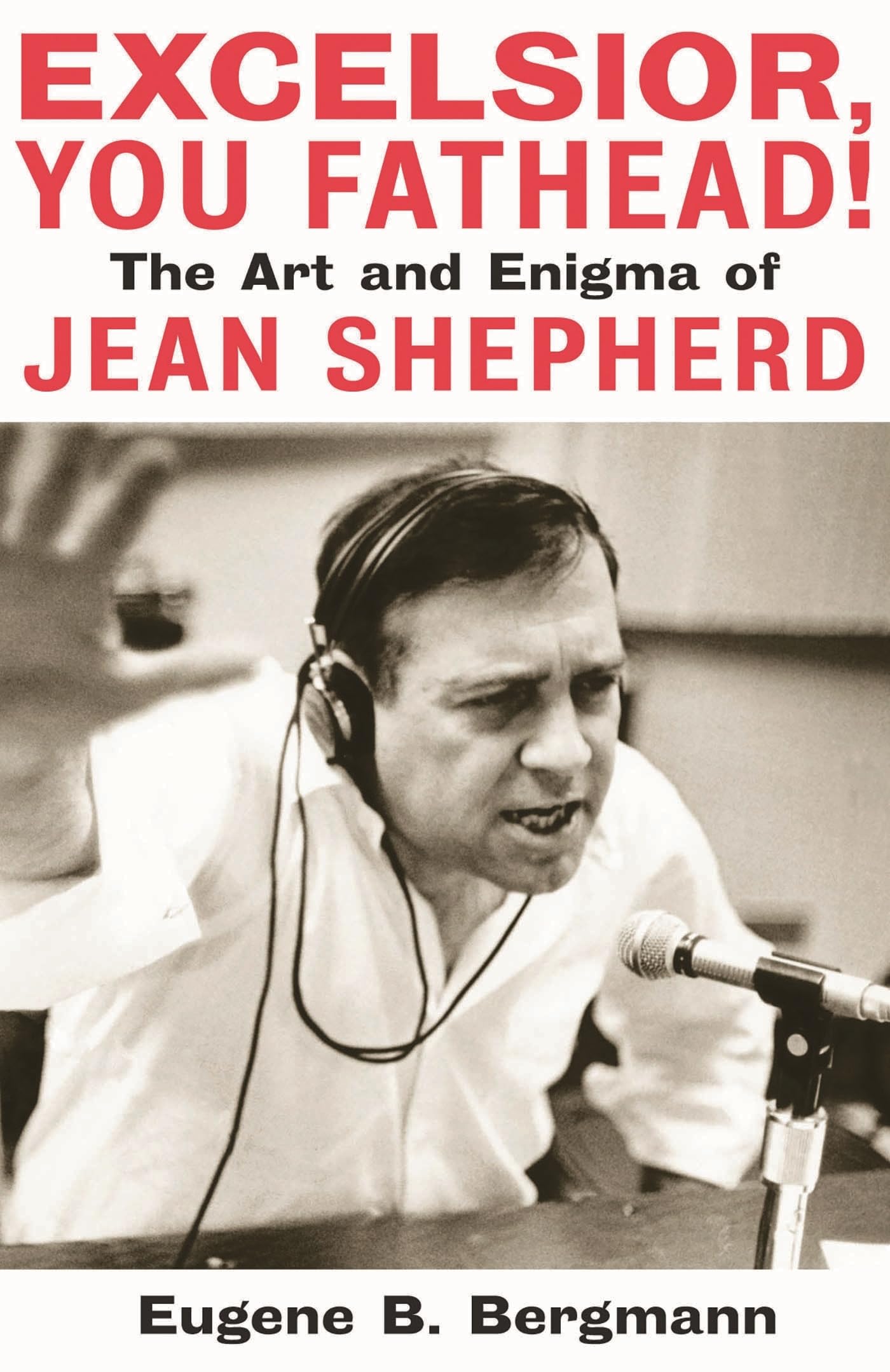
Excelsior, You Fathead!: The Art and Enigma of Jean Shepherd (Applause Books)
$27.95
by Eugene B. Bergmann



Jean Shepherd (1921-1999), master humorist, is best known for his creation A Christmas Story , the popular movie about the child who wants a BB gun for Christmas and nearly shoots his eye out. What else did Shepherd do? He is considered by many to be the Mark Twain and James Thurber of his day. For many thousands of fans, for decades, “Shep” talked on the radio late at night, keeping them up way past their bedtimes. He entertained without a script, improvising like a jazz musician, on any and every subject you can imagine. He invented and remains the master of talk radio. Shepherd perpetrated one of the great literary hoaxes of all time, promoting a nonexistent book and author, and then brought the book into existence. He wrote 23 short stories for Playboy , four times winning their humor of the year award, and also interviewed The Beatles for the magazine. He authored several popular books of humor and satire, created several television series and acted in several plays. He is the model for the character played by Jason Robards in the play and movie A Thousand Clowns , as well as the inspiration for the Shel Silverstein song made famous by Johnny Cash, “A Boy Named Sue.” Readers will learn the significance of innumerable Shepherd words and phrases, such as “Excelsior, you fathead ” and observe his constant confrontations with the America he loved. They will get to know and understand this multitalented genius by peeking behind the wall he built for himself – a wall to hide a different and less agreeable persona. Through interviews with his friends, co-workers and creative associates, such as musician David Amram, cartoonist and playwright Jules Feiffer, publisher and broadcaster Paul Krassner, and author Norman Mailer, the book explains a complex and unique genius of our time. “Shepherd pretty much invented talk radio ... What I got of him was a wonder at the world one man could create. I am as awed now by his achievement as I was then.” – Richard Corliss, Time magazine online These days, Jean Shepherd (1921-99), radio raconteur, social commentator, and author, is best known as the narrator of the perennially favorite holiday film A Christmas Story . But to his hardcore fans he was a pied piper of the radio waves--a nighttime voice that took them beyond their mundane realities by revealing how interesting the mundane can be. Shepherd broadcast almost nightly from 1955 to 1977 on WOR in New York City, gaining a cult following among the small community of insomniacs he dubbed the "night people." Although the author reveals himself as one of Shepherd's fans and this book as a labor of love--the title itself is a phrase Shepherd urged his fans to invoke--he makes no effort to hide his subject's faults. Bergmann points out that Shepherd's so-called nostalgia was actually antinostalgia: the painful memories of childhood and young adulthood are carefully masked by a fine midwestern sense of humor. A true storyteller and monologist--and a prickly genius. Frank Caso Copyright © American Library Association. All rights reserved The book is a masterful account of why Shepherd was known as a radio genius....It delves into what made Shepherd tick, his personal demons, and the sad last years of his life. For Shepherd fans, this is an indispensable book. --ASSOCIATED PRESS This is a very important book because it is one of the few thoughtfully researched volumes written about a radio star--ever....Get the book. --TALKERS MAGAZINE This prismatic portrait affirms Shepherd's position as one of the 20th century's great humorists. --Publishers Weekly Eugene B. Bergmann began listening to Jean Shepherd radio shows in 1956. Besides studying hundreds of broadcast tapes, he read and viewed virtually all of Shepherd's extensive work in other media. He designs and makes artists books; for 34 years he designed exhibits for New York City's American Museum of Natural History.