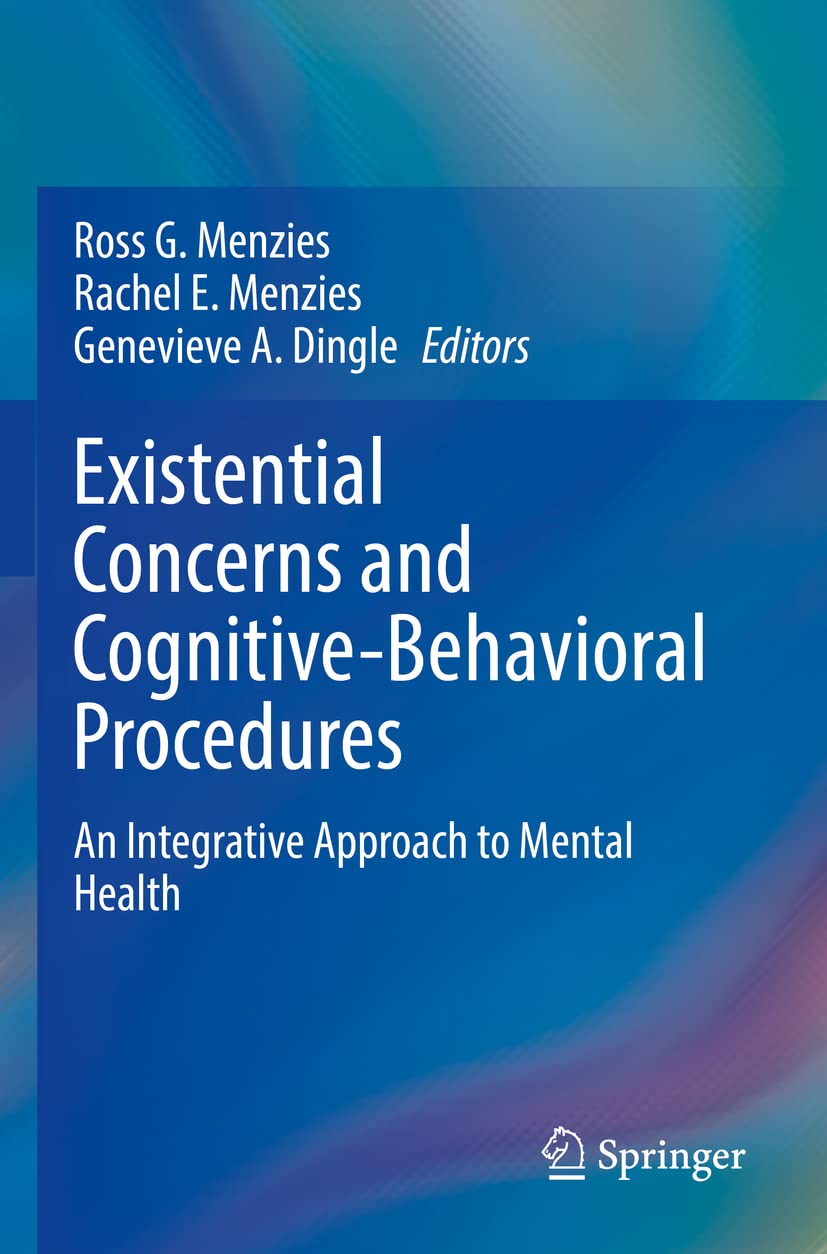
Existential Concerns and Cognitive-Behavioral Procedures: An Integrative Approach to Mental Health
$104.70
by Ross G. Menzies



Clients enter therapy grappling with a range of difficulties. They don’t speak in diagnostic terms, but instead focus on the everyday problems that confront them. Their struggles may include isolation, loneliness, anxiety, guilt and regret, and problems making decisions in a world that offers seemingly endless choice. In contrast, the cognitive-behavior therapist is trained in the language of conditioning and extinction, avoidance and safety behaviors, behavioral activation and attentional biases. This book explores the ideas of the existentialist philosophers as a bridge between the suffering client and technically trained clinician. The volume is not a rejection of cognitive behavior therapy (CBT), but seeks to place CBT in the broader context of the most popular philosophic tradition of the 19 th and 20 th centuries. Therapists versed in existentialism argue that the individual's starting point is characterized by a sense of disorientation in the face of an apparently meaningless and absurd world. Each individual must become solely responsible for giving meaning to life and living it passionately and authentically. Each of us must confront the ‘Big 5’ existential issues of death, isolation, identity, freedom and meaning and find our solutions to these problems. The present volume explores each of these existential themes in turn. Each section opens with a theoretical chapter describing the relevant existential dilemma and its impact on human experience. The second chapter in each section explores its relationship to mental health disorders and psychopathology. The third chapter in each section explores the evidence for treating the existential issue from a CBT framework. This book will be of value to those interested in CBT, philosophy and mental health, and will appeal to psychotherapists, clinical psychologists and psychiatrists. Clients enter therapy grappling with a range of difficulties. They don’t speak in diagnostic terms, but instead focus on the everyday problems that confront them. Their struggles may include isolation, loneliness, anxiety, guilt and regret, and problems making decisions in a world that offers seemingly endless choice. In contrast, the cognitive-behavior therapist is trained in the language of conditioning and extinction, avoidance and safety behaviors, behavioral activation and attentional biases. This book explores the ideas of the existentialist philosophers as a bridge between the suffering client and technically trained clinician. The volume is not a rejection of cognitive behavior therapy (CBT), but seeks to place CBT in the broader context of the most popular philosophic tradition of the 19 th and 20 th centuries. Therapists versed in existentialism argue that the individual's starting point is characterized by a sense of disorientation in the face of an apparently meaningless and absurd world. Each individual must become solely responsible for giving meaning to life and living it passionately and authentically. Each of us must confront the ‘Big 5’ existential issues of death, isolation, identity, freedom and meaning and find our solutions to these problems. The present volume explores each of these existential themes in turn. Each section opens with a theoretical chapter describing the relevant existential dilemma and its impact on human experience. The second chapter in each section explores its relationship to mental health disorders and psychopathology. The third chapter in each section explores the evidence for treating the existential issue from a CBT framework. This book will be of value to those interested in CBT, philosophy and mental health, and will appeal to psychotherapists, clinical psychologists and psychiatrists. Ross Menzies completed his undergraduate, masters and doctoral degrees in psychology at the University of NSW. He is currently Professor of Psychology in the Graduate School of Health, University of Technology Sydney (UTS). In 1991, he was appointed founding Director of the Anxiety Disorders Clinic at the University of Sydney, a post which he held for over 20 years. He is the past NSW President, and twice National President, of the Australian Association for Cognitive Behaviour Therapy (AACBT). He is the previous editor of Australia's national CBT journal, Behaviour Change , and has trained psychologists, psychiatrists and allied health workers in CBT around the globe. Professor Menzies is an active researcher with nearly three decades of continuous funding from national competitive sources. He currently holds over $AUS7 million in research funding. He has produced 10 books and more than 200 journal papers and book chapters and was the President and Convenor of the 8th World Congress of Behavioural and Cognitive Therapies (WCBCT) in Melbourne in 2016. He has recently been appointed a founding director and Treasurer of the newly formed World Confederation of Cognitive and Behavioural Therapies (WCCBT). Ross lives with his wife and th