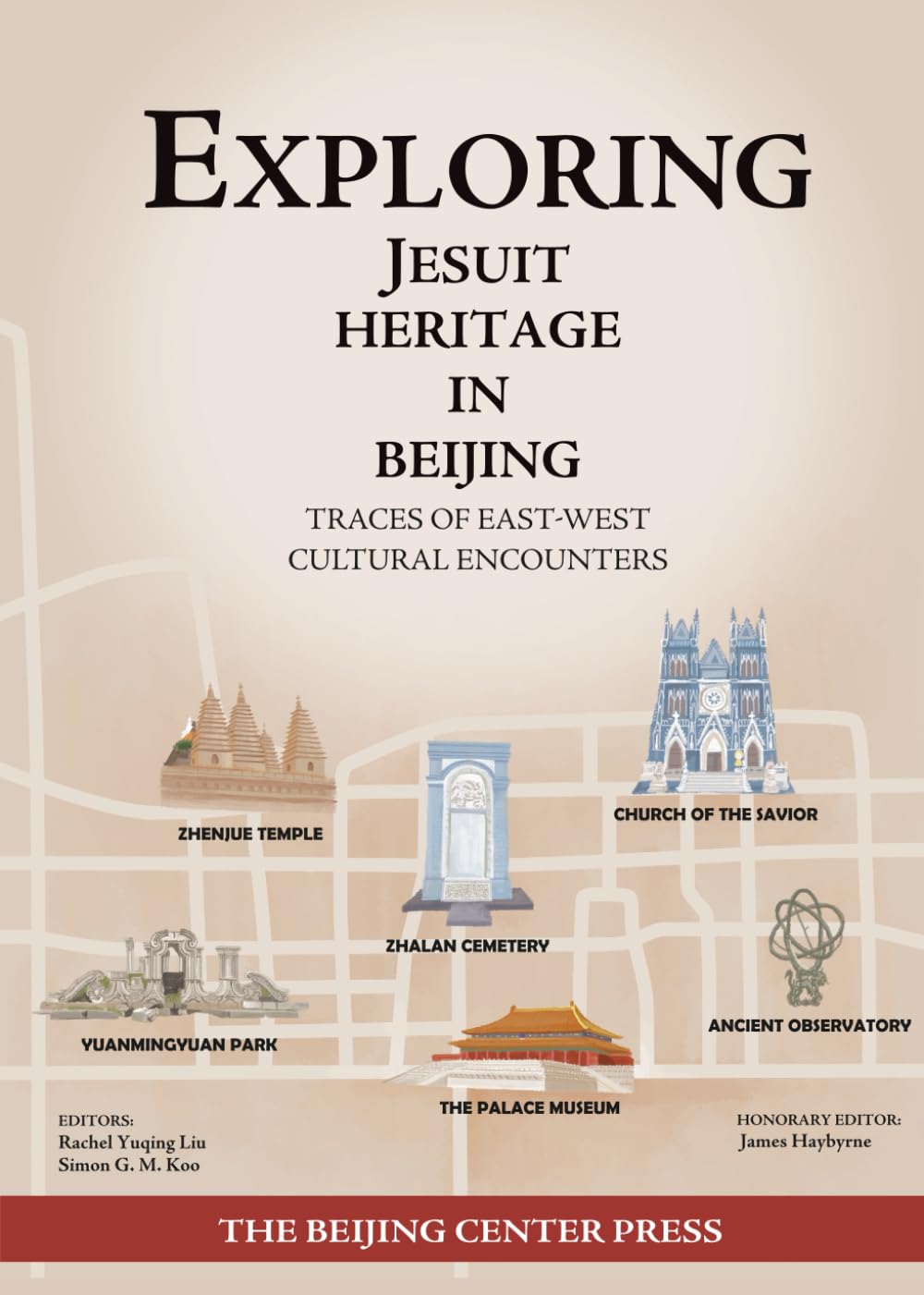
Exploring Jesuit Heritage in Beijing: Traces of East-West Cultural Encounters (The Beijing Center Publication Series)
$29.85
by Rachel Yuqing Liu



Beijing is often seen through the lens of empire—its red walls, golden roofs, and dynastic grandeur. Yet embedded within the city’s streets, churches, observatories, and forgotten ruins lies another, lesser-known history: centuries of encounters between China and the West that quietly shaped global knowledge, culture, and belief. Exploring Jesuit Heritage in Beijing: Traces of East–West Cultural Encounters guides readers through sixteen historically significant sites associated with Jesuit activity during the Ming and Qing dynasties. Blending historical narrative, cultural analysis, and on-the-ground urban exploration, the book reveals how missionaries, emperors, and Chinese scholars engaged one another in sustained dialogue—across languages, worldviews, and civilizations. Readers encounter landmark locations such as the South, North, and East Churches, where Western architectural forms were reinterpreted through Chinese aesthetics; the tombs of Jesuits including Matteo Ricci , embodying a legacy of intellectual exchange; and the astronomical instruments of the Ancient Observatory, enduring symbols of cross-cultural scientific collaboration. Other sites—the ruins of the Old Summer Palace, the Confucian Temple, the Lama Temple, the National Library of China, the Zhoukoudian Peking Man Site, and the now-forgotten Chabanel Hall—trace moments of dialogue, tension, adaptation, and mutual influence. Together, these places tell a larger story: encounters across distance and difference have long shaped the course of human civilization. Part walking guide and part historical reflection, this book invites readers to see Beijing not only as an imperial capital, but as a global crossroads. It will appeal to readers interested in Chinese history, Jesuit studies, cross-cultural exchange, and anyone seeking to understand how China and the West have been connected through shared spaces and lived experience.