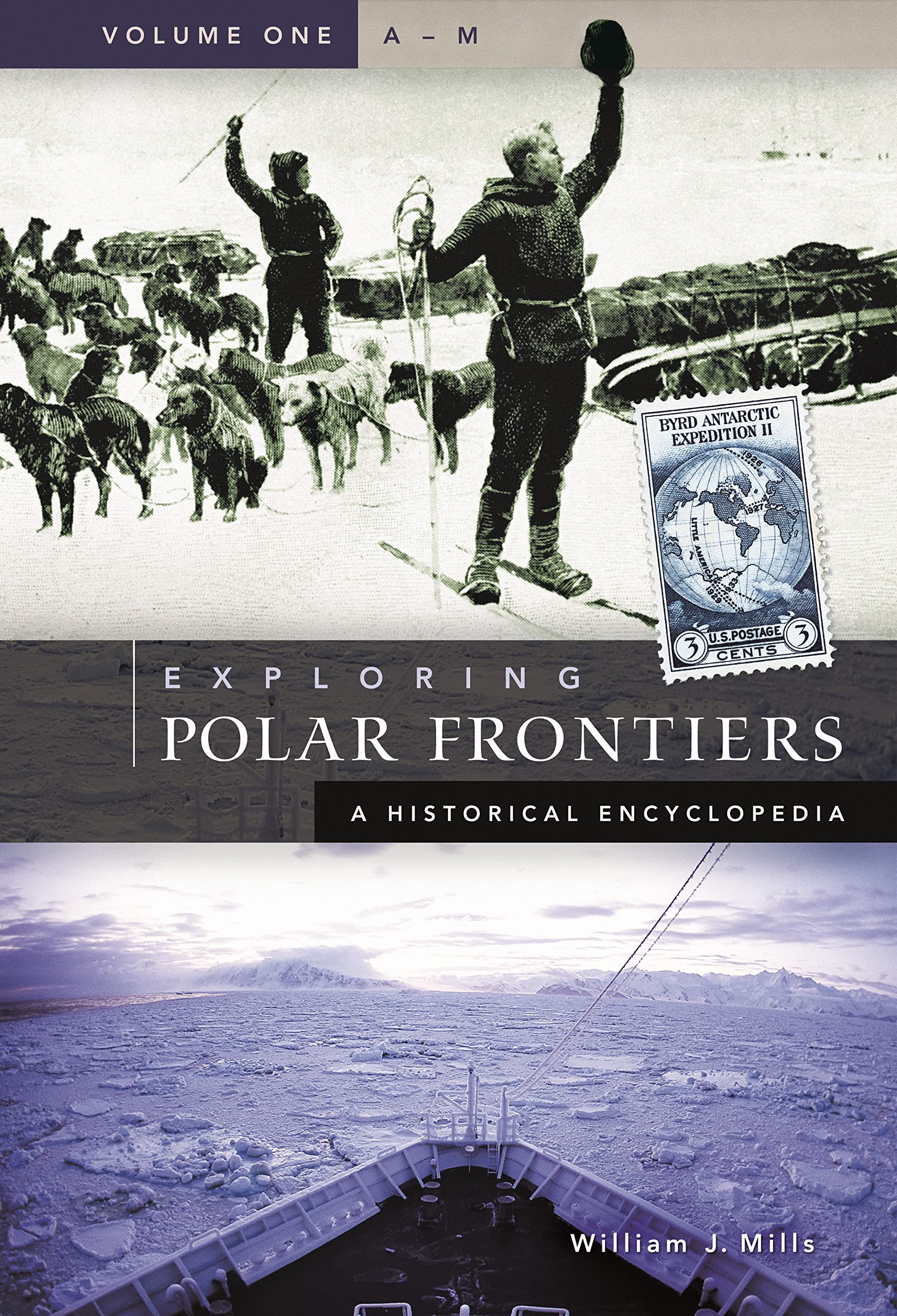



Exploring Polar Frontiers: A Historical Encyclopedia is the only reference work that provides a comprehensive history of polar exploration from the ancient period through the present day. The author is a noted polar scholar and offers dramatic accounts of all major explorers and their expeditions, together with separate exploration histories for specific islands, regions, and uncharted waters. He presents a wealth of fascinating information under a variety of subject entries including methods of transport, myths, achievements, and record-breaking activities.By approaching polar exploration biographically, geographically, and topically, Mills reveals a number of intriguing connections between the various explorers, their patrons and times, and the process of discovery in all areas of the polar regions. Furthermore, he provides the reader with a clear understanding of the intellectual climate as well as the dominant social, economic, and political forces surroundi Interest in the Arctic and the Antarctic has grown with the increased coverage of global warming and its effect on sea levels, the popularity of the Endurance saga, and the burgeoning interest in adventure travel. Recent titles such as Antarctica: An Encyclopedia from Abbott Ice Shelf to Zooplankton (Firefly, 2002) and Antarctica and the Arctic: The Complete Encyclopedia (Firefly, 2001) have provided some information about polar exploration. This excellent encyclopedia, written by the librarian at the Scott Polar Research Institute, concentrates entirely on the history of polar exploration and will be welcomed by both scholars and the general public. More than 500 entries cover people, places, expeditions, ships, countries, and subjects from 325 B.C.E. to the present, with the majority of coverage in the twentieth century. Examples of subject entries include Inuit contributions to polar exploration, Magnetic poles, Sledges and sleds, Surveying and mapping, Whaling and Antarctic exploration , and Women explorers . Entries range in length from a single paragraph to eight pages. The entries are accompanied by more than 160 illustrations, 20 maps, and 22 tables. Each entry has references and suggestions for further reading. There is a chronological polar time line that lists polar expeditions by region, a 135-word glossary of technical terms (such as the different forms of ice and types of vessels), abbreviations and acronyms, an extensive bibliography, and an index. Unfortunately, the index is structured so that the entries for explorers and ships are not where many readers will look for them. For example, Roald Amundsen (the first man to reach the South Pole) is listed under N (Norwegian explorers) but not under A (Amundsen). There is, however, an alphabetical listing of all entries in the front matter as well as lists of entries in chronological order and by broad category. Indexing aside, this is an excellent and thorough resource for anyone interested in the history of polar exploration. It is highly recommended for academic and public libraries where there is interest in the Arctic and Antarctic. RBB Copyright © American Library Association. All rights reserved William James Mills was librarian and keeper of collections at the world's largest polar library, located at the Scott Polar Research Institute, University of Cambridge, Cambridge, England. Used Book in Good Condition