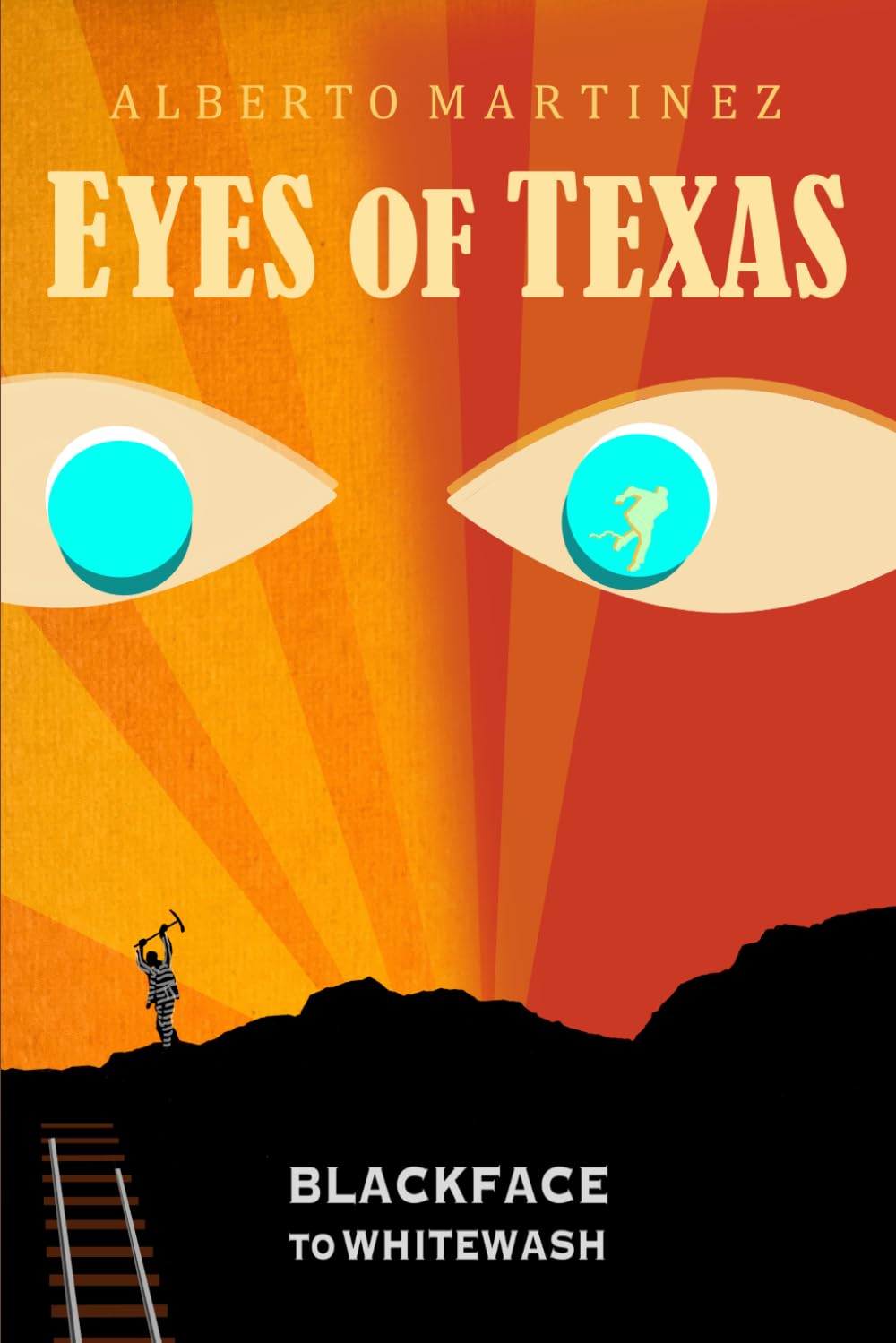



The beloved song has dark roots? Inspired by the Civil War, a university president told his all-White students: “The eyes of Texas are upon you!” By 1903, it was a campus joke and a song at a show mocking Black people. And recently, thousands of students rejected it. To them, it’s a racist relic of the Jim Crow South, when Black Americans were wrongly jailed and forced to build railways, while overseers kept them from escaping. But to many alumni, the song is about devotion to Texas. What is its true history? This book reveals how ‘The Eyes of Texas’ changed. It’s a history of music, shaped by jokes, dignity, football, protests, and threats. It traces how a minstrel song about uneducated Black prisoners evolved into the anthem of Texas higher education. It explains how some alumni whitewashed the past, by creating imaginative histories of the song. Alberto Martinez is a professor of history at the University of Texas at Austin. He is the author of eight books, including Negative Math (Princeton, 2005), Lost Origins of Einstein’s Relativity (Johns Hopkins, 2009), Science Secrets (Univ. of Pittsburgh Press, 2011) and Burned Alive (Reaktion / Univ. of Chicago Press, 2018). He also writes articles for The Hill , Austin American-Statesman , the USA Today newspapers, Scientific American , Houston Chronicle , Salon , New Standard Press , The Daily Texan , and others. Reviews of Martínez’s past books: “Outstanding ... his scholarship is admirable. Every subject needs its history told in a careful and useful manner, and Martinez clearly succeeds in this endeavor.” ⎼ Choice “at once scholarly and readable ... anyone with an interest in intellectual history would benefit.” ⎼ Books & Culture "This is not just another book about Texas: it is essential reading for anyone who cares about this state. ... The sanctification of the song is but one of 11 layers of whitewash that Martinez has identified and exposed in this book, which I would rate as the most important Texas history book you will ever read." -- Cliff Cunningham, Sun News Austin "a meticulously researched examination ... and a critique of how institutions sometimes reshape uncomfortable truths into more palatable narratives. ... Martinez's research demonstrates how traditions can acquire layers of meaning over time, and how debates about them often reflect broader struggles over memory, identity, and historical truth. ... Martinez's book stands as one of the most detailed historical examinations yet produced..." -- Big Bend Times / Texas Reporter