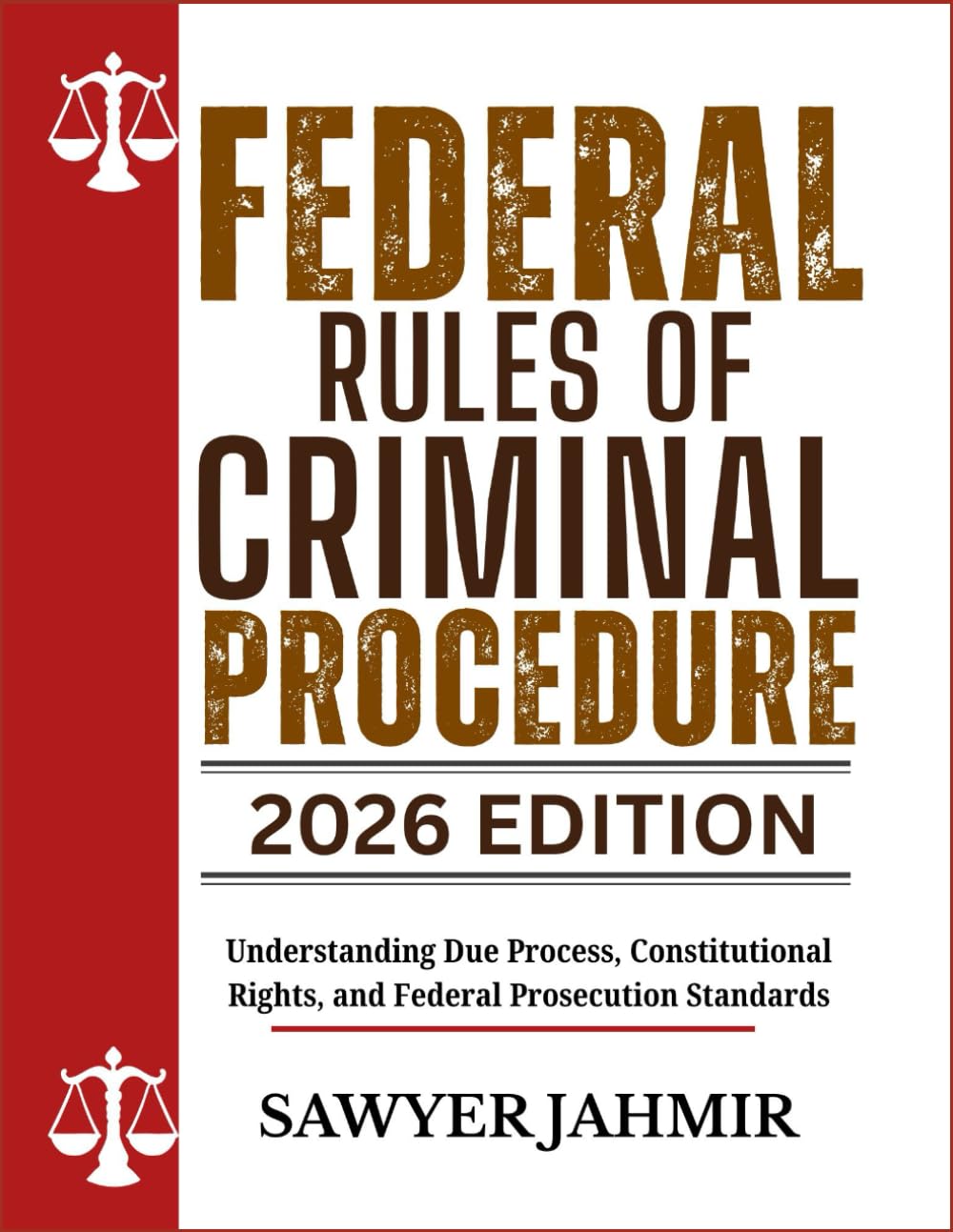
FEDERAL RULES OF CRIMINAL PROCEDURE: 2026 EDITION: Understanding Due Process, Constitutional Rights, and Federal Prosecution Standards
$16.99
by SAWYER JAHMIR



The United States legal system is a complex framework that balances the power of the state with the rights of individuals. At the heart of this balance lie the Federal Rules of Criminal Procedure (FRCP), a comprehensive set of rules that govern how criminal cases are initiated, prosecuted, and adjudicated in federal courts. The 2026 iteration of these rules reflects ongoing developments in criminal law, procedural refinements, and judicial interpretations that ensure fairness, efficiency, and adherence to constitutional principles in the federal justice system. Understanding the Federal Rules of Criminal Procedure is essential for anyone involved in the legal process, whether you are a practicing attorney, law student, law enforcement officer, or a citizen seeking to comprehend the safeguards that protect due process. These rules are not merely technical directives; they embody the fundamental principles of justice and the constitutional rights guaranteed to every individual under the Fifth, Sixth, and Fourteenth Amendments. This essential reference includes: Complete and Updated Federal Rules of Criminal Procedure: Full text of every rule, including recent amendments approved by Congress and the Supreme Court - Clear sectional organization for fast navigation during research or litigation Comprehensive Rule-by-Rule Analysis: Purpose and scope of each rule - Procedural implications for prosecutors, defense counsel, and the court - Practical notes on application, interpretation, and compliance Integrated Constitutional and Statutory References: Direct links to relevant statutes, federal codes, and landmark Supreme Court cases - Contextual explanations showing how constitutional rights shape federal criminal procedure Coverage of Every Stage of a Federal Criminal Case: Rule 1–20: Complaints, warrants, summonses, and arrest procedures - Rule 21–40: Motions, discovery, pretrial release, and trial conduct - Rule 41: Search and seizure guidance - Rule 43–60: Pleas, verdicts, sentencing, and judgment - Rule 61–88: Post-conviction motions, appeals, habeas considerations, and victim rights - Special Proceedings: Grand jury rules, extradition, contempt, and probation matters Practical Aids for Legal Professionals: Visual rule charts and procedural timelines - Updated forms used in federal criminal cases - Tables of authorities, rule history, and amendment tracking through 2026 Premium Features for 2026: New amendments addressing digital evidence, remote proceedings, and law-enforcement technology - Expanded notes on cybersecurity, digital warrants, and modern evidentiary challenges - Enhanced readability with a modern layout for fast in-hand reference Why This Book Matters: In a system where precision is everything, this edition provides the accurate and authoritative rules you need—without commentary clutter or outdated material. It is indispensable for: Attorneys and paralegals - Criminal justice students - Federal judges and clerks - Law enforcement and investigators - Legal researchers and policy analysts - Anyone preparing for federal litigation or compliance roles The journey through the Federal Rules of Criminal Procedure is more than a study of legal technicalities—it is an exploration of the principles that ensure justice is not only done but seen to be done. As we examine the 2026 rules, readers will come to understand how procedural rigor, constitutional protections, and prosecutorial standards collectively uphold the rule of law and protect the rights of every individual within the federal criminal system.