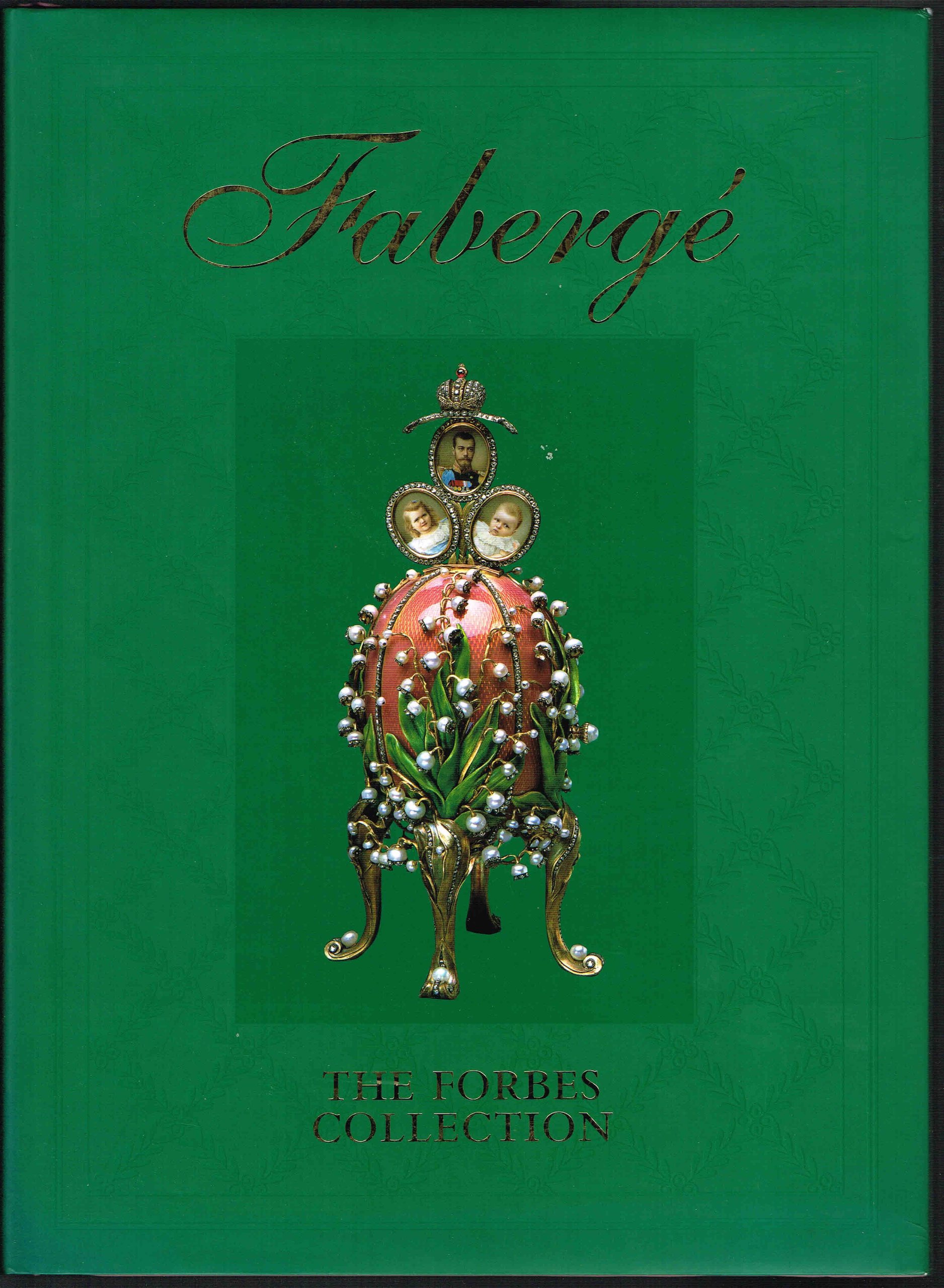
Fabergé: THE FORBES COLLECTION (Beaux Arts Edition)
$100.00
by Robyn Forbes Christopher; Tromeur-Brenner



The House of Faberge stands alone in the history of art. The name itself evokes images of the imperial grandeur of Czarist Russia and for over one hundred years has symbolized the finest in imaginative artistry and meticulous workmanship. The family whose works have come to epitomize the ultimate creations of the art of the goldsmith and jeweler descended from French Protestants who left France to escape religious persecution in the late seventeenth century. The Faberge family first settled near Stetin (now Szezecin in Western Poland) and eventually in the Russian Baltics at Pernau (in Estonia), where the firm's founder, Gustav Faberge, was born on February 20, 1814. At the age of twenty-seven, he earned the title Master Goldsmith. The following year, 1842, Gustav married Charlotte Junstedt and opened his own small business in St. Petersburg. The couple's first son, Peter Carl Faberge, was born in the imperial capital on May 30, 1846.This book documents the results to date of almost two generations and four decades of collecting. While all aspects of the creative genius of the House of Faberge are represented, the selection reflects the idiosyncrasies and preferences that are the hallmarks of any private collection. Therefore some genres of the firm's production, such as Pan-Slavic-style enamels or hardstone figurines, have only a token presence, while there is an abundance of other objects such as frames, boxes, and especially eggs.