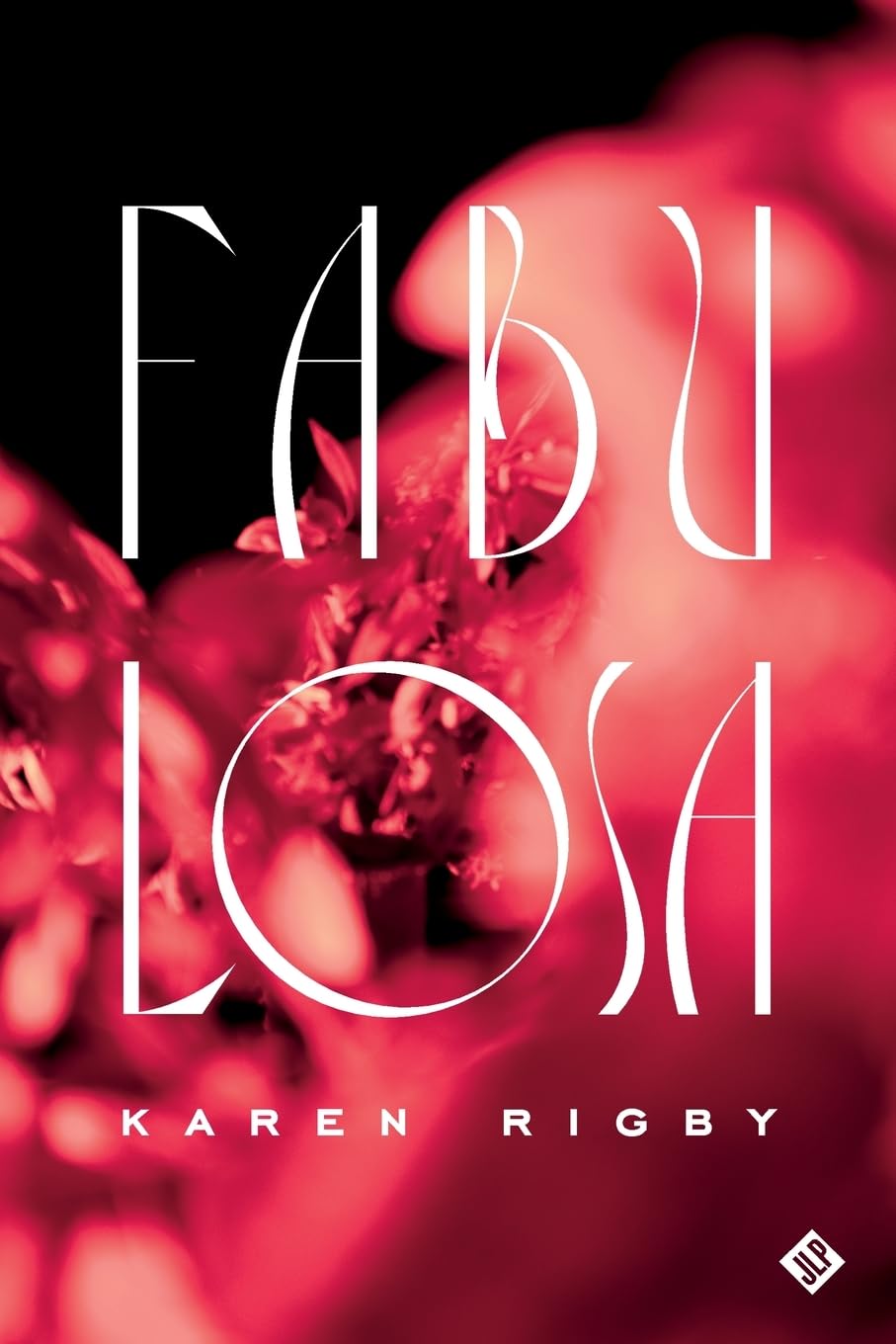



Karen Rigby writes with "fingers cocked like a gun." Deliciously inventive in its linguistic unfurlings, Fabulosa fibrillates with "noir and glitz" in these strange, seductive poems that are in conversation with a range of players from Dior to Endeavour Morse to Hieronymus Bosch. Shimmering with diamond-cut precision, Fabulosa underscores Rigby's observation that "I never write / without measuring, each line / hooking a quicksilver hunger." There is no bloat in this book; it is exquisitely hewn. Underpinning the collection is a keen interest in cinema, fashion, feminism, transformation, and textuality (from ars poeticas to portmanteaus to ekphrastics). Seamed with goldshine and darkness, we find in these fireball poems a "wilderness / glanced through the bull's eye." As the title suggests, Fabulosa is indeed absolutely fabulous! -Simone Muench In Rigby's second collection, following Chinoiserie (2012), the poem is the blueprint, the tool, and the vehicle for exploration of one's exterior and interior landscapes. The poems engage with art in many forms—fine art, television, literature, the natural world, and athletic performance—to position both poet ("I'm doing what history warns us / not to, inserting myself // in the frame") and reader ("how I like planting you, reader, / in the thick of it") firmly at potent vantage points that allow one to weave through the impermanence and weight of art and time ("Whatever we love is already leaving. / Whatever we touch, dissolves"). Whether the focus is a painting, a television series, or an Oscar dress, the collection transports the reader beyond what is nearest or clearest. Rigby posits, "I know a little about trying to reconcile pain // with what you later learn." Moreover, each movement in this layered work is threaded with persistent exploration of memory and what it might reveal. "Repetition is prayer for the driven. / Memory one more path // to euphorias." Copyright 2024 — Booklist Reviews Yes, Fabulosa : where "poems arrive wearing black gloves," then "jump speed rope," "refuse daylight," and "end on fire." Here, couture rhymes with futur because these poems know why Dior's "wasp-waist" and the Doomsday clock debut together. Karen Rigby reminds us that whether writing or reading a poem, we are "doing what history warns us / not to, inserting myself // in the frame." Wear black gloves, jump speed rope: read these poems and find how "the brute song housed / in the chest finds a way out." — Angie Estes Karen Rigby's lush, restless poems somersault dazzlingly between the world's myriad surfaces and the shadowy interiors of heart and mind. In Fabulosa , her gorgeous second collection, Rigby's voracious intelligence snares on everything from an Oscar dress to police procedurals to bougainvillea ramping over a chain link fence. I'm in awe of these poems, already possessed of such knowledge yet always hungry for more. — Kasey Jueds Enter Fabulosa as you would step into a film noir, with fascination and apprehension. In Karen Rigby's extraordinary new book, poems wear a "river of black beads // down a backwards V-dress." They peel down black evening gloves and "hunt shadow in the folds." They smell of lemons in the desert and "new blood." These poems blaze with history and private anguish against a twilight backdrop. You leave Fabulosa feeling like a jewel thief who has pulled off the crime of the century. A victory of deftly executed spins and fistfuls of diamonds. — Sharon Suzuki-Martinez Fabulosa— the second poetry collection by Karen Rigby—lives up to its title, propelled by a sensory rush of cinematic color as the poet pulls us through poems as vivid as paintings, as physical as putting on a dress or taking a breath. [...] So come to a poetry party as colorful as a Venetian ball or a Mardi Gras parade. Then stay for the reflections inside the eye of a hurricane. —Sharon Tracey, MER In Fabulosa , through Rigby's attention to how figurative language is never decorative when done well, lyricism becomes both a shawl around the shoulders of the reader and a set of Kate Spade sunglasses — which is to say, we're able to see ourselves and the world more clearly. —Steven Leyva, Washington Independent Review of Books "Fire, gesture, illusion." Ms. Magazine , Best Poetry of '23-'24 Born in the Republic of Panama, Karen Rigby is the author of two collections of poetry, Chinoiserie (Ahsahta Press, 2012) and Fabulosa (JackLeg, 2024). Her awards include the 2011 Sawtooth Poetry Prize for Chinoiserie and a literature fellowship from the National Endowment for the Arts. Her poetry has been published in numerous journals, including Poetry Northwest , The London Magazine , and Bennington Review . She lives in Arizona.