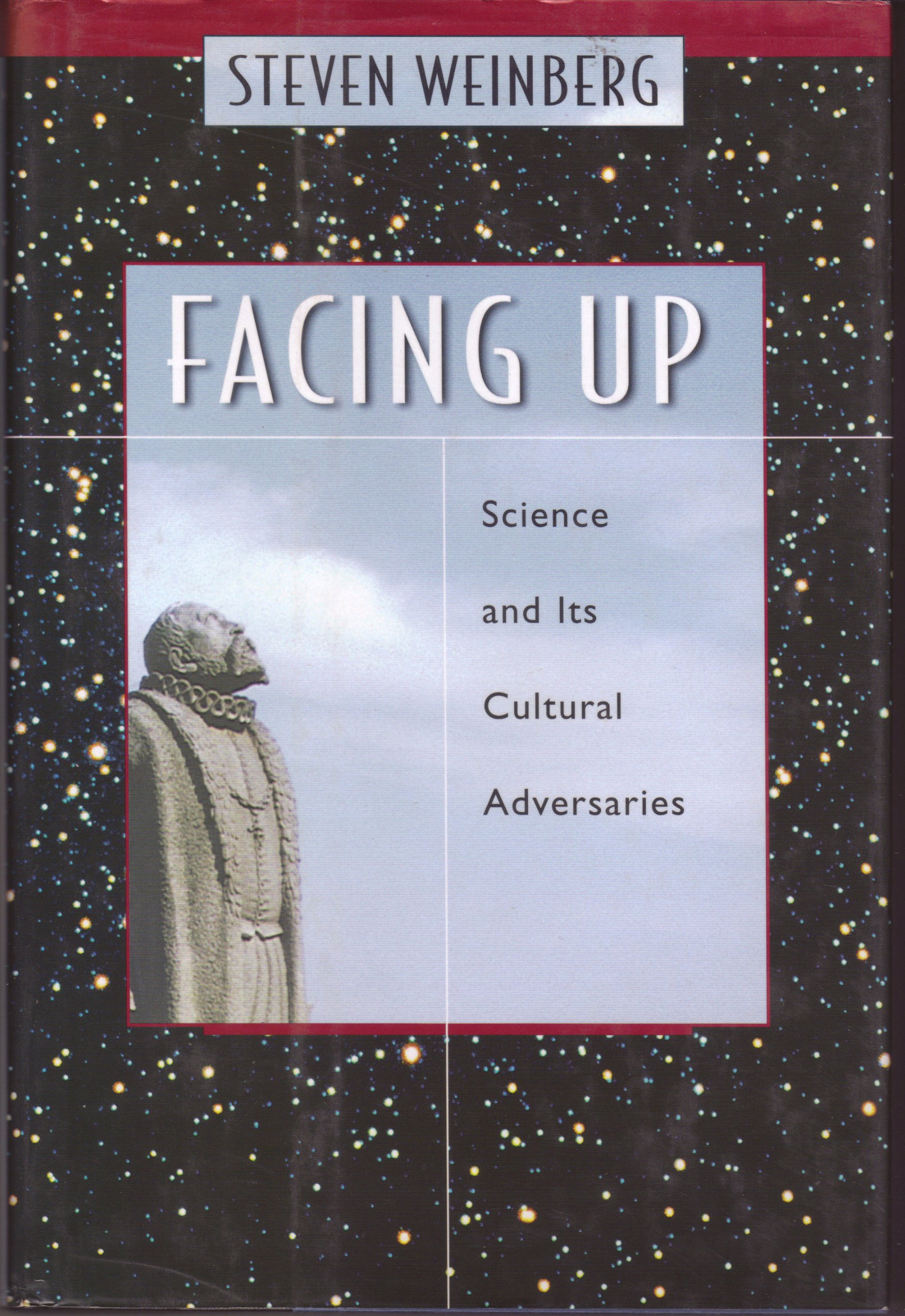



In a recent New York Times profile, James Glanz remarked, "Steven Weinberg is perhaps the world's most authoritative proponent of the idea that physics is hurtling toward a 'final theory,' a complete explanation of nature's particles and forces that will endure as the bedrock of all science forevermore. He is also a powerful writer of prose that can illuminate--and sting...He recently received the Lewis Thomas Prize, awarded to the researcher who best embodies 'the scientist as poet.'" Both the brilliant scientist and the provocative writer are fully present in this book as Weinberg pursues his principal passions, theoretical physics and a deeper understanding of the culture, philosophy, history, and politics of science. Each of these essays, which span fifteen years, struggles in one way or another with the necessity of facing up to the discovery that the laws of nature are impersonal, with no hint of a special status for human beings. Defending the spirit of science against its cultural adversaries, these essays express a viewpoint that is reductionist, realist, and devoutly secular. Each is preceded by a new introduction that explains its provenance and, if necessary, brings it up to date. Together, they afford the general reader the unique pleasure of experiencing the superb sense, understanding, and knowledge of one of the most interesting and forceful scientific minds of our era. Steven Weinberg isn't ashamed of science. Of course, as a Nobel winner in physics, he does have emotional capital invested in the enterprise, but most of his arguments are sound and compelling. Facing Up is a collection of his essays, written over 15 years, celebrating and defending mainstream science. Rising up against the cultural critics who insist that science is essentially politics or even imperialism dressed up in a white coat, he is patient and eloquent as he explains how their misreadings of scientific literature and their own preconceptions guide their reasoning. From mildly wonkish to endearingly passionate, his writing engages the reader's full attention regardless of cultural affiliation. Science lovers will adore Weinberg's unabashed boosterism, while skeptics can try to rise to his challenge. --Rob Lightner Weinberg's thesis in these essays is that the laws of nature, insofar as they are known, "are impersonal, with no hint of a divine plan or any special status for human beings." Each essay, he says, "struggles with the necessity of facing up to these discoveries." Weinberg is an eminent physicist-sharer of the Nobel Prize for Physics in 1979 and professor of physics and astronomy at the University of Texas at Austin-who some 20 years ago started speaking and writing on broader subjects, notably "on the follies that I found in the attitudes toward science of many sociologists, philosophers, and cultural critics, and on the ancient tension between science and religion." The 23 pieces gathered here, learned and deftly written, are among the results of that undertaking. Editors of Scientific American In our insouciant culture, no one looks more suspect than the defender of orthodoxy. But as a champion of rigorous science, Weinberg dares to defy the zeitgeist, throwing down the gauntlet to all the multiculturalists, religionists, feminists, and posmodernists who regard the physicist's formulas as mere cultural artifacts, hopelessly contaminated with social biases. Weinberg insists that such formulas, regardless of the cultural background of the scientists who apply them, reveal objective realities. Cogent and lucid, this collection of essays helps general readers understand both why the so-called science wars have aroused such passions within the academy and how these wars have affected sociopolitical events far beyond university campuses. Like other compilers of previously published pieces, Weinberg repeats himself (resorting to the same arguments against different foes in different contexts) and includes items of questionable relevance. But these essays generally cohere in an articulate explanation of the bedrock objectivity of science and in a forceful counterattack against those who have called that objectivity into question. Bryce Christensen Copyright © American Library Association. All rights reserved Steven Weinberg is a national treasure. Not only is he one of America's greatest physicists, he is also a delightful essayist as well. In Facing Up , he addresses the issues of objectivity, reductionism, and the nature of science in rightful ways sure to outrage postmodernists. --Eric J. Chaisson, author of Cosmic Evolution In this wonderful and compelling collection of essays, Steven Weinberg--one of the greatest and most influential of physicists--convincingly argues that the more we discover about the laws governing the cosmos, the less it seems that we have any special status or role to play. While Weinberg may well be right regarding the absence of a divine plan for human beings, you cann