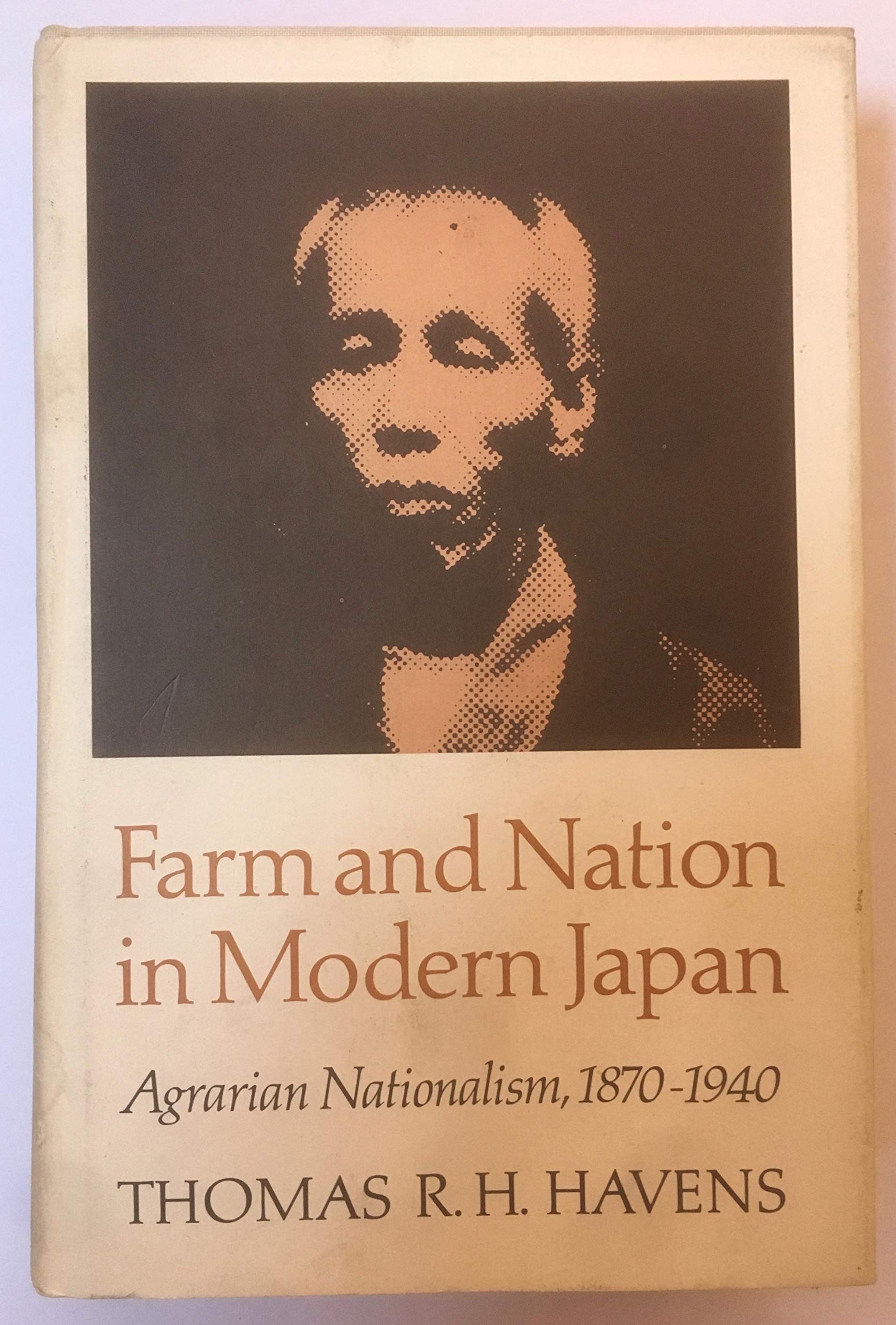
Farm and Nation in Modern Japan: Agrarian Nationalism, 1870-1940 (Princeton Legacy Library)
$25.00
by Thomas R.H. Havens



A study of agrarian thought in prewar Japan, this bonk concentrates on the developing fissure between official and rural conceptions of nationalism in the late nineteenth and early twentieth centuries. Professor Havens analyzes the response of Japanese farmers and their spokesmen to the pursuit of modernization during the Meiji and Taishō periods. Through a critical examination of writings and speeches of major farm ideologues, including Gondō Seikyō, Tachibana Kōzaburō, and Katō Kanji, the author examines the ways in which agrarianist theories shaped modern Japanese nationalism and the extent to which rural ideologies triggered political violence in the turbulent 1930s. He then focuses on the romantic rural communalism of the 1920s and 1930s as an example of antigovernment nationalism designed to rescue the Japanese people at large from bureaucracy, capitalism, and urbanization. Based on extensive research in modern Japanese ideological, political, and economic materials, the study offers new insight into the early twentieth century revolution in nationality sentiments and provides fresh grounds for doubting the state's monopoly on public loyalties during the years immediately preceding Pearl Harbor. Originally published in 1974. The Princeton Legacy Library uses the latest print-on-demand technology to again make available previously out-of-print books from the distinguished backlist of Princeton University Press. These editions preserve the original texts of these important books while presenting them in durable paperback and hardcover editions. The goal of the Princeton Legacy Library is to vastly increase access to the rich scholarly heritage found in the thousands of books published by Princeton University Press since its founding in 1905. Farm and Nation in Modern Japan Agrarian Nationalism, 1870-1940 By Thomas R.H. Havens PRINCETON UNIVERSITY PRESS Copyright © 1974 Princeton University Press All rights reserved. ISBN: 978-0-691-03101-9 Contents Preface, v, Tables, xi, I. Agrarian Thought and Japanese Modernization, 3, II. Early Modern Farm Ideology and the Growth of Japanese Agriculture, 1870-1895, 15, III. Bureaucratic Agrarianism in the 1890s, 56, IV. Small Farms and State Policy, 1900-1914, 86, V. Popular Agrarianism in the Early Twentieth Century, 111, VI. Farm Thought and State Policy, 1918-1937, 133, VII. Gondo Seikyo: The Inconspicuous Life of a Popular Nationalist, 163, VIII. Gondo Seikyo's Ideal Self-Ruling Society, 190, IX. Gondo Seikyo and the Depression Crisis, 212, X. Tachibana Kozaburo's Farm Communalism, 233, XI. Tachibana Kozaburo's Patriotic Reform, 254, XII. Kato Kanji and Agricultural Expansionism, 275, XIII. Agrarianism and Modern Japan, 295, Works Cited, 323, Index, 347, CHAPTER 1 Agrarian Thought and Japanese Modernization Each May the emperor of Japan wades into a paddy on the grounds of the imperial palace in central Tokyo to perform a symbolic planting of young rice shoots. Each September or early October he harvests the rice in his shirt sleeves under a warm late summer sun. The new rice is taken as an offering to the Ise Grand Shrine in Mie Prefecture, where until 1945 Amaterasu Omikami was worshiped as the great ancestress of the Japanese imperial line. Although much of the mythology associated with the state shrine system evaporated after World War II, many Japanese continue to believe that a visit, if not a pilgrimage, to Ise should be undertaken by every citizen at least once in his life. The annual ceremonial offering by the emperor doubtless reinforces this conviction. After the ritual is completed, the rice is used to make sake that is dedicated to the imperial ancestors on Labor Thanksgiving Day, November 23. In these traditional ceremonies, the emperor expresses gratitude to farmers for producing the nation's staple crop. Farming has historically been so closely tied to Japanese thought and belief that its importance has usually been taken for granted and only rarely acknowledged. So long as agriculture provided the main source of gainful employment and national wealth, Japanese political practices and social patterns were closely articulated with farming, which remained the economic cornerstone of the nation until at least the start of the twentieth century. Most premodern political and social thinkers in Japan, both official and nonofficial, assumed that agricultural production was vital for a happy and prosperous country. Likewise, the dominant religion, Shinto, perpetuated the beliefs and rituals of a distinctly rural society. Many Shinto prayers and ceremonies were fitted to the cycle of the seasons. The ancient sacred festivals, still celebrated today, were associated with the new year, planting, rainy season (and attendant purification ceremonies to exorcise illness), harvest, and other aspects of agricultural fertility. Yet it is doubtful whether many pre-modern adherents of the Shinto deities paid c