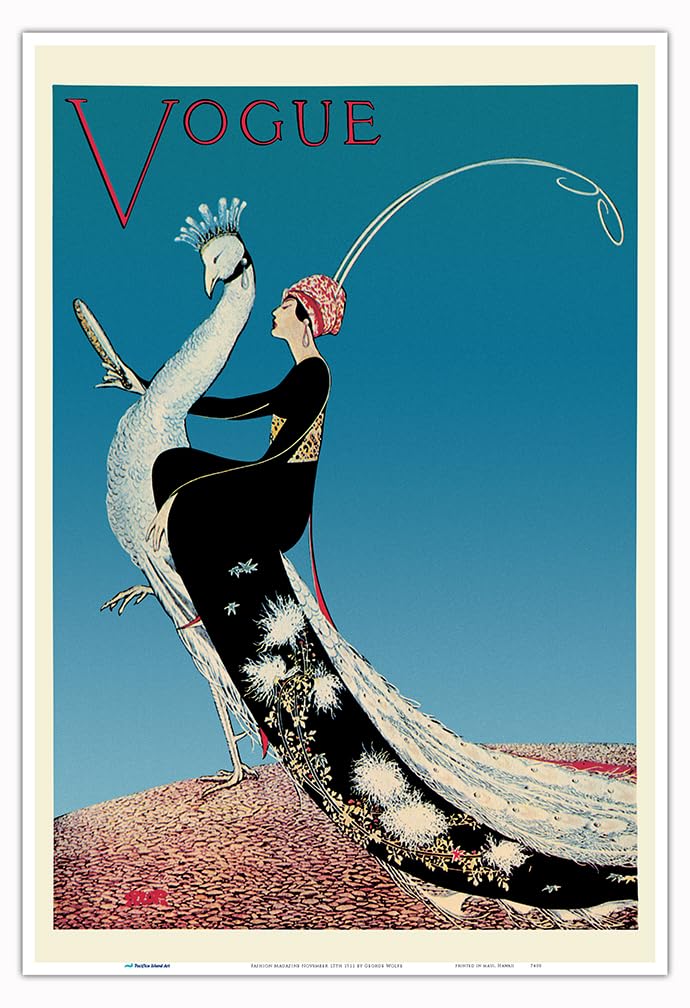
Fashion Magazine November 15th 1911 - Vintage Magazine Cover by George Wolfe Plank - Master Art Print (Unframed) 13in x 19in
$22.98
by Pacifica Island Art



Wall art print on satin-finish heavyweight paper (9 mils, 216 gsm) designed for lasting clarity and detail. A great addition to modern home decor, office walls, creative studios, or gallery-style displays. Printed on eco-friendly paper that is recycled, FSC and SFI certified, and chlorine-free (TCF and ECF compliant). A sustainable choice for those seeking environmentally conscious wall art without compromising material standards. Unframed wall art print sized to fit standard ready-made frames, making it easy to frame and display without custom framing. A practical choice for home, office, or gallery-style decor. Print measures 13x19 inches (33x48 cm), with an image area of 12.5x18.5 inches (32x47 cm) centered on the page. A subtle white border surrounds the artwork, allowing for easy framing and a clean visual presentation. Printed on demand and packaged using rigid mailers or protective tubes to help prevent damage in transit. Each order is handled with care to support secure delivery and ready-to-frame condition upon arrival. Enjoy a taste of Aloha with these beautiful Master Art Prints by Pacifica Island Art - printed in Maui, Hawaii. This print will look wonderful framed in the home, office or restaurant and is perfect for the Vintage Art Collector. - ABOUT THE ARTIST - George Wolfe Plank - George Wolfe Plank (1883–1965) was an American artist illustrator, chiefly remembered for his long-term association with Vogue Magazine, which resulted in years of covers in an Art Deco style related to that of Helen Dryden and influenced, by among others, Edmund Dulac. Style Plank's work has been compared with such artists as Rackham, Dulac, Alphonse Mucha and even Gustav Klimt. His work is characterized by broad fields of bright colour setting off the mass and line of his principal figures. His composition is clear and simple, the wealth of sartorial detail notwithstanding. Plank broke onto the Vogue scene with his mature style almost completely established and worked for some years with no real rivals before Helen Dryden's work matured and she became one of the most important of his colleagues. William Packer described Plank's concept of fashion as 'ideal, bizarre and improbable, at once adventurous and yet romantic and nostalgic'.