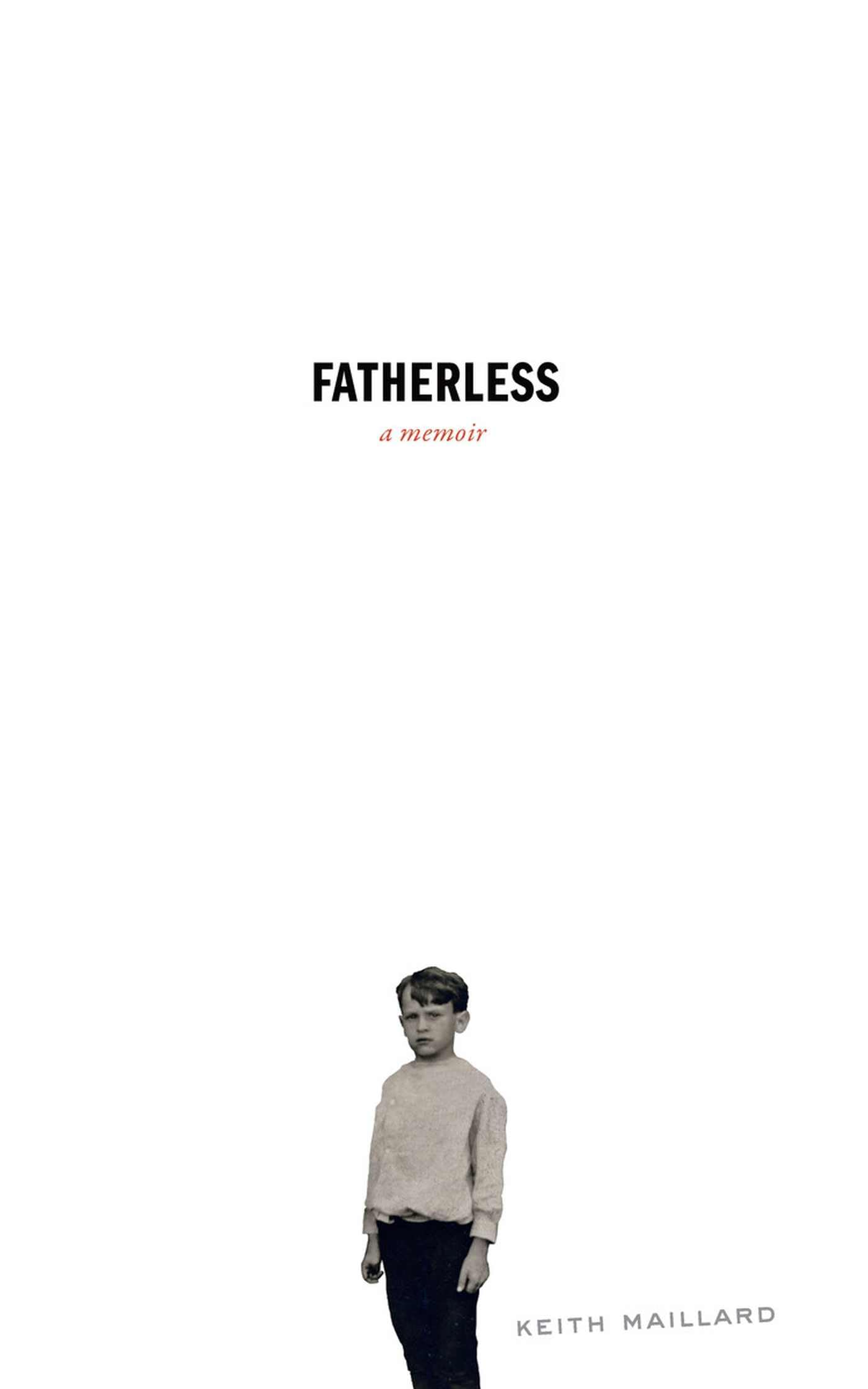



This story begins with a phone call out of the blue: a lawyer tells a writer that his ninety-six-year-old father, with whom he has had no contact since the age of three and whom he has twice tried to find without success, has just died, leaving him nothing. Half-reluctant, half-fascinated, both angry and curious, Keith Maillard begins to research his father’s life. The result is a suspenseful work of historical reconstruction—a social history often reading like a detective story—as well as a psychologically acute portrait of the impact of a father’s absence. Walking a tightrope between the known and the unknown, and following a trail that takes him from Vancouver to Montreal to his native Wheeling, West Virginia, Keith Maillard has pulled off a book that only a novelist of his stature could write. “This memoir is an astonishing act of generosity and tenacity, exploring the profound flaws of one family’s dynamics and the resiliency of the human spirit.” Eden Robinson, author of Son of a Trickster “ Fatherless is Keith Maillard’s haunting response to that most ancient curse: Why, father, did you desert me? How, father, should I love you?” Clark Blaise, author of I Had a Father “Marvelous and brutally honest.” Marc Harshman, author of Woman in Red Anorak and poet laureate of West Virginia This story begins with a phone call out of the blue: a lawyer tells a writer that his ninety-six-year-old father, with whom he has had no contact since the age of three and whom he has twice tried to find without success, has just died, leaving him nothing. Half-reluctant, half-fascinated, both angry and curious, Keith Maillard begins to research his father’s life. The result is a suspenseful work of historical reconstruction—a social history often reading like a detective story—as well as a psychologically acute portrait of the impact of a father’s absence. Walking a tightrope between the known and the unknown, and following a trail that takes him from Vancouver to Montreal to his native Wheeling, West Virginia, Keith Maillard has pulled off a book that only a novelist of his stature could write. Keith Maillard is the author of fourteen novels, most recently Twin Studies, the winner of the Alberta Book of the Year Award in Fiction. Born and raised in West Virginia, he has lived in Vancouver for most of his adult life. He has been a musician, photographer, and journalist, and has taught creative writing at the University of British Columbia since 1989. 1. I was in my office at the university on an ordinary Monday morning—March 3, 1997—when I got the phone call, heard an unfamiliar man’s voice asking if I was Keith Maillard. I said I was. “Are you related to Eugene Charles Maillard?” If I were writing this as a scene in a novel, I would write in a beat here for myself—a significant pause while I tried to absorb the impact of the question—but I didn’t hesitate at all. “Yes, that’s my father.” “I’m sorry to have to tell you this, but your father has died.” I don’t remember what I said—something to the effect of “Oh? Is that right?” Later, when I would look at my agenda book, I would find that my right hand had taken off on its own and written “My father has died.” An outside observer would have seen my body sitting at my desk, functioning normally, making all the right noises into the telephone, but I didn’t have a clue what I was feeling, and I can’t describe it clearly now. “Squashed flat and pinned on a cold hard wall” is not bad, but that image is working too hard and doesn’t get at the smeary unfocused blur of it. I could use psych jargon and call myself depersonalized, although that doesn’t really do it either. I do remember exactly what I was thinking. What the hell do you mean, he’s died? Do you mean he’s just died? How can that be? He was born in 1901, for Christ’s sake. He must have been dead for years. He died on the 25th of February, the voice was telling me—apparently this was my father’s lawyer. My right hand continued to write down what he was saying. My father’s funeral had been yesterday—a Masonic service conducted by my father’s lodge in Escondido, California. My father had been cremated and his ashes scattered at sea. He’d been a remarkable man. He’d died just a few months short of his 96th birthday. He’d never lost his memory. He was lucid right up to the end. “Oh, is that right?” I said. Why, I thought, should I give a shit whether or not he’d been lucid right up to the end? The lawyer asked me for my address. He needed to send me legal documents. “I’m sorry to say that he didn’t leave you anything.” “Uh-huh.” Was I supposed to be surprised by that? Disappointed? If I’d known about my father’s existence, I would have expected exactly what I’d always got from him—nothing. I wrote down the lawyer’s number, thanked him for calling. How strange, I thought—how meaningless and useless and anticlimactic. I’d never known my father, had never felt any personal connection to him, so it really shouldn’t