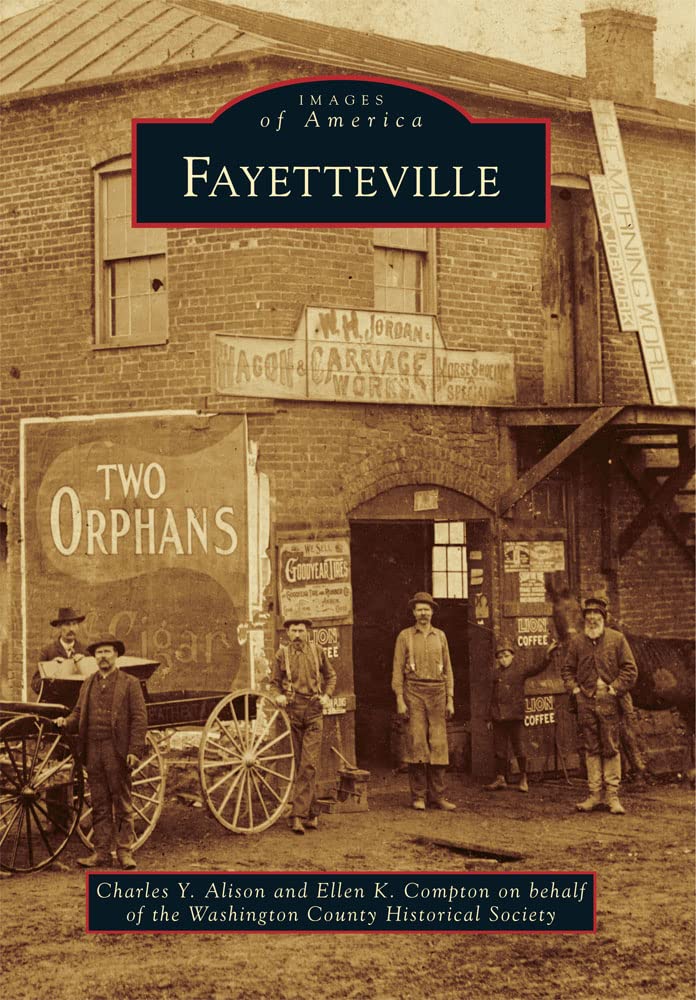



Founded on America's frontier in 1828, Fayetteville soon became a trade center and educational oasis for northwest Arkansas and the Indian Territory just to the west. Its location up in Ozark hills gave it a picturesque setting, a healthy climate, and diverse economy. The earliest residents named the town Washington Court because it was the county seat of Washington County, but its name was changed to Fayetteville in 1829, soon becoming synonymous with education in Arkansas. Fayetteville provided numerous educational firsts, including the first public school district, the first college chartered to award degrees, the first state university, and the first school and university in the South to integrate. In addition to being a cultural crossroads, Fayetteville also proved to be a literal crossroads for the following: the Trail of Tears, the Butterfield stagecoach route, and the St. Louis & San Francisco Railway. They fostered a citizenry that thrived on commerce while encouraging education and tourism. Title: Historic Fayetteville photo book now available for purchase Author: Dustin Bartholomew Publisher: Fayetteville Flyer Date: 7/20/2011 It's been a good year for Fayetteville history buffs. A few months ago, we learned that Larry Foley is working on a documentary film, "Up Among the Hills" about the history of our city. Now, Arcadia Publishing has released a new book of historic Fayetteville photos as part of their Images of America series. Local authors Charles Y. Alison (FayettevilleHistory.com) and Ellen K. Compton compiled the book, simply titled Fayetteville. The book features more than 200 images and descriptions from some of the lesser-known and most historic photos from the Shiloh Museum of Ozark History and the University of Arkansas Libraries Department of Special Collections. Here's a description of the new book, from the publisher's website: Founded on America's frontier in 1828, Fayetteville soon became a trade center and educational oasis for northwest Arkansas and the Indian Territory just to the west. Its location up in Ozark hills gave it a picturesque setting, a healthy climate, and diverse economy. The earliest residents named the town Washington Court because it was the county seat of Washington County, but its name was changed to Fayetteville in 1829, soon becoming synonymous with education in Arkansas. Fayetteville provided numerous educational firsts, including the first public school district, the first college chartered to award degrees, the first state university, and the first school and university in the South to integrate. In addition to being a cultural crossroads, Fayetteville also proved to be a literal crossroads for the following: the Trail of Tears, the Butterfield stagecoach route, and the St. Louis & San Francisco Railway. They fostered a citizenry that thrived on commerce while encouraging education and tourism. The book is now available for purchase online, or locally at Nightbird Books on Dickson Street. Title: History of Fayetteville Told Through Photographs Publisher: Arcadia Publishing Date: 7/18/2011 The newest addition to Arcadia Publishing's popular Images of America series is Fayetteville from local authors Charles Y. Alison and Ellen K. Compton. The book boasts more than 200 vintage images and memories of days gone by. Founded on America's frontier in 1828, Fayetteville soon became a trade center and educational oasis for northwest Arkansas and the Indian Territory just to the west. Its location up in Ozark hills gave it a picturesque setting, a healthy climate, and diverse economy. The earliest residents named the town Washington Court because it was the county seat of Washington County, but its name was changed to Fayetteville in 1829, soon becoming synonymous with education in Arkansas. Fayetteville provided numerous educational firsts, including the first public school district, the first college chartered to award degrees, the first state university, and the first school and university in the South to integrate. In addition to being a cultural crossroads, Fayetteville also proved to be a literal crossroads for the following: the Trail of Tears, the Butterfield stagecoach route, and the St. Louis & San Francisco Railway. They fostered a citizenry that thrived on commerce while encouraging education and tourism. Within Fayetteville, the Washington County Historical Society has selected some of the lesser-known and most historic images from its collection at the Shiloh Museum of Ozark History and from the University of Arkansas Libraries Department of Special Collections to illustrate Fayetteville's history. Highlights of Fayetteville: ? The public square ? The seat of education ? The center of commerce ? Parades and performers ? A crossroads of transportation ? Public service and government Available at area bookstores, independent retailers, and online retailers, or through Arcadia Publishing at www.arcadiapublishing.com or (888)-313-26