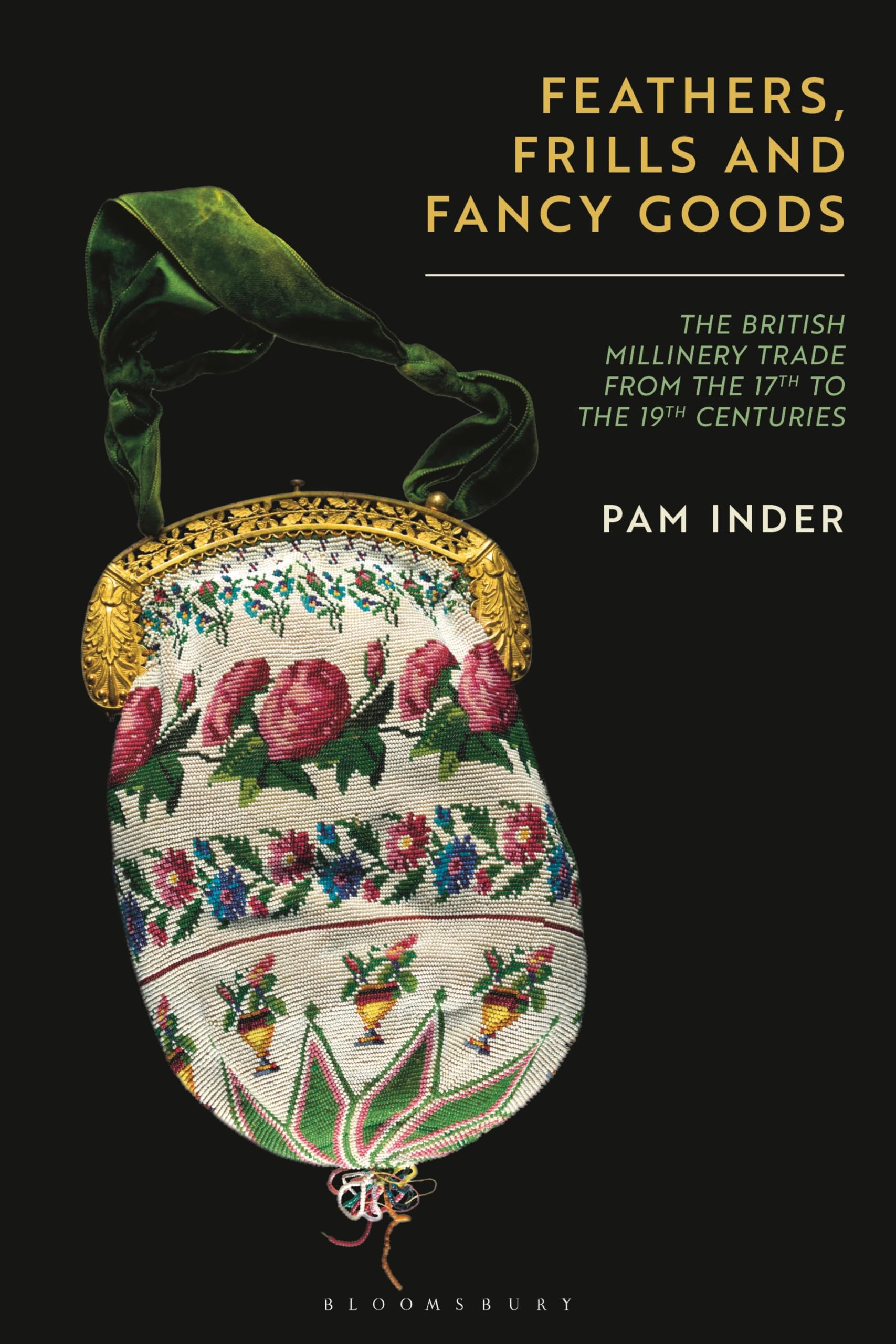



Tracing its development from a trade devoted to selling small needlework articles, ribbons and trimmings to one chiefly concerned with making and selling hats and bonnets, Feathers, Frills and Fancy Goods is an examination of the millinery trade from the early 17th century to the Victorian period. The term 'milliner' derives from milan-er – seller of goods from Milan. Milliners sold 'small wares' – pins, needles, thread, tapes, ribbons, laces, soft leathers for belts and purses, gloves, hosiery and other decorative items which often, but not invariably, included caps and hats. Feathers, Frills and Fancy Goods traces the history of the millinery trade from the late 16th century, when most milliners were men, to the 19th century, when an increasing number of women had moved into the industry, and the term 'milliner' began to take on its contemporary meaning of 'hat maker/seller'. Drawing on a wealth of unpublished and primary sources, and illustrated with over 65 images, Feathers, Frills and Fancy Goods traces the evolution of this complex and under-researched trade and grants new insights into working class life in 18th- and 19th-century Britain. “Once again, Pam Inder draws the reader into the colourful world of dress and textile makers and sellers, exploring the evolution of the milliner across centuries of change.” ― Kate Strasdin, Falmouth University, UK “ Feathers, Frills and Fancy Goods is Pam Inder's third book analysing the many aspects of female dressmaking. Its use of wide-ranging source material and complementary images will be invaluable to all readers who enjoy discovering fashion's many histories.” ― Valerie Cumming, editor of The Dictionary of Fashion History (2nd edition) Pam Inder is an independent scholar and was formerly Curator of Applied Arts at first Exeter and then Leicestershire Museums (specialising in dress history), after being an Assistant Curator at Birmingham City Art Gallery. She later taught at Staffordshire and De Montfort Universities.