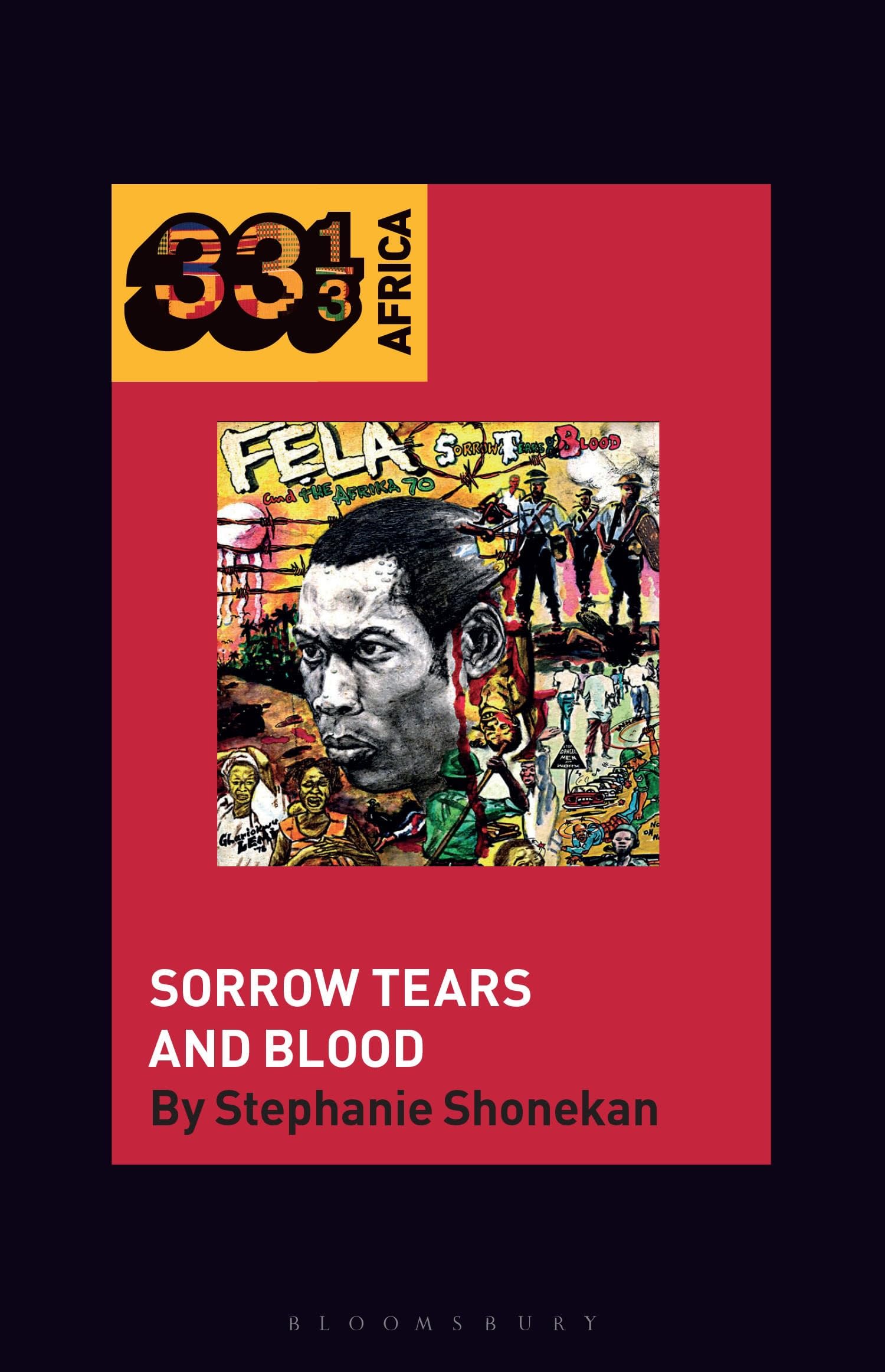
Fela Anikulapo-Kuti’s Sorrow Tears and Blood (33 1/3 Africa)
$22.95
by Stephanie Shonekan



Sorrow Tears and Blood offers a glimpse into the complicated social, cultural, and political phenomenon that is Nigeria. Though Nigeria is the most populous African country, and sometimes called the “Giant of Africa,� Fela's album sheds a sharp light on the reasons why Nigeria has not lived up to its potential. While the text primarily hovers over 1977 (the year of the album's release) as a critical cultural moment in Nigerian history, it also explores the album in the context of a wider look at how colonialism and its aftermath impacted the social, political, and economic environment in Nigeria, and how Western imperialism continues to affect Nigerian identity and life. As we reflect on Nigeria's turbulent post-independent political and social history, Sorrow Tears and Blood offers a rich sonic and lyrical landscape in which to interrogate the potency of Fela's message for generations to come. Michael E. Veal is Professor of Ethnomusicology at Yale University. Veal's work has typically addressed musical topics within the cultural sphere of Africa and the African diaspora. He is author of several books, including Fela: The Life and Times of an African Musical Icon (2001), Dub: Songscapes and Shattered Songs in Jamaican Reggae (2007) , Tony Allen: Master Drummer of Afrobeat (2013), and co-editor of Punk Ethnography: The Sublime Frequencies Companion (2016). He has also written articles for publications such as The New York Times and The Wire.