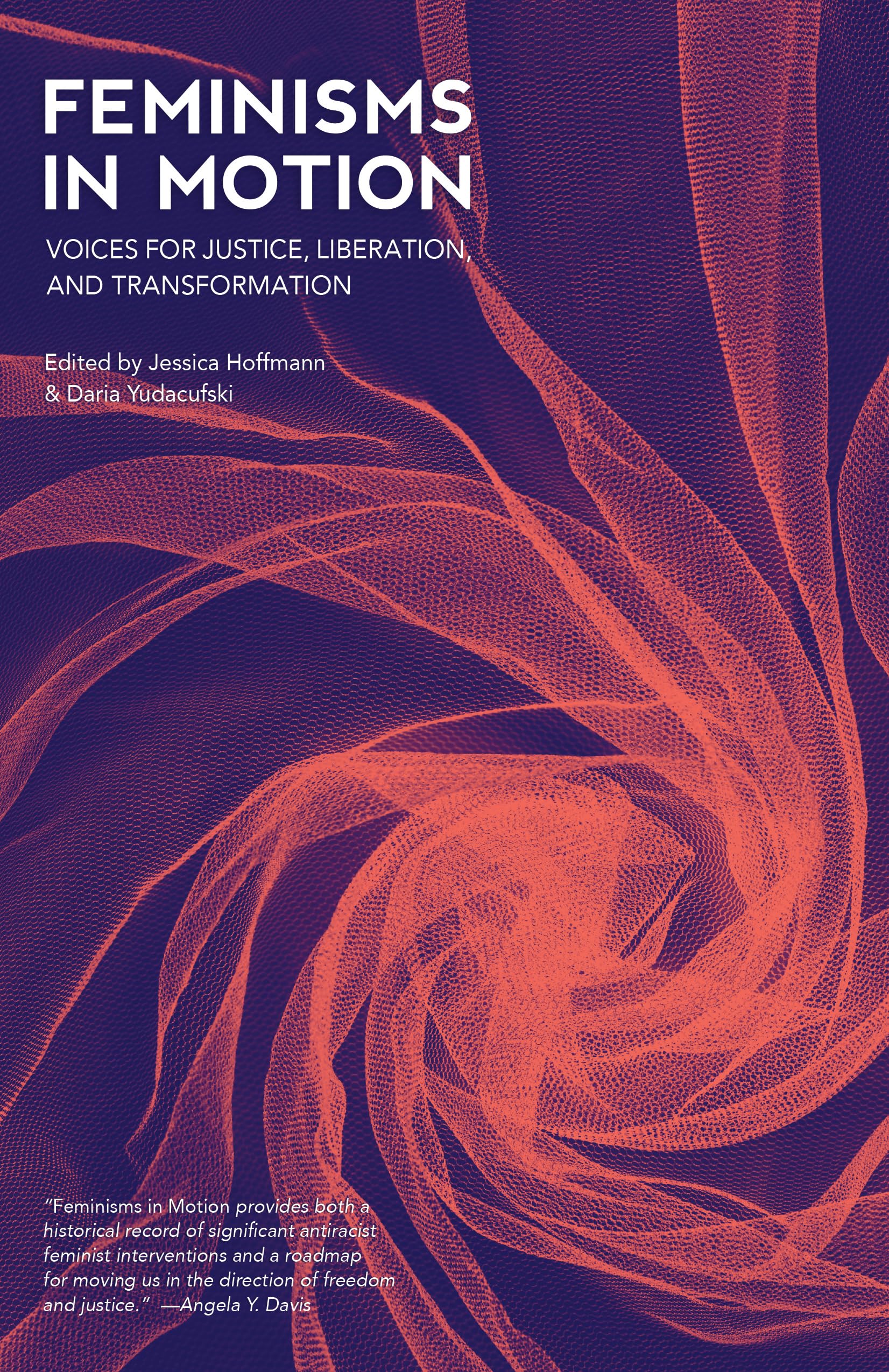
Feminisms in Motion: Voices for Justice, Liberation, and Transformation
$18.66
by Jessica Hoffmann



In recent years, feminism has been at the forefront of social criticism in the United States, but the mainstream face of feminism is still typically white and often focused on gender issues to the exclusion of race, class, and almost everything else. Meanwhile, there are long and rich traditions of women-of-color-centered feminisms that acknowledge all systems of power as connected, and recognize how ending one form of violence entails the transformation of society on multiple fronts. From 2007 to 2017, a small, Los Angeles-based independent magazine called make/shift published some of the most inspiring feminist voices of the decade, articulating ideas from the grassroots and amplifying feminist voices on immigration, state violence, climate change, and other issues. Feminisms in Motion offers highlights from 10 years of make/shift magazine, providing a wide-ranging look at contemporary intersectional feminist thought and action. We are living in a moment of mounting racist violence, xenophobia, income inequality, climate displacement, and war. Intersectional feminism has been creating and pointing toward solutions to these problems for generations. Feminisms in Motion offers ideas, critique, and inspiration from diverse feminists from Los Angles, to India, to Palestine, who are pointing toward a world where all people can thrive. "Women of color have been at the center and forefront of some of the most urgent political struggles for freedom in the United States. They have pioneered, through practice and theory, models of collective, intersectional feminism that have demanded more radical and more just ways of living, being, and acting. Feminisms in Motion is a welcome and urgent anthology that foregrounds the exciting and compelling work of these activists and writers." — Viet Thanh Nguyen, Pulitzer Prize-winning author of The Sympathizer, The Refugees , and Nothing Ever Dies: Vietnam and the Memory of War. "It was never said out loud, but as a young girl in Tijuana I thought certain activities weren't meant for me. I wish make/shift had existed then to help show me what I know now: all worlds are possible." —Ceci Bastida (musician, former member of Tijuana No!) “ I cannot stress enough what a valuable space make/shift has been for women of color media makers.”—Maegan Ortiz, Executive Director of IDEPSCA (Instituto de Educacion Popular Sur de California) Jessica Hoffmann is a writer, editor, and museum administrator. Utne named her one of “50 Visionaries Who Are Changing Your World.” Her writing has appeared in Bitch, ColorLines , SFAQ , and the anthology We Don’t Need Another Wave: Dispatches from the Next Generation of Feminists , among others. She has spoken and presented workshops on intersectional feminism across the U.S. and Europe. Daria Yudacufski is the executive director of Visions and Voices: The Arts and Humanities Initiative at USC. She was formerly the director of the Cross Cultural Centers at CSULA and the programming director of the MultiCultural Center and Women’s Center at UCSB. She has spoken about feminism at numerous universities, and in media outlets including Ms. , Feministing , and the book Feminist Media: Participatory Spaces, Networks, and Cultural Citizenship. We edited and published make/shift , a biannual independent magazine of community-based, intersectional feminist art and action, from 2007 to 2017. We mailed out the twentieth and final issue in the summer of a year that felt like a watershed moment for feminism in the U.S. mainstream. It was a year that started with enormous Women’s Marches and closed with a social-media outpouring of truths about sexual violence that knocked powerful abusers from their pedestals one after another. A sliver of a 1968 poem by Muriel Rukeyser was being quoted all over: “What would happen if one woman told the truth about her life?” Rukeyser asked. She quickly answered, “The world would split open.” In some ways it does feel like the world is splitting open. But it also feels entirely unsurprising. Even if we weren’t editors of a feminist magazine who have had the repeated experience of finding that the majority of submissions to each issue were about sexual violence, we are women in this world. We know pervasive sexual violence is the truth because it is and because we do not have the privilege of rationalizing or denying it. (In other words, and of course, #ustoo.) And: that Rukeyser poem is actually about a different kind of war. It’s called “Käthe Kollwitz,” and it’s about an artist and the World Wars she lived through, and economic inequality, and the gendered experience of these, and motherhood, and art, and yes the body (simultaneously individual and social), too. But what can that mean, “one woman”? We know #metoo, the social-media hashtag that is threading together stories of sexual violence, is true because we are women in this world, but the second we think that, we hear Sojourner Truth asking “Ain’t I