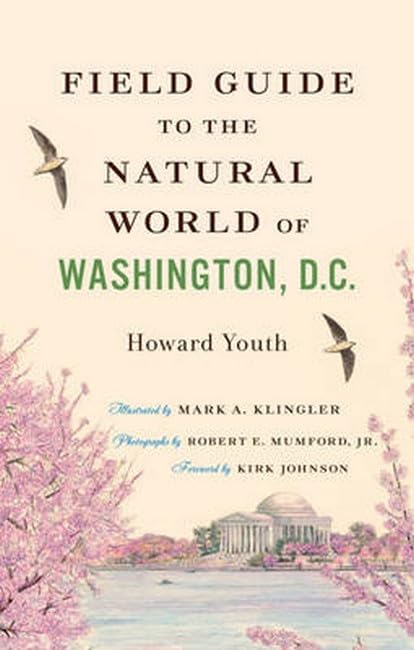



A field guide to plants and animals commonly found in the nation's capital. Winner of the Design and Effectiveness Award of the Washington Publishers Nature awaits discovery at almost every turn in the complex ecosystem of Washington, D.C. In parks large and small, within the District's gardens, and on public streets, there is tremendous biodiversity. In Field Guide to the Natural World of Washington, D.C. , naturalist Howard Youth takes us on an urban safari, describing the wild side of the nation's capital. Beyond the abundant wildlife that can be seen in every neighborhood, Washington boasts a large park network rich in natural wonders. A hike along the trails of Rock Creek Park, one of the country’s largest and oldest urban forests, quickly reveals white-tailed deer, eastern gray squirrels, and little brown bats. Mayapples, Virginia bluebells, and red mulberry trees are but a few of the treasures found growing at the National Arboretum. A stroll along the Potomac and Anacostia Rivers might reveal stealthy denizens such as bullfrogs, largemouth bass, and common snapping turtles. Detailed drawings by Carnegie artist Mark A. Klingler and photography by Robert E. Mumford, Jr., reveal the rich color and stunning beauty of the flora and fauna awaiting every D.C. naturalist. Whether seeking a secluded jog or an adventurous outing, residents and tourists alike will find this handsome guide indispensable for finding oases away from the noise of the city. Visiting birders would do well to carry [ Field Guide to the Natural World of Washington, D.C. ]. ― BirdWatching The book is simply an amazingly informative work of art. . . if you're visiting D.C., by boat preferably, this guide is great to bring along. ―Chris Knauss, The Star Democrat To most people, the only animals in Washington D.C. are political animals, but how wrong they are... If you love Washington D.C., nature, or even have a healthy curiosity of the natural world, this guide is for you. ―Scott R. DiMarco, American Reference Books Annual Downtown sightings of such wild creatures as snowy owls, peregrine falcons, and vultures may generate media attention, but after perusing Howard Youth's Field Guide to the Natural World of Washington, D.C. , I don't find these episodes as outlandish as the headlines might suggest . . . The guide represents a considerable documentation of the species that share our corner of the world. ―Adrian Higgins, Washington Post A field guide to plants and animals commonly found in the nation's capital. Within weeks of arriving in Washington, I heard from my friend Mark Klingler, who was just completing the illustrations for a book about the natural history of my new home. Mark had teamed with author Howard Youth and photographer Robert Mumford, Jr., to create a neat and portable volume about the nature that exists in my new city. Using a combination of paintings, photographs, and prose, they tell tales of the city’s parks and paths and do a great job of exploring and exposing the biodiversity that permeates the city. Located at the confluence of the Potomac and Anacostia Rivers at the head of Chesapeake Bay and just downstream from the Fall Line that marks the edge of the Appalachian Piedmont, Washington is a natural crossroads for migratory birds and a great place to experience the forests of the East Coast. The book describes the best locales to escape from sometimes frantic city life, places that provide opportunities for close encounters with nature.―From the Foreword by Kirk Johnson, Sant Director, Smithsonian National Museum of Natural History Howard Youth is a freelance natural history writer and former associate editor and communications manager for the Friends of the National Zoo. His work has been published in Audubon magazine, National Wildlife , and the Washington Post . Mark A. Klingler is a natural history artist in residence at Carnegie Museum of Natural History and illustrator of Field Guide to the Natural World of New York City , also published by Johns Hopkins. Robert E. Mumford, Jr., is a wildlife photographer whose work has appeared in Birder's World, Smithsonian Zoogoer (the National Zoo's magazine), and the New York Times .