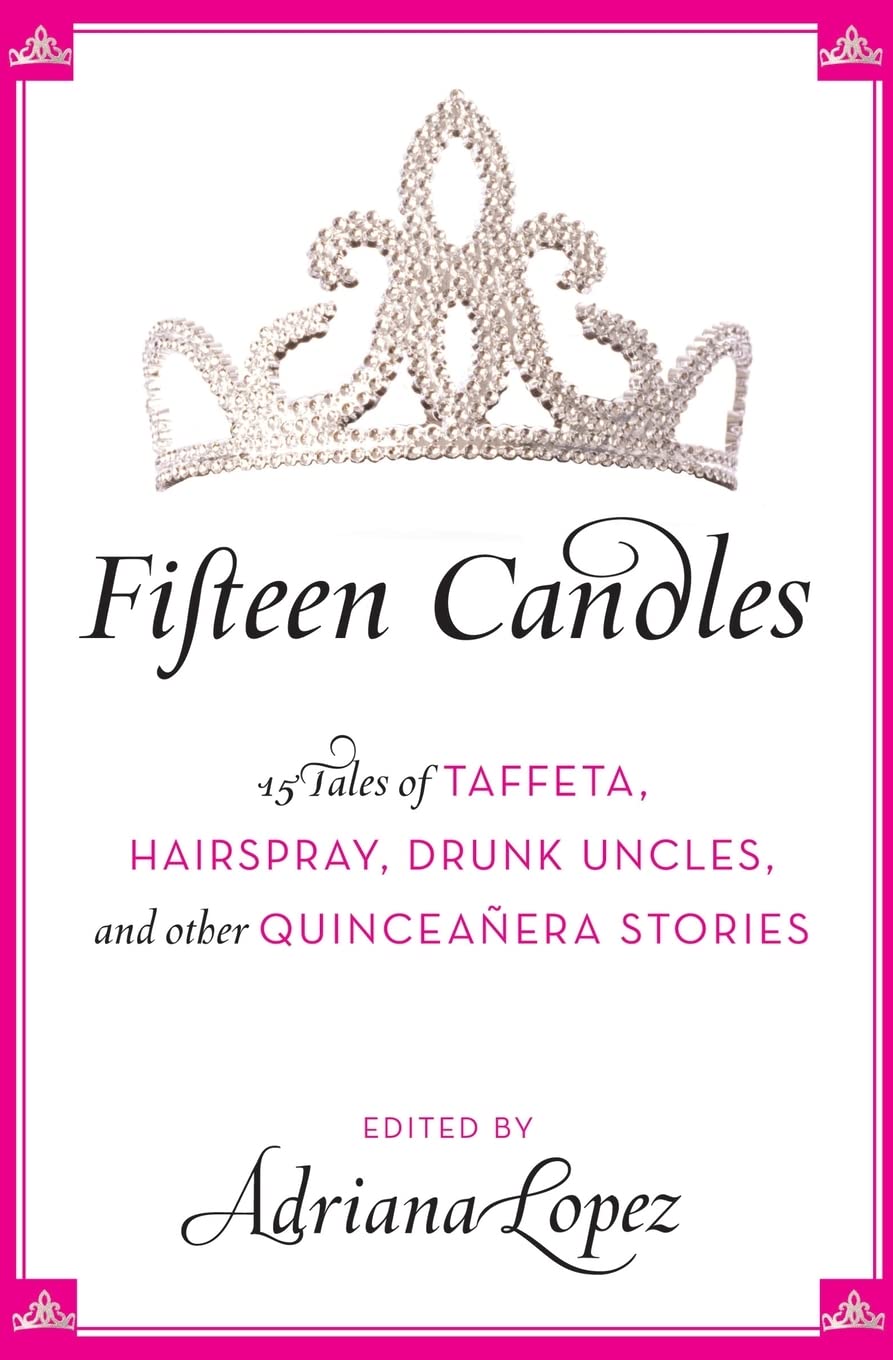
Fifteen Candles: 15 Tales of Taffeta, Hairspray, Drunk Uncles, and other Quinceanera Stories – A Funny and Moving Collection by Latino Writers on
$12.31
by Adriana V. Lopez



For the uninitiated, the quinceañera celebrates the passage of a fifteen-year-old girl into adulthood: It's a bit bat mitzvah with a dash of debutante ball, and loaded with the same potential for hilarity and adolescent angst. In this original anthology, fifteen of the brightest and funniest Latino writers, men and women alike, share their own memories of these moving and often absurd extravaganzas—tales of that unique form of familial humiliation that is borne of the best intentions, fierce love, and the infectious joy of parents finally allowing their little girl to grow up. In terms that vary from frank and irreverent to tender and even a little sapppy, 15 writers tell personal stories about a quinceanera, the traditional celebration that marks a Latina's fifteenth birthday. Some teens grab the chance to be a grown-up princess. In contrast, a Cuban immigrant remembers hating her party as a refugee "straitjacket"; but now she is appalled that her own daughter wants it all with lace, ruffles, and pearls. Of course, it is a coming-of-age landmark, and many remember the universals of trying to navigate the signals and subtleties, to look cute and sexy, but not like a zorra (whore). Party guests write, too, including male family members, escorts, lovers. The diversity is a big part of the fun across ethnicity, class, generation, and sexual orientation. Some want a quiet religious ceremony; some want to rent Disney World. But as Lopez points out in her great introduction, the "quinces" are having a comeback in the U.S., and however diverse, all do include the expectations, the nerves, and eventually the messy mush of memories. Rochman, Hazel “Many readers--especially 20 or 30-somethings--will find the honesty liberating.” - Publishers Weekly For the uninitiated, the quinceañera celebrates the passage of a fifteen-year-old girl into adulthood: It's a bit bat mitzvah with a dash of debutante ball, and loaded with the same potential for hilarity and adolescent angst. In this original anthology, fifteen of the brightest and funniest Latino writers, men and women alike, share their own memories of these moving and often absurd extravaganzas—tales of that unique form of familial humiliation that is borne of the best intentions, fierce love, and the infectious joy of parents finally allowing their little girl to grow up. Adriana Lopez was the founding editor of Críticas magazine, Publishers Weekly 's Spanish-language sister publication. Lopez's work has appeared in the New York Times , the Los Angeles Times , and the Washington Post , among other publications. A member of the PEN American Center, she lives in New York City.