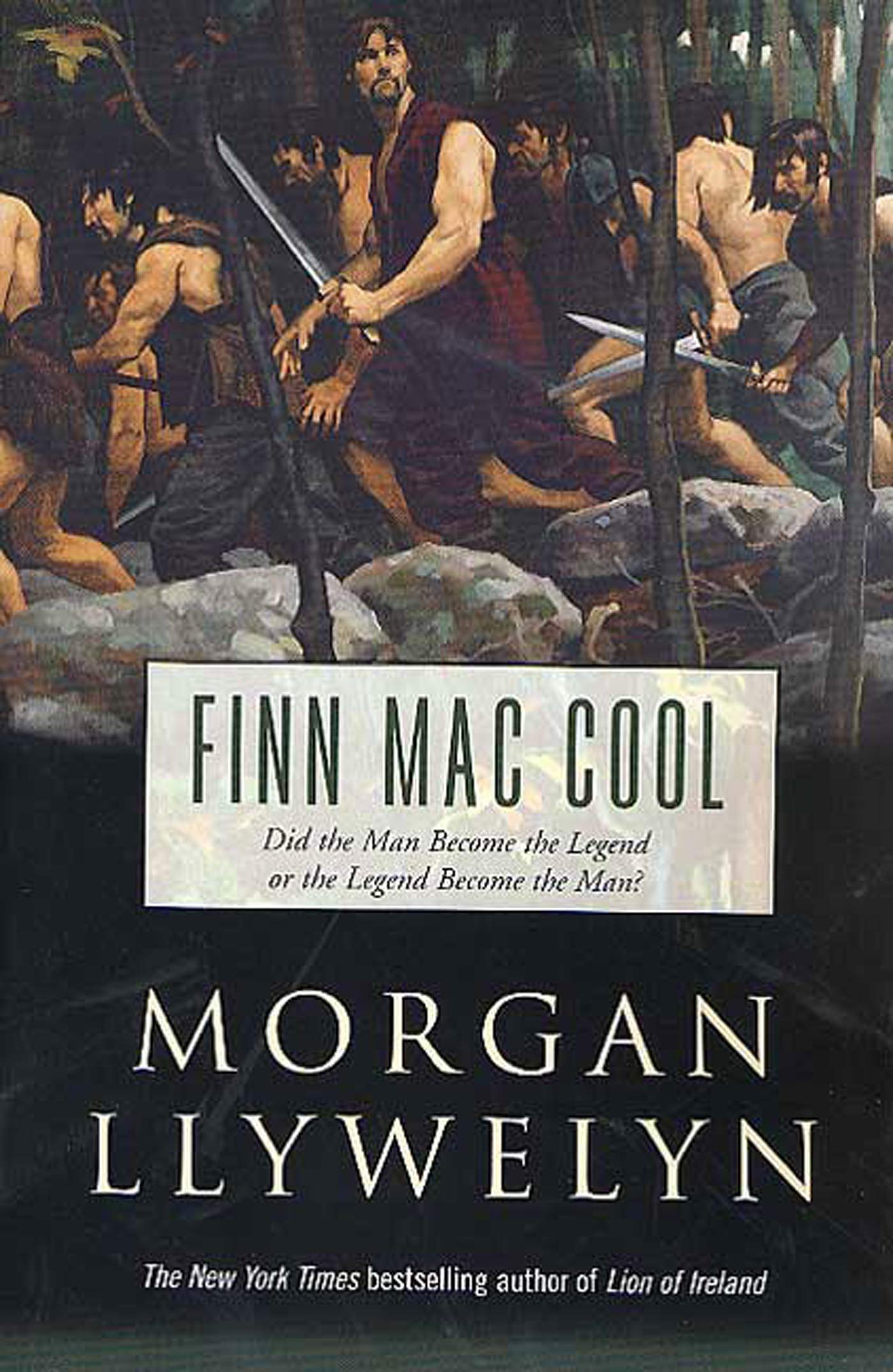



Somewhere in the shadowy borderland between myth and history lies the territory of Finn Mac Cool. Mightiest of the Irish heroes, leader of the invincible army of Fianna, he was a man of many faces: warrior, poet, lover, creator, and destroyer. Finn Mac Cool is a man taken from one of the lowest classes of Irish society, driven by ambition and strength to rise above his birth and bring new respect and status to his people. He had it all and lost it all, but in the end he gained immortality. Finn Mac Cool is a novel of sweeping historical grandeur and awesome adventure. “In addition to being fast paced and full of action, this novel is witty in its descriptions of how Finn's legends were seeded . . . . This is vintage Llywelyn, full of color and poetry and the wonderful flavor of real Irish speech.” ― Booklist “She exhibits a mastery of complex, emotional themes . . . . Poignantly explores the duality between historical fact and fiction.” ― Irish American Post MORGAN LLYWELYN is the author of such highly praised historical novels as the New York Times bestselling Lion of Ireland , Bard, Brian Boru, Finn Mac Cool, Pride of Lions, and 1916 . She is celebrated as the high priestess of Celtic historical fiction and has won numerous awards for her historical fiction. She lives near Dublin, Ireland. Finn Mac Cool By Llywelyn, Morgan Tor Books Copyright ©2002 Llywelyn, Morgan All right reserved. ISBN: 9780312877378 I The red stag broke cover unexpectedly. Finn and his hounds were taken by surprise. The two dogs froze, waiting for his command. He had one glimpse into huge liquid eyes, pleading eyes; then the stag bounded away down the mountain, belling a warning. Light from the westering sun burnished the deer’s russet coat. North beyond Galway Bay, thick, pale clouds sagged with the weight of approaching winter. Sleet hissed on the wind. Hot with life, the stag flickered like flame across a cold grey landscape. “Red deer, red deer,” Finn murmured, immobilized by beauty. A poem rose in him like spring water. Shouts exploded behind him. “Stag, a big one!” “Get it!” “Kill it! Kill it!” Men boiled past Finn, waving their spears and howling their hunger. His instincts briefly merged with theirs. His fingers tightened on the shaft of his spear, his muscles contracted for heft and hurl. But the poem stopped him. The poem, growing in him. “Hold where you are!” he cried. The two young hounds, Bran and Sceolaun, whined, but stood. The men found it harder to obey. Momentum had already carried them past him. They were hunters and a stag was running. But they were also warriors of the Fíanna , and he was the new leader of their particular fían of nine. He called himself Finn Mac Cool. Planting their spears on the slope to brace themselves, the fénnidi watched with regret as the deer leaped from one limestone outcropping to another. When it disappeared from sight, their eyes turned toward Finn. “You let a fine fat stag get away,” accused Conan Maol, Conan the Hairless. “And us starving.” Dark, slender Cailte added, “I could have run him down and eaten the entire animal myself.” “You could have done,” Finn said amiably. “But then he’d be gone, all that grace and beauty destroyed. And you’d just be hungry again tomorrow. A creature that splendid can serve a better purpose surely than swelling your belly.” His men exchanged glances. They were beginning to recognize a certain cadence when it crept into the speech of their newly appointed rígfénnid . Fionn son of Cuhal was a dedicated hunter. But when the impulse to poetry seized him, everything else must wait. His band had already learned that much about him. With a last wistful glance after the lost deer, they formed a circle around their leader, crossed their legs, and sat. The ground was cold. They ignored discomfort. Finn remained standing. His eyes were turned northward. The jagged peaks of the Twelve Bens were dimly visible across the bay, disappearing into lowering clouds, but Finn was not looking at the mountains anyway. In his mind, he was watching the red stag run. His expression grew dreamy and faraway. His hair was as pale as winter sunlight, his eyes as clear as water. But when he was ready to speak, his voice would be deep and sure. Bran and Sceolaun sniffed out the bed in the bracken where the deer had lain. Some of the animal’s warmth lingered in the flattened ferns. Circling three times, the hounds remade the bed to suit themselves and curled up together. Sceolaun rested her muzzle on her crossed forepaws, but her companion’s head was propped across her back so Bran could keep watchful eyes on Finn. The cry of wild geese rang through the sky. Looking up, Finn saw black wings carving lines in silver space. He nodded. The poem was complete. He recited, Here’s my tale . Stag cries, winter snarls, summer dies . High and cold the wind . Low and dull the sun, and brief its run . Strong surge the seas . In red-brown bracken,