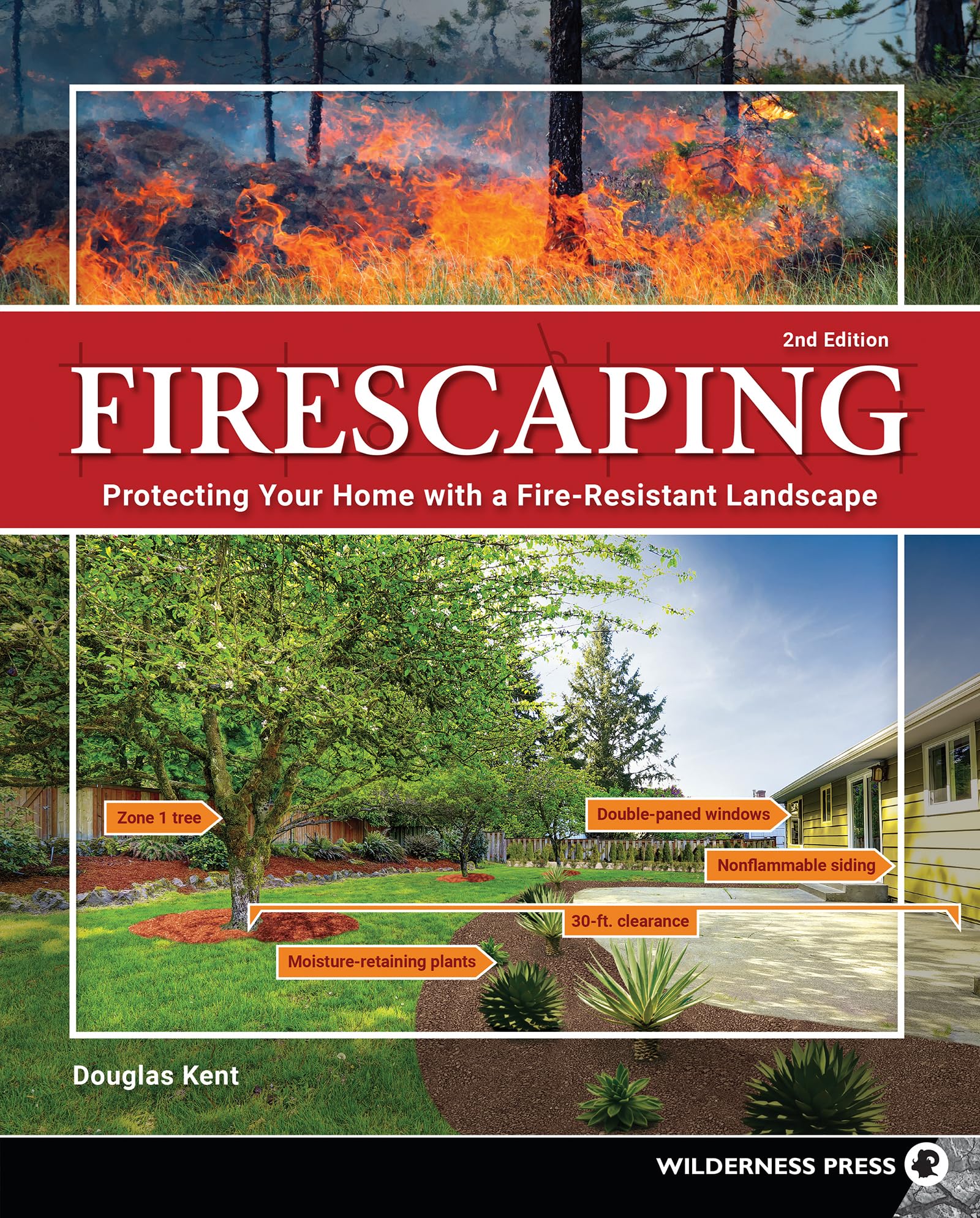



Learn the Essentials of Creating Beautiful, Fire-Resistant Properties With wildfires getting more frequent and ferocious, approximately 120 million US citizens live with the threat of being overrun. Are you one of them? If so, Firescaping helps you create a safer environment. This unique form of landscaping design keeps your property healthy, clean, and clear. Land management expert Douglas Kent shares decades of experience working in many of the nation’s most flammable areas. Get the information needed to determine your property’s degree of fire risk. Learn effective design strategies for your home and landscape, as well as key characteristics that make your propertymore accessible to firefighters. With checklists, simple instructions, and tips that truly work, this practical, hands-on guide is a valuable resource for homeowners, business owners, landscape professionals, and fire protection agencies. If you live in an area at risk, this book can help to prepare you and give you peace of mind. Douglas Kent began work on Firescaping in 1992. He lived 25 miles northwest of the Tunnel Fire, which had devoured 25 lives and 2,900 homes in the Berkeley/Oakland Hills area of California. Both frightened and inspired, Kent began to compile a guide that would help prevent others from enduring such a tragedy. In the years since, Kent has toured, worked with, and spoken to high-risk communities throughout California. He has been on the front lines of wildfires and has interviewed many survivors. With this edition of Firescaping, he uses all his years of fire experience to create a comprehensive resource that homeowners and at-risk communities nationwide can use to create more fire-resistant landscapes and structures. Kent has 27 years of soot-filled experience in firescaping, but that is far from his only credential. He started gardening in 1979 and has written six other books, has worked on hundreds of landscape projects, has helped lead four statewide gardening campaigns, and has taught at California Polytechnic University, Pomona, since 2008. THE ZONE THEORY In the middle of a murky landscape stands a lone house. Its walls are a grayish, sticky black, and the ground cover of periwinkle and iris is singed and curled but still green. All surrounding shrubs are ash. The horizon is torn by jet-black, leafless trees. Chimneys and large piles of soot are seen in the distance, the only remains of the neighbors’ houses. The scene described above accompanies almost every fire. In the midst of a charred landscape sits a single home, somehow protected from the fire that consumed all others. This chapter emphasizes the reasons why some houses are able to survive. It is a model from which all landscapes should be designed. Firescaping’s Zone Theory differs from the standard model by addressing the elements that create a beautiful and functional landscape as well as a fire-protected property. Planting for a sense of privacy or holding a hill can unintentionally create a lot of fuel. A good landscape design will not only help defend a home against the threat of fire, but will serve the unique goals of the individuals who care for it as well. The Zone Theory is perfectly suited for large properties. People who manage small lots, properties on steep slopes, and houses nestled under a grove of trees may find the model cumbersome. Chapter 10 covers slopes; Chapter 11 covers small properties; and Chapter 12 covers ridgetop and understory properties. ZONE 1: THE GARDEN ZONE/DEFENSIBLE SPACE Distance: Extends 30 feet from all sides of a house or structure. Primary goal: The garden zone/defensible space is the most important zone in this model. Without igniting, this zone must be able to withstand firebrands and intense heat, between 900°F and 1,300°F. Everybody and anybody should be able to move unencumbered and swiftly through the garden zone. Firefighters will battle a blaze within these first 30 feet. Secondary goals: The garden zone has to maintain high recreational, functional, and/or economic value to remain useful to its occupants. The ideals of beauty and privacy play a large role in determining plant selection. Fences, hedges, sheds, compost areas, and stored items, such as firewood, are common in this zone and add a lot of fuel. RECOMMENDATIONS PLANT SELECTION Plants in the garden zone must wilt and sizzle, but not ignite, when exposed to flames and heat. This means that plants in this zone will likely be broad-leaved, supple, and moist. This group is considered fire retardant. Chapter 13 (“Plant Selection and Fire Protection”) has Zone 1 plant lists for lawn alternatives, festive perennials, and accent trees. CARE AND MAINTENANCE The garden zone will consume a disproportionate amount of a landscape’s budget. And rightly so―lives are at stake within this zone. The garden zone also consumes the most water, resources, and time. The most fire-retardant plants will require irrigation and attention, more so in arid e