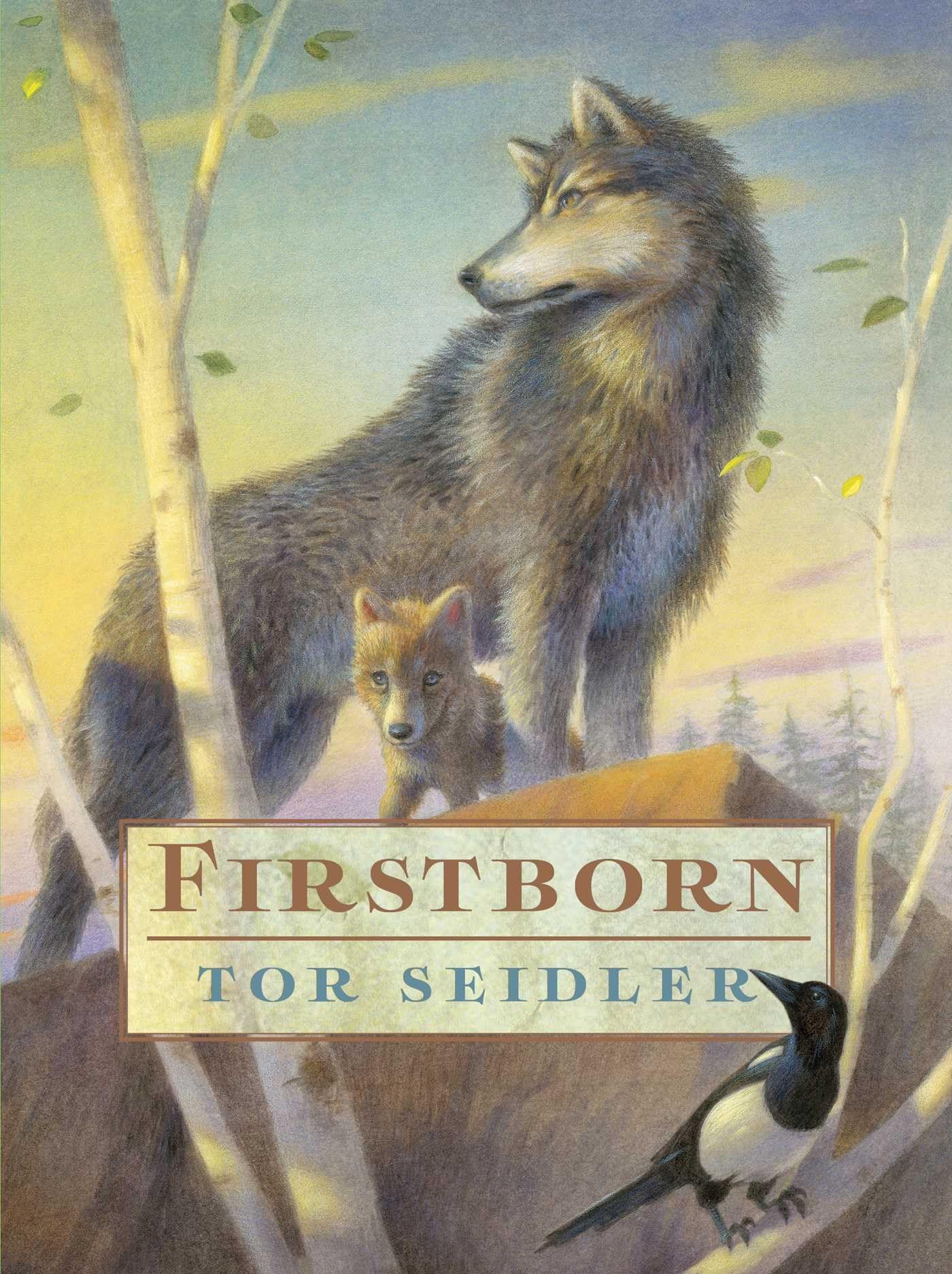



A young wolf seeks the bravery to be himself in this “rich take on the wild that quickens the pulse and fills the heart” ( Kirkus Reviews ), from the author of National Book Award Finalist Mean Margaret and The Wainscott Weasel . Wolves. Predators of the wild. Stalkers of the forests. Born into rankings and expected to live up to their roles. Blue Boy, the alpha male of his pack, is the largest wolf many have ever seen, and his dream is to have a firstborn son who will take after him in every way. But Lamar is not turning out the way his father hoped. Lamar likes to watch butterflies. He worries if his younger siblings fall behind in the hunt. He has little interest in peacocking in front of other clans. Blue Boy grows increasingly dismayed at Lamar’s lack of wolf instincts, and then Lamar does the intolerable: he becomes attracted to a coyote. While the other infractions can be begrudgingly tolerated, this one cannot, and the unity of the pack is in jeopardy. Lamar wants to make his family happy, but is doing what is expected of him worth losing the only true friend he’s ever had? Full of bite and beauty that will make you think of White Fang , then Ferdinand , this story cuts to the heart of what’s most important: being true to yourself, and being true to others. Tor Seidler is the critically acclaimed and bestselling author of more than a dozen children’s books, including Firstborn , The Wainscott Weasel , A Rat’s Tale , The Steadfast Tin Soldier , Gully’s Travel s, and most notably Mean Margaret , which was a National Book Award Finalist. He lives in New York, New York. Firstborn 1 “COME SEE, MAX!” MY MOTHER cried. “Max, come see!” My father landed on the rim of the nest and held something over me in his black beak. I’d just broken through my shell. There were several other grayish-green shells around me, all still intact. I craned my neck, grabbed the morsel out of my father’s beak, and gulped it down. “Isn’t she the most adorable little magpie in the whole world?” my mother crooned. “Cute, cute, cute! What shall we call her?” “Up to you, Mag,” said my father. “You did most of the work.” “How about Maggie?” “Perfect.” I gawped at them in disbelief. Here I was, a minute-old magpie, with a mother named Mag and a father named Max, and they were calling me Maggie! My only consolation was that they weren’t much more imaginative with my five siblings. As my brothers and sisters hatched around me, they were dubbed Mark, Marge, Mandy, Mack, and Matt. On a brighter note, I wasn’t just first out of the egg—I was also the first of the brood to make it to the edge of the nest. “What’s this place called?” I asked, looking out. “Home,” my mother said. “Isn’t it glorious, glorious, glorious?” It was quite a view, though of course I had little to compare it to. “What are those green things?” I said, peering straight down. “Branches. We’re in a pine tree.” She pointed out other pine trees, a farmhouse, a smaller structure called a henhouse, a bigger one called a barn, and two tall things with egg-shaped tops called silos. Between the silos was a glittering ribbon of blue. In the distance there were fenced-in fields, some trees with leaves instead of needles, and vast expanses of open range. “What are the four-legged beasts?” I asked. “Cattle.” “Where’s their nest?” “There,” she said, pointing her beak at the barn. The small boxlike thing on top of the barn was called a cupola, and the thing on top of that was a weather vane. The weather vane had a bird perched on it. “Is that a magpie?” I asked. “That homely old thing? He’s a crow.” Hopping onto the sunny side of the nest, my mother spread her wings and flicked her tail. “You’re the most beautiful ma in the world,” cooed my brother Matt. How many mothers did he know, I wondered—though, in fact, ours was pretty striking. Her black-and-white plumage had a hint of iridescent green, and her tail was long and graceful. She and my father devoted the next few days to bringing us lovely insects and succulent bits of carrion. As our fluff turned to feathers, our parents warned us of creatures to avoid once we left the nest. “Keep a sharp eye out for eagles and foxes.” “Watch out for hawks and coyotes.” “Foxes and housecats.” “Coyotes and rattlesnakes and eagles.” “Did we mention foxes?” As we grew, the nest got more and more cramped, and despite the looming perils, I yearned to be free of it. But the only way out of the nest was by air, and my first attempt at flying was a disaster. If not for a well-placed bough, I’d have broken my neck. I did better on my second try, however, and by the time I was a month old, I was giving my siblings flying lessons. Life without wings must be a bitter thing. You’d miss out on not only the freedom, but the perspective. Flying lets you see from close up or far away. You can zoom up to things and, if you don’t like the look of them, zoom away. At first I steered well clear o