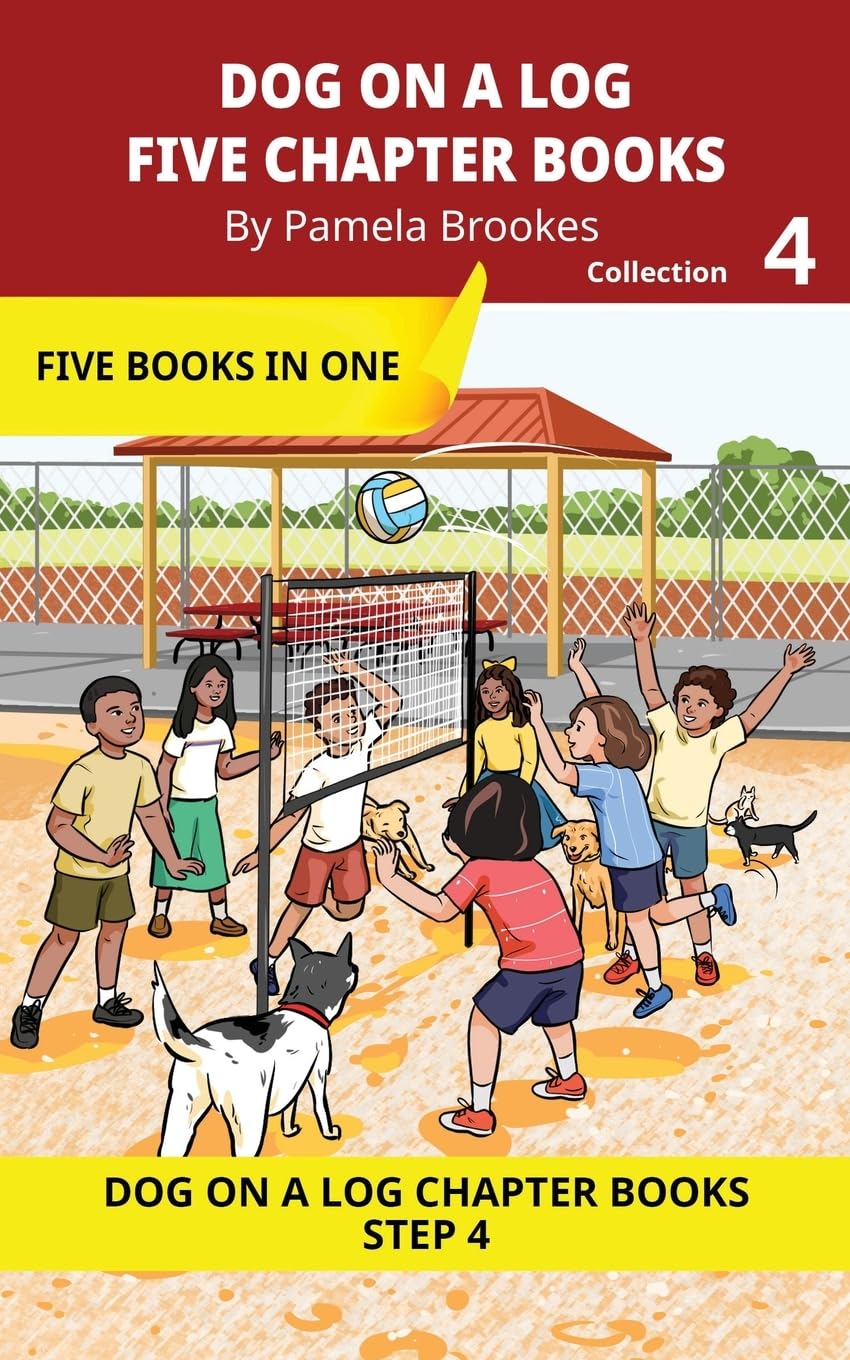
Five Chapter Books 4: Decodable Series for Students Learning to Read. For Beginning Readers and Students with Dyslexia. (Step 4 Consonant Blends) (DOG
$16.99
by Pamela Brookes



5 books in 1! Each Book has 800-1,900 words. DOG ON A LOG Books are for anyone learning to read, including people with dyslexia. You can start anywhere in the series based on your student’s reading skills. The word list below and the "Read Sample" button under the cover picture will help you determine if this book is right for your reader. About DOG ON A LOG Books: The series progresses in Steps. Each Step of books introduces a few more phonics rules. - The stories get longer and more complex with each new step of phonics. - Kids love that they get to read REAL chapter books that need a bookmark. - Students should be taught the phonics and High Frequency Words in each book prior to reading. This allows them to use their skills to sound-out and READ the words. They will have no need to guess any words. - Written with a Systematic Phonics, Orton-Gillingham, Science of Reading-based phonics sequence. - Print books optimized for dyslexia with cream-colored paper, large Verdana font, and extra spacing. - Kindle collection volumes have colored images. This is a collection of five Step 4 chapter books. Books can be purchased individually or as collection volumes. (Blue) DOG ON A LOG Get Ready! Readers help students learn the letters and blending words. - (Teal) DOG ON A LOG Get Set! Books offer more practice of three-letter words with a middle short vowel. - (Purple) DOG ON A LOG Let’s GO! Readers tell the same stories, but have fewer words than the chapter books. They help prepare kids who are not ready for the longer chapter books. - (Red) DOG ON A LOG chapter books gradually introduce more phonics rules and allow students to work towards mastery of the phonics skills. For additional information on using this series, see DOG ON A LOG's “ Teach Reading With Decodable Books." Information on printable activities is provided in each book. Use this word list to help you decide where in the series your child should start. DOG ON A LOG "WHAT STEP SHOULD WE START WITH?" WORD LIST Have your child read the following words. If they cannot read every word in a Step, that is probably the step they should start with. For some kids, you may want to start at an earlier Step so they can build confidence in their reading ability. IF YOUR CHILD IS NOT READY FOR GET READY! READERS Check out the DOG ON A LOG Parent and Teacher Guide: --Prepare For Reading (Activities for Pre-Readers) Get Ready! Or Get Set! Books jet, zap, pod, kit, rug, bin, hem Step 1 chin, mash, sock, sub, cat, that, Dan’s Step 2 less, bats, tell, mall, chips, whiff, falls Step 3 bangs, dank, honk, pings, chunk, sink, gong, rungs Step 4 silk, fluff, smash, krill, drop, slim, whisk Step 5 hunch, crate, rake, tote, inch, mote, lime Step 6 child, molts, fold, hind, jolt, post, colds Step 7 strive, scrape, splint, twists, crunch, prints, blend Step 8 finish, denim, within, bathtub, sunset, medic, habit Step 9 hundred, goldfinch, tree, wheat, inhale, play, Joe Step 10 be, remake, spry, repeat, silo, sometime, pinwheel Step 11 far, north, spire, turn, inhabit, calculate, Wyoming Check out our books for Parents and Teachers: --Teaching a Struggling Reader: One Mom’s Experience with Dyslexia --Prepare For Reading (Activities for Pre-Readers) Teaching Letters & Sounding-Out Words The Manual for Using Get Ready! Readers --Learn to Read (Letters Make Words) Teaching Phonics and Reading --Teach Reading with Decodable Books Lynne E. Jaffee, PHD, co-author: Woodcock-Johnson IV: Reports, Recommendations, and Strategies (2016) , and Comprehensive Evaluations: Case Reports for Psychologists, Diagnosticians, and Special Educators (2011): In the 45 years that I have been teaching students with dyslexia, I'm always looking for reading material. Pamela Brookes has created DOG ON A LOG Chapter Books that follow an incremental, phonics-based pattern and work well with Orton-Gillingham based programs. Ms. Brookes' books will be a great asset to educational therapists, parents, and special education teachers in their work with children and adults with dyslexia. My child needed an ongoing supply of systematic, decodable phonics books that can be used with an Orton Gillingham or Science of Reading approach. Finding such books that provided enough reading practice for each Step of phonics proved to be a nearly impossible task so I decided to write them myself. I knew other families were as desperate as I had been for this type of series so I decided to publish them.My daughter's tutors helped me learn about evidence-based reading instruction and have taught me so much about effective methods of reading instruction.DOG ON A LOG Books can be used for any new reader. My message to parents of struggling readers: There was a time when I did not think my daughter with dyslexia would learn to read. Now she reads better than most American adults. It took years, but with good instruction, a lot of hard