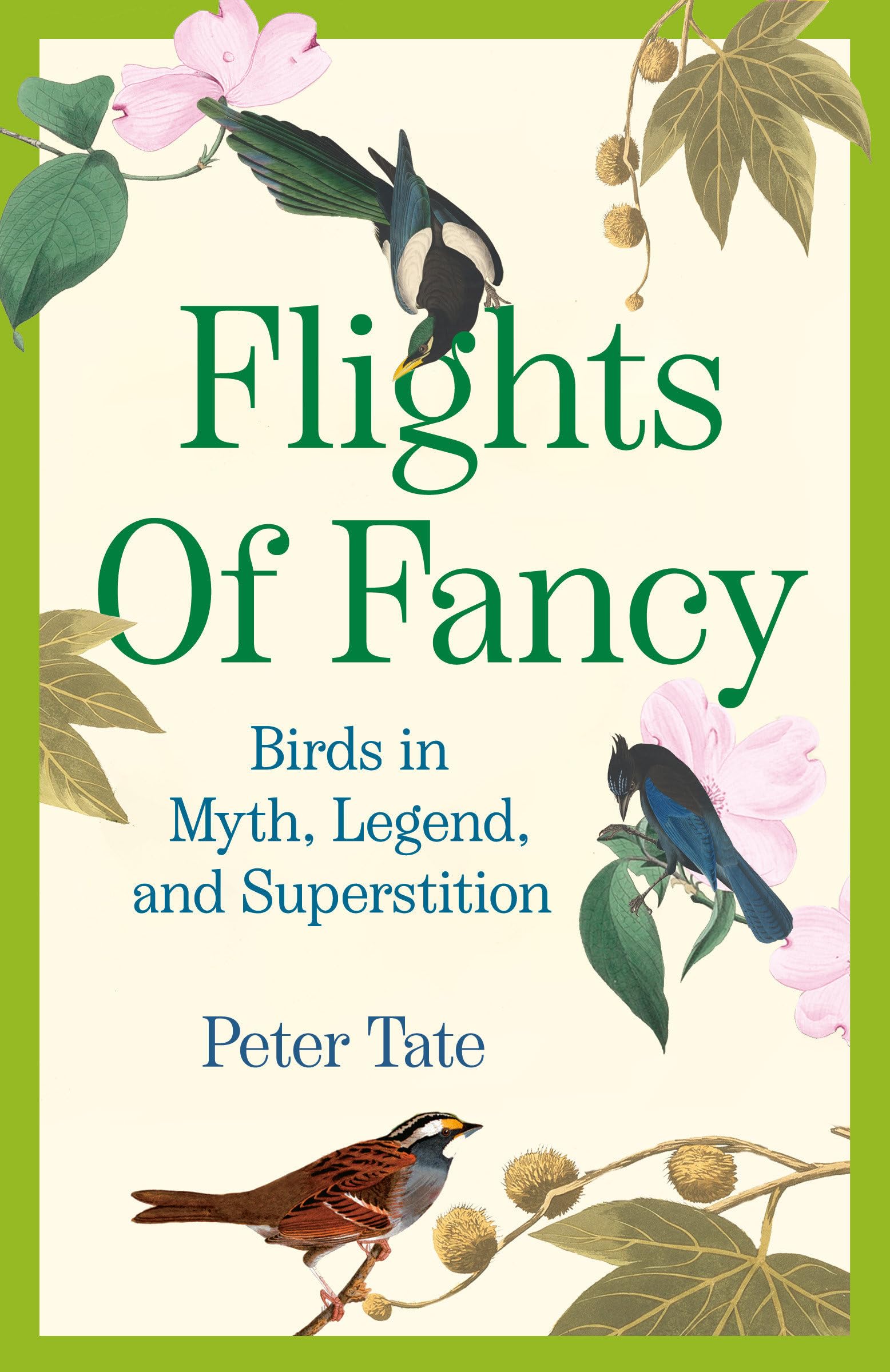



Perfect for bird-watchers, a thoughtfully curated collection of ancient myths, classic adages, and fascinating stories from around the world about thirty species of birds From the significance of the first cuckoo to rhymes about magpies, an astonishingly large and varied body of folklore has grown up around birds. They can be found in all parts of the world, such as the story of Yorimoto in Japan, who hid from his enemies in a tree and was protected by two doves, and the strange tale of Gertrude in Germany, who was turned into a woodpecker as punishment for her miserliness. What they all show is just how fascinated mankind has always been by birds. They are, after all, creatures that occupy a very particular and unusual place in our lives. In Flights of Fancy , renowned ornithology writer Peter Tate collects his favorite stories, folktales, and proverbs about thirty species of birds, including: • Cranes: “ Don’t promise the crane the sky, but give the titmouse in your hand.” (Russian proverb) • Magpies : “ One for sorrow, two for joy . . .” (Traditional English rhyme) • Owls : “The owl shrieked at thy birth, an evil sign.” (Shakespeare, Henry VI ) • Peacocks : “The peacock is ashamed of its large black feet.” (Medieval Persian tradition) • Ravens : “When the raven tried to bring fire to the world, ash turned its feathers black.” (Cherokee legend) • Swans : “Sewing a swan’s feather into your husband’s pillow will keep him faithful.” (British superstition) The perfect gift for every bird-watcher, nature lover, or mythology enthusiast, Flights of Fancy celebrates the storied beliefs about these magnificent creatures. “Will intrigue bird-watchers and nature lovers.” — Booklist Peter Tate published several books on ornithology. In Flights of Fancy , he collected the stories that most intrigued him over a lifetime of study. Tate lived in England. Blackbird (Turdus merula) A rather plump species of thrush with very obvious differences between males and females. The male blackbird lives up to its name and has black feathers with a bright orange bill, while the female is mainly dark brown. Related to what in the US are called robins (Turdus migratorius), it is one of Northern Europe's most familiar birds, and can be found in most gardens and parks. Its song is clear, beautiful and distinctive, making blackbirds one of the most recognizable songsters. Like so many birds with a black plumage, blackbirds were once thought to have been white. In Brescia in Italy, for example, it was believed that the blackbird changed colour as a result of a cruel and cold winter. Forced to take shelter from the wind and snow, the bird sought refuge in a chimney, where it became blackened by the soot. In commemoration, the last two days of January and the first of February became known as i giorni della merla, 'the blackbird days'. White blackbirds can also be found in ancient Greek tradition: Aristotle describes them in his History of Animals as living on Mount Cyllene in Arcadia. These mythical birds were supposed to have a wider range of notes than other blackbirds and to appear only by moonlight. An alternative legend was recorded by the nineteenth-century French author Eugene Rolland. It tells how a white blackbird, while lurking in a thicket, was greatly astonished to discover a magpie hiding diamonds, jewellery and golden coins in her nest. Upon asking the magpie how he too might acquire such a treasure, he received the reply: 'You must seek out in the bowels of the earth the palace of the Prince of Riches, offer him your services and he will allow you to carry off as much treasure as you can carry in your beak. You will have to pass through many caverns each more overflowing with riches than the last, but you must particularly remember not to touch a single thing until you have actually seen the Prince himself.' The blackbird immediately went to the entrance of the subterranean passage to discover the treasure. The first cavern he had to pass through was lined with silver, but he managed to keep the magpie's advice in mind and continue on his way. The second cavern was ablaze with gold, and though the blackbird tried to master himself, it proved too much for him and he plunged his beak into the glittering dust with which the floor was strewn. Rolland continues: Immediately there appeared a terrible demon vomiting fire and smoke who rushed up to the wretched bird with such lightning speed that the bird escaped with the greatest difficulty. But alas the thick smoke had besmirched forever his white plumage and he became as now, quite black with the exception of his bill which still preserves the colour of the gold he was so anxious to carry off. This legend also sought to account for the piercing cries of terror uttered by a blackbird when startled: it claims the bird is expecting to be attacked by another terrible demon. Blackbirds tend not to play much of a part in religious stories (unlike, f