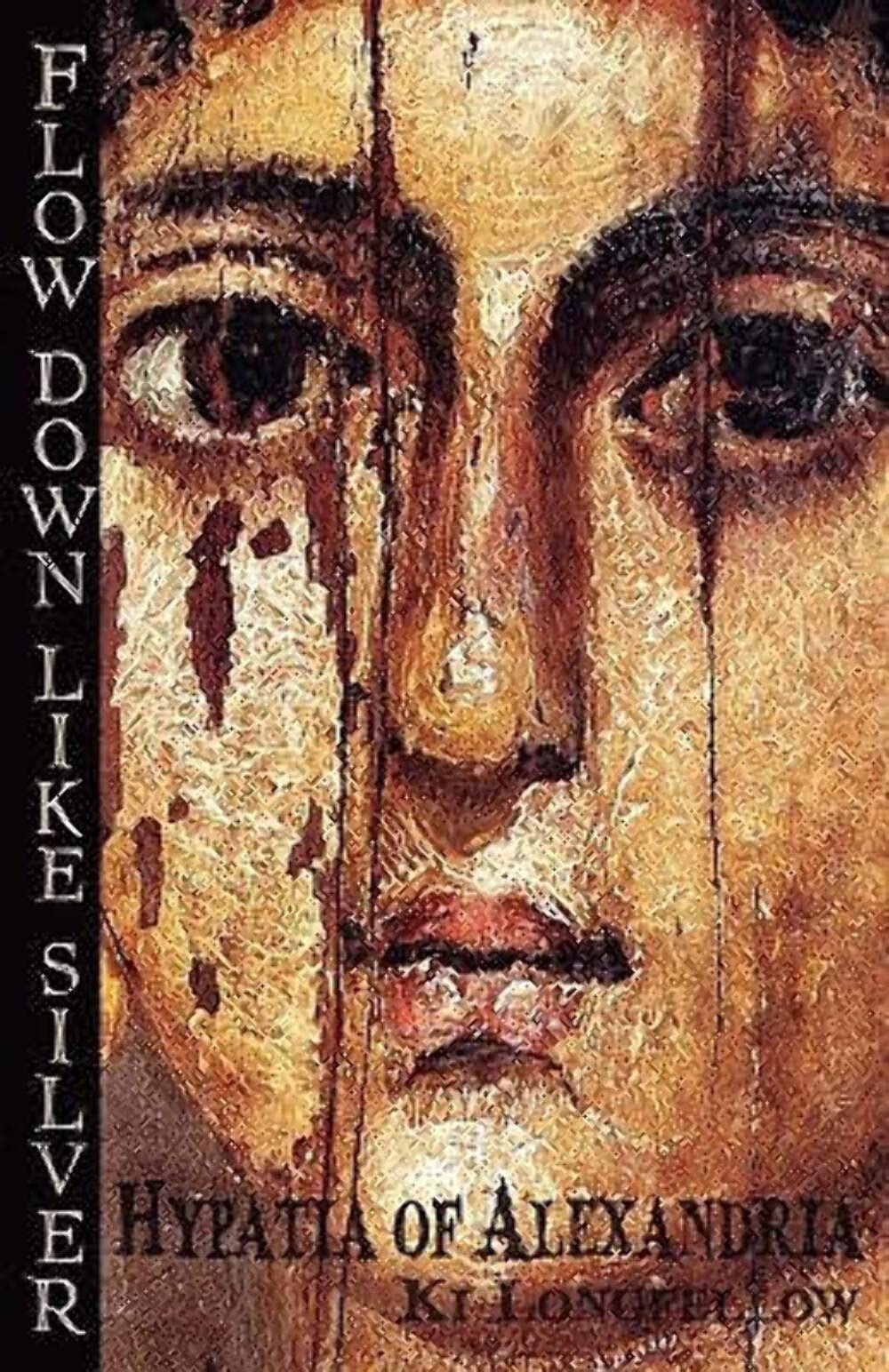



Ki Longfellow, author of the acclaimed The Secret Magdalene, has now written the astonishing life of Hypatia, famed throughout the Mediterranean world, a beauty and a genius, yet for 17 centuries ignored by history.As the Roman Empire fights for its life and emerging Christianity fights for our souls, Hypatia is the last great voice of reason. A woman of sublime intelligence, Hypatia ranks above not only all women, but all men.Hypatia dazzled the world with her brilliance, was courted by men of every persuasion and was considered the leading philosopher and mathematician of her age...yet her mathematics, her inventions, the very story of her life in all its epic and dramatic intensity, has gone untold.A heart-breaking love story, an heroic struggle against intolerance, a tragedy and a triumph, Hypatia walks through these pages fully realized while all around her Egypt's Alexandria, the New York City of its day, strives to remain a beacon of light in a darkening world. "She has a very special bond with her subjects, almost as if she calls them back from the dead to hear and write their stories...the words are so precise and so vivid." --Michelle Moran, author of "Nefertiti," "Cleopatra's Daughter," & "The Heretic Queen" "Put down the book and was shocked to find myself at home--so magical to be transported back to hear, see, feel, taste and smell Alexandria as if I were there. Beautifully orchestrated. Had me on the edge of my seat." --Nancy Savoca, Sundance Grand Jury prize award winning filmmaker "A feast for the spirit and the mind, set in the dying flames of the ancient world." --Margaret George, author of “The Memoirs of Cleopatra,” and “Mary, called Magdalene.” Hypatia was a privileged Greek born and raised in Alexandria, Egypt, the daughter of the city's leading mathematician, Theon of Alexandria. She was not merely bright or gifted, she was a mathematical and philosophical genius and her work was once found in every library in the ancient world. Immediately after her early death, every book she wrote or commented on was made to "disappear." If there were works written about her during her lifetime or soon after, they also disappeared. To know anything at all about Hypatia of Alexandria, today's scholars depend on the efforts of other men writing long after her death, and none of these used original source material simply because there wasn't any...or more accurately, there was very little and none of it in her own hand. Lacking anything else, older "scholars" resorted to hearsay and tradition and the ardent attempts of Christian apologists to whitewash what was very black indeed. Only her most devoted student left us first hand information in the form of letters to his beloved teacher, Hypatia. In them we see a Bishop of the Christian Church besotted with a Hellenistic mind, perhaps even a Hellenistic body. His need for her attention and respect overflows his pages. His complaints ("...you don't answer, you leave me alone, bereft, lost without the sound of your exalted voice or the sight of your exalted words") tells us that her time was filled with teaching and studying and the constant visits of important men whose first task upon reaching Alexandria was an audience with Hypatia. We have what we think of as "facts." Virtually all of these facts are taken from writers working with the Suda, a 10th century encyclopedic lexicon, much of which was culled from Christian sources. To imagine that a learned teacher of ancient mysteries was distainful of the delights of the body stems from those who lived in a later time where virtue meant chastity. In Hypatia's time chastity was rare and laughable. Those who practiced it were the small but growing number of desert ascetics who believed that abusing and neglecting the body pleased their god. But one thing is true and undeniable: Hypatia was murdered. Brutally, publically, and shamefully. Hypatia wore a philosoper's robe as a male would. She drove her own chariot, sailed her own boat, rode blooded horses alone out into Alexandria's encircling deserts. She stood before thousands when she spoke, and being both young and lovely, knew many men. Before she was twenty, she surpassed her famous father in mathematics and astronomy. To some she was a witch, deserving of her fate. To some, her death signaled the end of Hellenism, of reason, of asking questions and searching for answers. To some, she was criminally put to death at the hands of fanatical Christians and their jealous bishop. To some, her murder was mere bad luck: wrong place, wrong time. And some wish to believe she was the last of the "pure" scientists. Whatever pure science is, it did not exist in 400 CE. Mathematics mingled with divination, cosmology and astronomy went hand in hand with astrology. Alchemy was a secret "science" that did indeed work with the transmutation of metals, but its deeper truer purpose was the transmutation of the spirit. In the mystery teachings, and Hypatia was