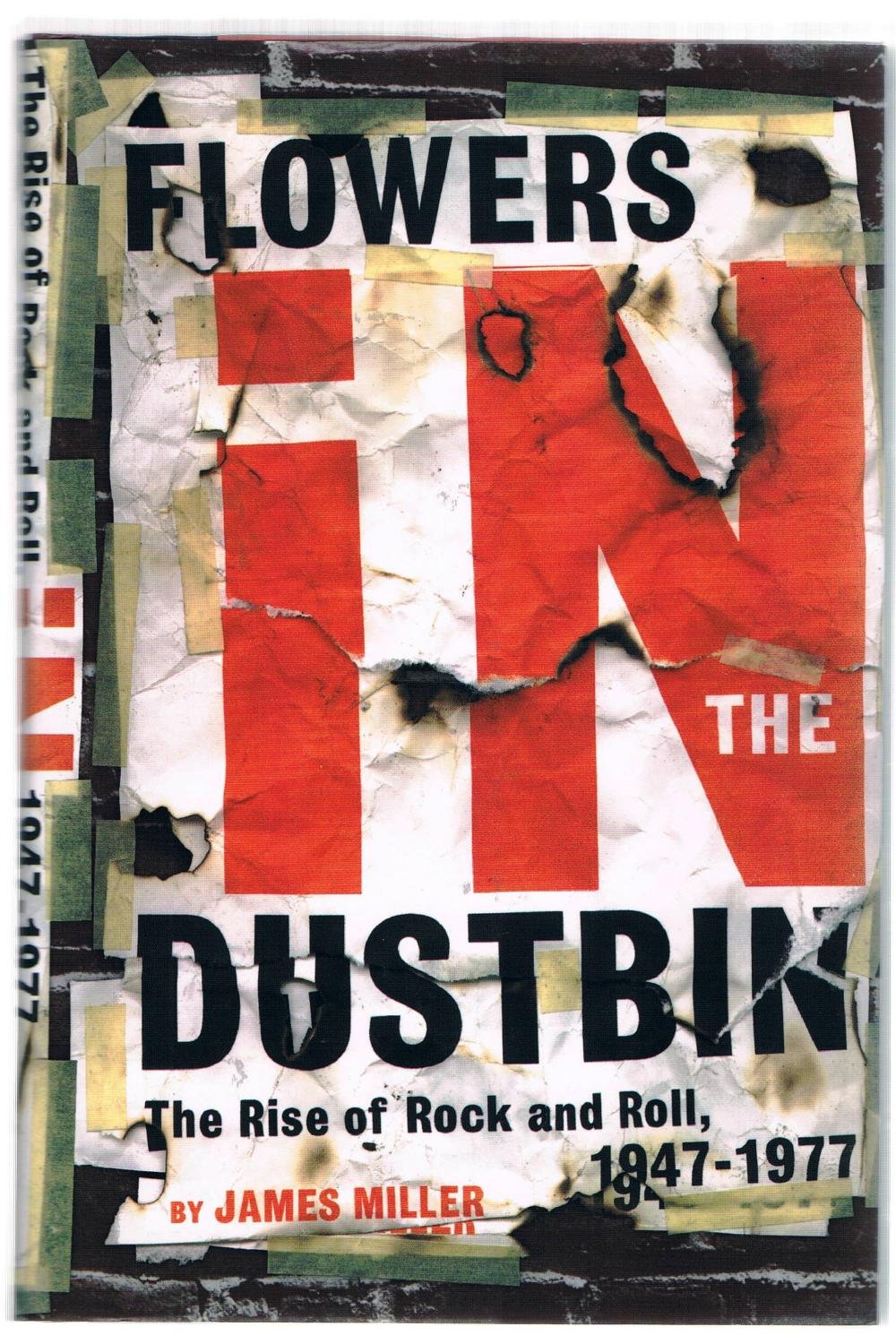



Follows the twenty-five-year evolution of rock and roll, from its tempestuous birth in the 1950s, through its maturation in the 1960s, to its movement towards a cruder form in the 1970s with the advent of punk It appears that Flowers in the Dustbin author James Miller has just about had his fill of rock & roll. After chronicling a succession of triumphs in the development of the genre and its allied ancestors and offspring, here the veteran music scribe and editor of the superb first edition of The Rolling Stone Illustrated History of Rock & Roll surveys an environment tainted by "the Muzak of the Millennium" and "artifacts of stunning ugliness" (exemplified by Marilyn Manson and Wu-Tang Clan). Miller ponders, "What if rock and roll, as it had evolved from Presley to U2, had destroyed the very musical sources of its own vitality?" The erudite yet eminently readable author doesn't answer his query in these pages, but he does prompt a longing for a time when pop culture moved too fast and impulsively to be processed and packaged. Miller makes it his mission to tell the story of the "explosive growth" of rock & roll by recounting creative and commercial breakthroughs, dating from Wynonie Harris's 1947 recording of the jump-blues hit "Good Rockin' Tonight" through the last-gasp mutiny of the Sex Pistols and the death of Elvis Presley in 1977. In between, the development of top-40 radio begets the payola scandal of the '50s, Norman Mailer's "white Negro" becomes the model in a line of ever-more-self-conscious mavericks, and the 1960s trinity of the Beatles, the Rolling Stones, and Bob Dylan pile remarkable musical and lyrical innovations atop one another like gifted children eager for attention. Once rock had reached its zenith, from the author's perspective, it didn't so much crumble as settle into regurgitated mush. That Miller is able to chronicle these dour developments in such an involving manner is testimony to his talent as a writer and historian, and to the thrill of rock & roll when it's right. --Steven Stolder The author, a historian and former pop music critic for Newsweek, explores the cultural underpinnings of Fifties and Sixties rock'n'roll. In dozens of brief chapters, he identifies turning points in rock history: the rise of jump blues, the introduction of Top 40 radio, Alan Freed's rock'n'roll dances, Dick Clark's American Bandstand, and the payola scandal. Miller pays special attention to Elvis Presley and the Beatles, rehashing such oft-told tales as the flurry over Beatlemania, Elvis's first appearance on the Ed Sullivan Show, and his death in 1977. Despite his claim to have written a social history of rock'n'roll, Miller only superficially links rock events to larger forces in American culture. He ignores entire musical genresAthe Beach Boys and the California sound, soul music, funk, heavy metal, and fusionAand acts as if rock reached a creative dead end after the 1960s. The result is a fast-moving, well-written, entertaining, but superficial and incomplete account that will appeal to a popular audience unfamiliar with rock'n'roll. -ADavid P. Szatmary, Univ. of Washington, Seattle Copyright 1999 Reed Business Information, Inc. Name authority hounds, take note. Behind the author's neutral monicker is the guy who edited The Rolling Stone Illustrated History of Rock and Roll . That's right, kids; this is another rock history from one of the (now) graybeards who created rock journalism. It bulges with overreaching cultural references, such as "In the Spring of 1968, the world was burning . . ." Some pronouncements are, perhaps, arbitrary, and the narrative ends in 1977, when, Miller asserts, rock became a "finished cultural form--a more or less fixed repertoire." Other remarks seem obscure for obscurity's sake, such as the reference to "the London-based bhangra groups currently fusing Punjabi folk music with American Sixties funk" (come again?). Stylistic and cosmic quibbles aside, Miller makes fine, thoughtful rock history by combining "research into contemporary sources with an analysis of . . . essential issues, informed by a quarter century of experience working inside the music business." He is best dissecting such events as the Jean-Luc Godard^-Rolling Stones film project that yielded both Sympathy for the Devil and One plus One and the first meeting of the Beatles and Bob Dylan. A strong, professional effort with only a modicum of that crazy old RS Sturm und Drang. Mike Tribby In his monumental account of popular music, Miller, a music-journalist-turned-educator (Political Science/New School; Democracy Is in the Streets, 1987, etc.), ties together several intellectual and cultural strandsNorman Mailers myth of the White Negro, Tom Wolfes radical chic, H.G. Koenigsbergers theories on music and religion, Wagners significance to Bismarckian Germanyall without bleaching out the raw essence of the music. Beginning with what he calls the first rock 'n roll record, Good Rockin To