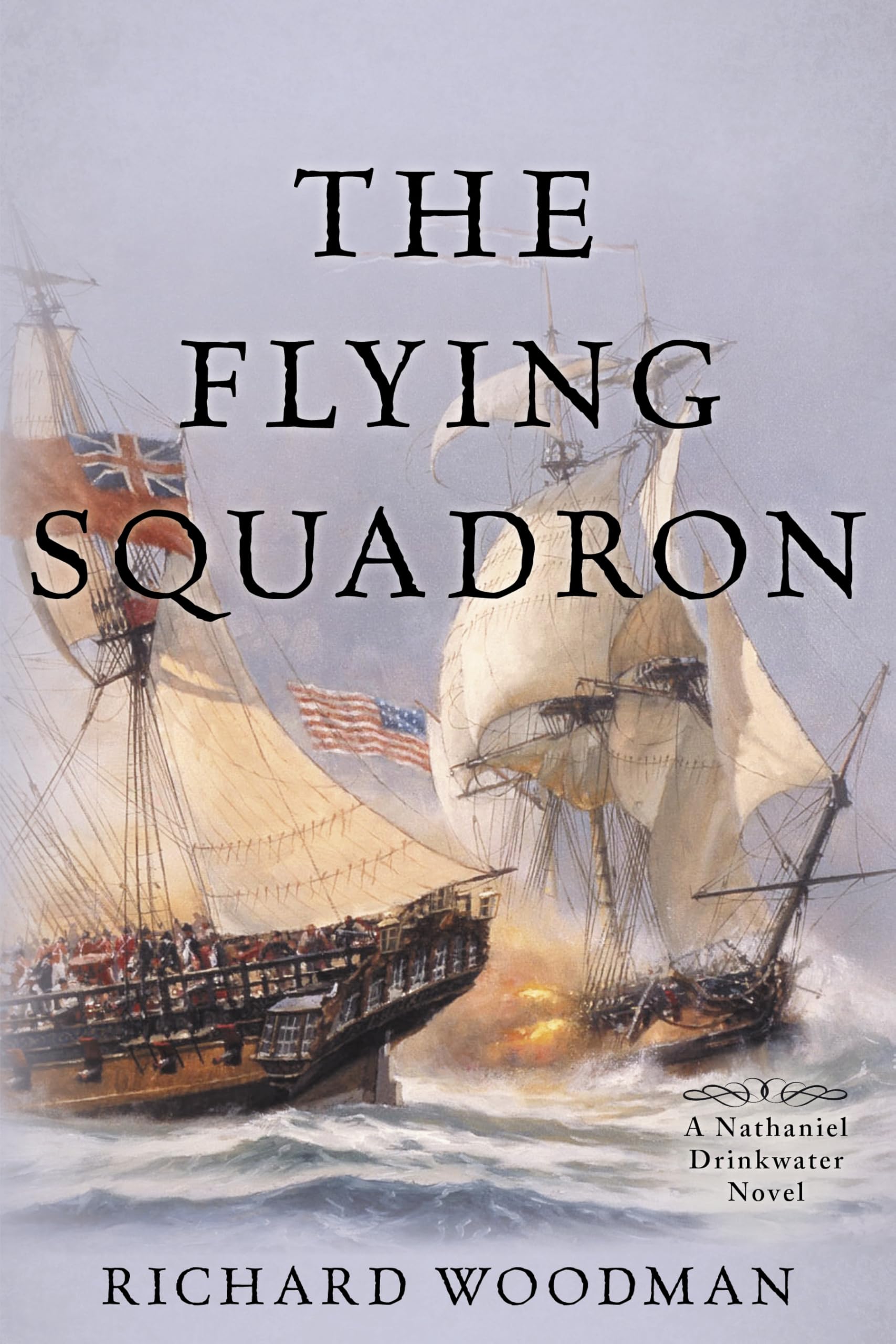



It is 1811 and Napoleon’s French Empire dominates Europe. Desperate to stem the encroaching French tide and avert war with the emerging power of the United States, the Royal Navy orders Captain Nathaniel Drinkwater to the Chesapeake Bay to heal the rift between London and Washington. On the banks of the Potomac, Drinkwater discovers the first clue to a plan by which the U.S. could defeat the Royal Navy, collapse the British government, and utterly destroy the British cause. Drinkwater takes command of a squadron sent against the Americans in the South Atlantic, audaciously risking his reputation and, in a climactic confrontation, coming face-to-face with the horror of an interminable war. Packed with exciting incident worthy of wide appeal to those who love thrilling nautical encounters and the sea. ― Nautical Magazine There is no doubt that Nathaniel Drinkwater rates up there with the best of the nautical world. ― Midwest Book Review Rich in detail, historically accurate, and displaying a masterly knowledge of the technical aspects of ships under sail, Woodman's novel is comparable to sea fiction by masters such as C.S. Forester and Alexander Kent in its evocation of the past age of wooden ships and iron men. Highly recommended for public libraries. ― Library Journal Those looking for high seas action and historical intrigue are in luck . . . ― Publishers Weekly Well written and exciting. ― Latitudes & Attitudes Woodman knows his ships and the sea and is a craftsman of great ability. ― Guernsey Evening Press Brilliantly told . . . the characters are real and lively, the language similar; but above all it is a convincing and compulsive seafaring story. ― Oxford Times Action to the bone, no romantic bilge-water. ― Observer . . . for all who like to read about naval action in the 19th century, told with gusto and bravura. ― Publishing News Captain Richard Martin Woodman retired in 1997 from a 37-year nautical career. Woodman's Nathaniel Drinkwater series is often compared to the work of the late Patrick O'Brian. Woodman is the author of some two dozen nautical novels, as well as several nonfiction books. Unlike many other modern naval historical novelists, such as C.S. Forester or O'Brian, he has served afloat. He went to sea at the age of sixteen as an indentured midshipman and spent eleven years in command. His experience ranges from cargo-liners to ocean weather ships and specialist support vessels to yachts, square-riggers, and trawlers. Said Lloyd's List of his work: "As always, Richard Woodman's story is closely based on actual historical events. All this we have come to expect—and he adds that special ambience of colourful credibility which makes his nautical novels such rattling good reads." Captain Nathaniel Drinkwater hauled himself up the companionway against the heel of the ship and stepped on to the quarterdeck. Clapping one hand to his hat he took a quick reef in his billowing cloak with the other and made his way into the partial shelter of the mizzen rigging. 'Morning, sir.' The third lieutenant approached, touched the fore-cock of his hat and added, quite unnecessarily, 'A stiff breeze, sir.' 'Indeed, Mr Frey.' Drinkwater stared aloft, at the whip of the topgallant masts and the flexing of the yards. The wind had veered a touch during the night and had hauled round into the north-west quarter. He knew from the tell-tale compass in his cabin that they were making a good course, but he knew also that the shift of wind would bring bright, squally weather. The first rays of the sun breaking above the cloud banks astern of them promised just such a day. 'Let's hope we've seen the last of that damned rain and sea fret,' Drinkwater said, turning his attention forward again, where the bow swooped, courtseying to the oncoming grey seas. Two days west of the Scillies, clear of soundings and with a fine easterly wind giving them the prospect of a quick passage, the weather had turned sour on them, closed in and assailed them with a head wind and sleeting rain. 'Treacherous month, August,' Mr Wyatt the master had said obscurely. In the breaks between the rain, a thick mist permeated the ship, filling the gun and berth decks with the unmistakable stink of damp timber, bilge, fungus and human misery. The landsmen, yokels and town labourers, petty felons and vagrants swept up by either the press or the corruption of the quota system which allowed substitutes to be bought and sold like slaves, spewed up their guts and were bullied and beaten into the stations where even their puny weight was necessary to work the heavy frigate to windward. In his desperation to man the ship, Drinkwater had written to his old friend, Vice-Admiral Sir Richard White, bemoaning his situation. You have no idea the Extremities ot which we are driven in Manning the Fleet Nowadays. It matches the worst Excesses of the American War. We have every Class of Person, with hardly a Seaman amongst them and a large