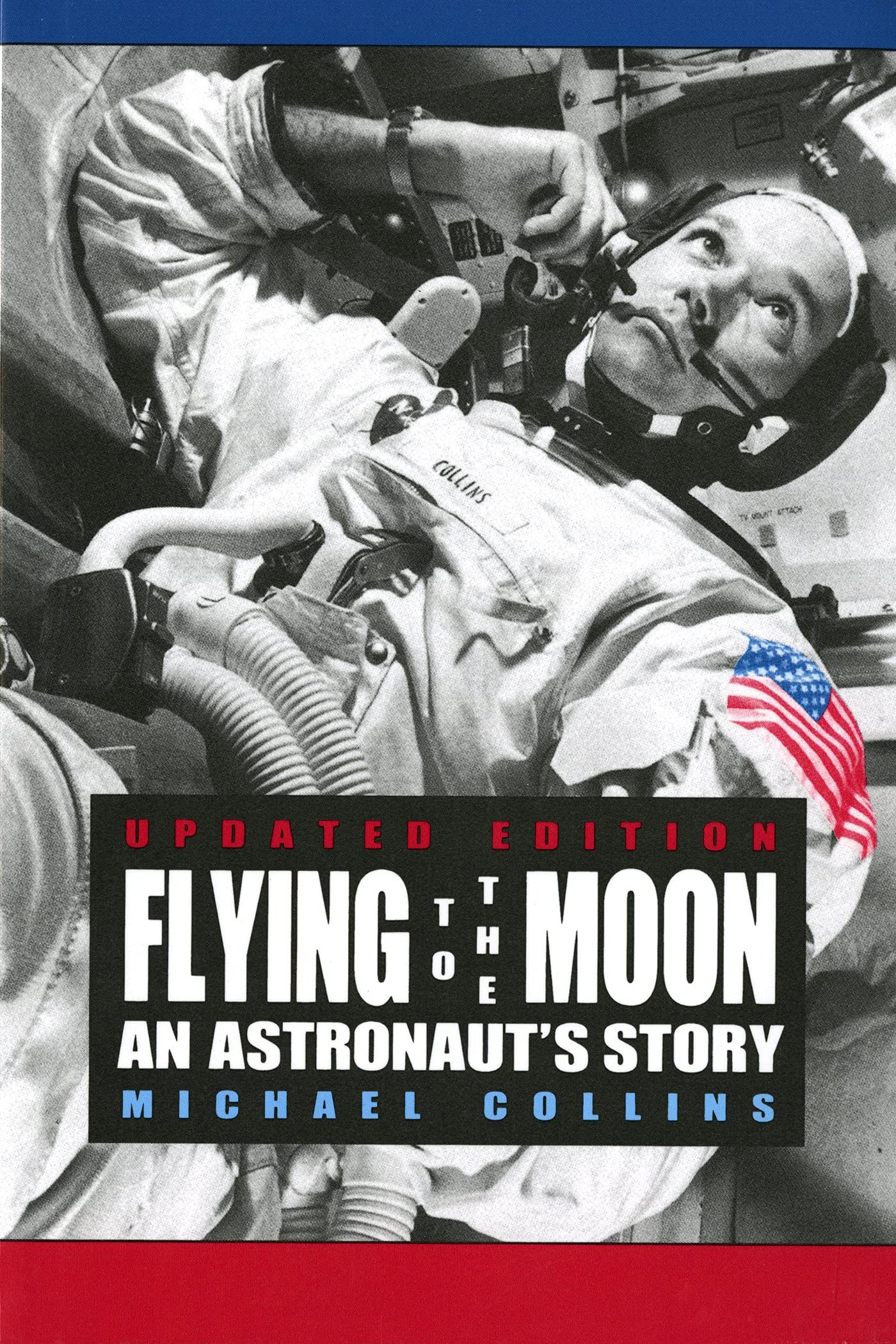



In this entrancing account, space traveler Michael Collins recalls his early days as an Air Force test pilot, his astronaut training at NASA, and his unparalleled experiences in orbit, including the Apollo 11 mission, the first manned lunar landing. The final chapter to his autobiography, revised and updated for this edition of Flying to the Moon , is an exciting and convincing argument in favor of mankind's continued exploration of our universe. "Several astronauts have written about their experiences, but none so well as Michael Collins...This is just the book to give the child whose parents made Yeager and The Right Stuff best sellers."-The Washington Post Book World “Several astronauts have written about their experiences, but none so well as Michael Collins. . .This is just the book to give the child whose parents made Yeager and The Right Stuff best sellers.” ― The Washington Post Book World Michael Collins (1930-2021) was an astronaut, one of 24 who have flown to the moon. A West Point graduate, he was an Air Force jet-fighter pilot and a test-pilot before being recruited by NASA in 1963 as a member of the third astronaut group selected for the Apollo moon project. Lieutenant Colonel Collins flew in the Gemini 10 space mission, orbiting the earth forty-three times in 1966, and piloted the Apollo 11 module for the 1969 lunar mission which put Neil Armstrong and Buzz Aldrin on the moon’s surface. After NASA, Collins became director of the Smithsonian’s National Air and Space Museum, then under secretary of the Smithsonian Institution, and vice president of the LTV Aerospace and Defense Company. He held the rank of major general when he retired from the Air Force Reserve. Collins recounted his experiences as an astronaut in the memoirs Carrying the Fire and Flying to the Moon . Flying to the Moon An Astronaut's Story By Michael Collins Farrar, Straus and Giroux (BYR) Copyright © 1994 Michael Collins All right reserved. ISBN: 9780374423568 Flying To the Moon 1 E arly on the morning of July 20, 1969, I was circling the moon with Neil Armstrong and Buzz Aldrin in our spacecraft Columbia . We had just awakened from a short sleep and were sucking lukewarm coffee out of plastic tubes and munching on bacon which had been squeezed into little cubes, like lumps of sugar. While we were eating our breakfast, we were talking on the radio with our friends in Mission Control in Houston, Texas. Today was the day Neil and Buzz were going to land on the moon, and Houston was giving them some last-minute advice. Mostly it was technical stuff about their schedule, but all of a sudden they said, " ... watch out for a lovely girlwith a big rabbit. An ancient legend says a beautiful Chinese girl called Chang-O has been living there for four thousand years. It seems she was banished to the moon because she stole the pill of immortality from her husband. You might also look for her companion, a large Chinese rabbit, who is easy to spot since he is always standing on his hind feet in the shade of a cinnamon tree." Of course, our friends in Houston were kidding, because the moon doesn't have any cinnamon trees or even any air for people or rabbits to breathe. They probably just wanted to make us laugh a little bit so we wouldn't be too nervous about landing on the moon for the first time ever.We were a little nervous that morning. We were concerned about how well our spacecraft and computers would work. We also worried about the rocket blast from Eagle , our lunar module, which might kick up a lot of dust and prevent Neil Armstrong from being able to see well enough to land. Or suppose Neil couldn't find a spot smooth and level enough to put Eagle down? As it turned out, we need not have worried about the moon, because the Eagle landed beautifully in the Sea of Tranquility, and Neil and Buzz were able to walk around and collect some rocks.The moon's surface didn't surprise us, because people had studied the moon very carefully long before Project Apollo came along. In fact, as long as there have been human beings, I suspect that they have wondered about the moon. How far away was it? How big? What was it made of? How could one visit it? It looked like a shining silver plate hanging in the sky, and on a clear night it seemed almost close enough that a cow could jump over it. But really it is far away--nearly a quarter of a million milesfrom earth. Before anyone visited the moon, scientists made very accurate measurements of its distance. How can you tell how far away something is when you haven't even been there? There are at least two ways. One is to get two people on different sides of the earth to look at the moon at the same time and measure where it appears with respect to the stars in the background; that is, which stars appear next to it. By comparing what the two observers see, it is possible to measure an angle--called parallax. Once the parallax angle and the distance between