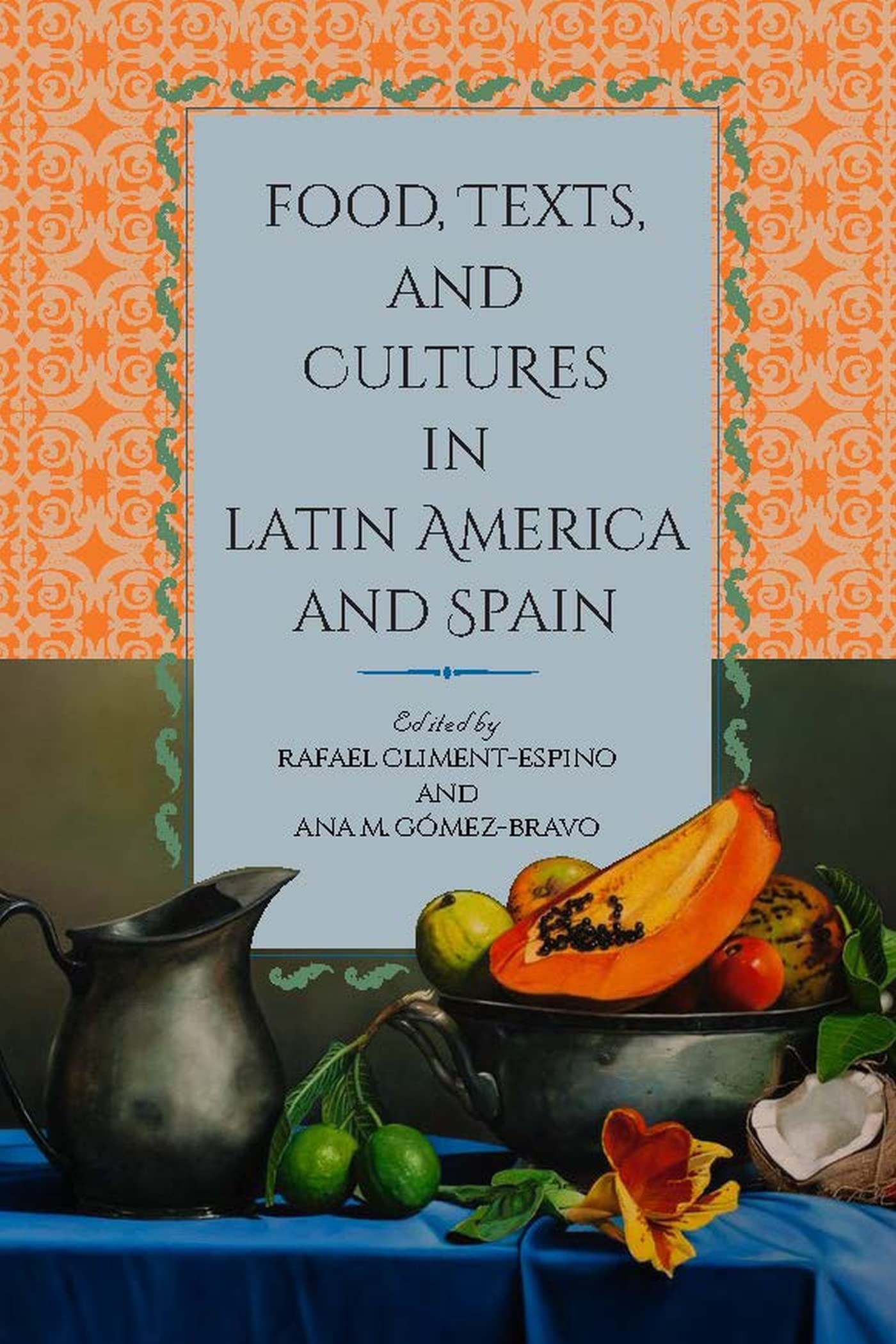



The fourteen essays in Food, Texts, and Cultures in Latin America and Spain showcase the eye-opening potential of a food lens within colonial studies, ethnic and racial studies, gender and sexuality studies, and studies of power dynamics, nationalisms and nation building, theories of embodiment, and identity. In short, Food, Texts, and Cultures in Latin America and Spain grapples with an emerging field in need of a foundational text, and does so from multiple angles. The studies span from the Middle Ages to the twenty-first century, and the contributing scholars occupy diverse fields within Latin American and Hispanic Studies. As such, their essays showcase eclectic critical and theoretical approaches to the subject of Latin American and Iberian food. Food, Texts, and Cultures in Latin America and Spain also introduces the first English-language publication of works from such award-winning scholars as Adolfo Castañón of the Mexican Academy of Language; Sergio Ramírez, winner of the 2017 Miguel de Cervantes Prize in Literature; and Carmen Simón Palmer, winner of the 2015 Julián Marías Prize for Research. Cover designer: Steve Kress Cover image: Cóctel Cubano , oil on canvas, May 2018, by Raimundo López-Silvero Martínez. Courtesy of Ga Rafael Climent-Espino is associate professor in Spanish and Portuguese at Baylor University. He is the author of Del manuscrito al libro: Materialidad del texto y crítica genética en la novela iberoamericana, 1969–1992 . Ana M. Gómez-Bravo is professor of Spanish at the University of Washington. Her most recent book is Comida y cultura en el mundo hispánico . Introduction
Food Studies in Latin American and Spanish Contexts A growing interest in food studies, particularly in relation to economic, environmental, political, and cultural issues, has translated into a large number of publications across a wide range of venues. From books such as Marion Nestle’s Food Politics or Michael Pollan’s The Omnivore’s Dilemma to the Slow Food movement, popular academic journals such as Gastronomica , Food and Foodways , and Food, Culture, and Society , and city-specific periodicals such as Edible Communities , food consumption choices are understood to have enormous impact on the environment, the socioeconomics of food access, and health and disease prevention. New scientific research on metabolic diseases (including state-of-the-art “omics” disciplines such as genomics, proteomics, and metabolomics) and other types of medical research in key areas such as nutrient needs and deficiencies or eating disorders have helped bring food studies to the fore. At the same time, fiction, mass media, and social media have increasingly been preoccupied with what people eat, along with the social, political, and environmental context of food. The consistent popularity over the last twenty years of films such as What’s Cooking (2000) and Fuera de carta ( Chef’s Special ; 2008), documentaries like King Corn (2007) and The Meaning of Food (2004), and fiction like Josep Pla’s Lo que hemos comido (2013) and Cristina Campos’s Pan de limón con semillas de amapola (2018) shows that the centrality of food remains inescapable. Food’s strong presence in social and visual media—for example, in the numerous iterations of Masterchef ; food blogs like Gastro Andalusí (Jiménez), El Comidista-El País (López Iturriaga), and México en mi cocina (Martínez); and Instagram posts—brings attention to the visual components of food commercialization, consumption, and sociability, prompting new concepts and terms like “foodography” or “food porn,” coined by Rosalind Coward. The need to combine cultural studies with those based on the biological sciences has been underscored in several collective volumes in the field of food studies, most recently from a historical approach by Jennifer J. Wallach and Michael Wise, from a literary standpoint by Rita De Maeseneer, and from an interdisciplinary perspective in the studies collected by Montserrat Piera and Ángeles Mateo del Pino and María N. Pascual Soler, all of which correctly warn against trivializing a focus on food in academic humanities research. From a curricular perspective, the rise of food studies programs in university structures and curricula clearly shows that food is a junction where diverse disciplines in the humanities, social and natural sciences, health and nutrition, and medicine can meet and begin productive dialogues and collaborations. The critical paths that lead from such intersections point to an exciting role for the humanities by creating a widening interest in interdisciplinary research and collaboration, for which scholars such as Warren Belasco have made a compelling case. As Lorna Piatti-Farnell and Donna L. Brien point out in the introduction to The Routledge Companion to Literature and Food , university courses on food fill up quickly, posing a strong pedagogical platform from which to engage students ac
Food Studies in Latin American and Spanish Contexts A growing interest in food studies, particularly in relation to economic, environmental, political, and cultural issues, has translated into a large number of publications across a wide range of venues. From books such as Marion Nestle’s Food Politics or Michael Pollan’s The Omnivore’s Dilemma to the Slow Food movement, popular academic journals such as Gastronomica , Food and Foodways , and Food, Culture, and Society , and city-specific periodicals such as Edible Communities , food consumption choices are understood to have enormous impact on the environment, the socioeconomics of food access, and health and disease prevention. New scientific research on metabolic diseases (including state-of-the-art “omics” disciplines such as genomics, proteomics, and metabolomics) and other types of medical research in key areas such as nutrient needs and deficiencies or eating disorders have helped bring food studies to the fore. At the same time, fiction, mass media, and social media have increasingly been preoccupied with what people eat, along with the social, political, and environmental context of food. The consistent popularity over the last twenty years of films such as What’s Cooking (2000) and Fuera de carta ( Chef’s Special ; 2008), documentaries like King Corn (2007) and The Meaning of Food (2004), and fiction like Josep Pla’s Lo que hemos comido (2013) and Cristina Campos’s Pan de limón con semillas de amapola (2018) shows that the centrality of food remains inescapable. Food’s strong presence in social and visual media—for example, in the numerous iterations of Masterchef ; food blogs like Gastro Andalusí (Jiménez), El Comidista-El País (López Iturriaga), and México en mi cocina (Martínez); and Instagram posts—brings attention to the visual components of food commercialization, consumption, and sociability, prompting new concepts and terms like “foodography” or “food porn,” coined by Rosalind Coward. The need to combine cultural studies with those based on the biological sciences has been underscored in several collective volumes in the field of food studies, most recently from a historical approach by Jennifer J. Wallach and Michael Wise, from a literary standpoint by Rita De Maeseneer, and from an interdisciplinary perspective in the studies collected by Montserrat Piera and Ángeles Mateo del Pino and María N. Pascual Soler, all of which correctly warn against trivializing a focus on food in academic humanities research. From a curricular perspective, the rise of food studies programs in university structures and curricula clearly shows that food is a junction where diverse disciplines in the humanities, social and natural sciences, health and nutrition, and medicine can meet and begin productive dialogues and collaborations. The critical paths that lead from such intersections point to an exciting role for the humanities by creating a widening interest in interdisciplinary research and collaboration, for which scholars such as Warren Belasco have made a compelling case. As Lorna Piatti-Farnell and Donna L. Brien point out in the introduction to The Routledge Companion to Literature and Food , university courses on food fill up quickly, posing a strong pedagogical platform from which to engage students ac