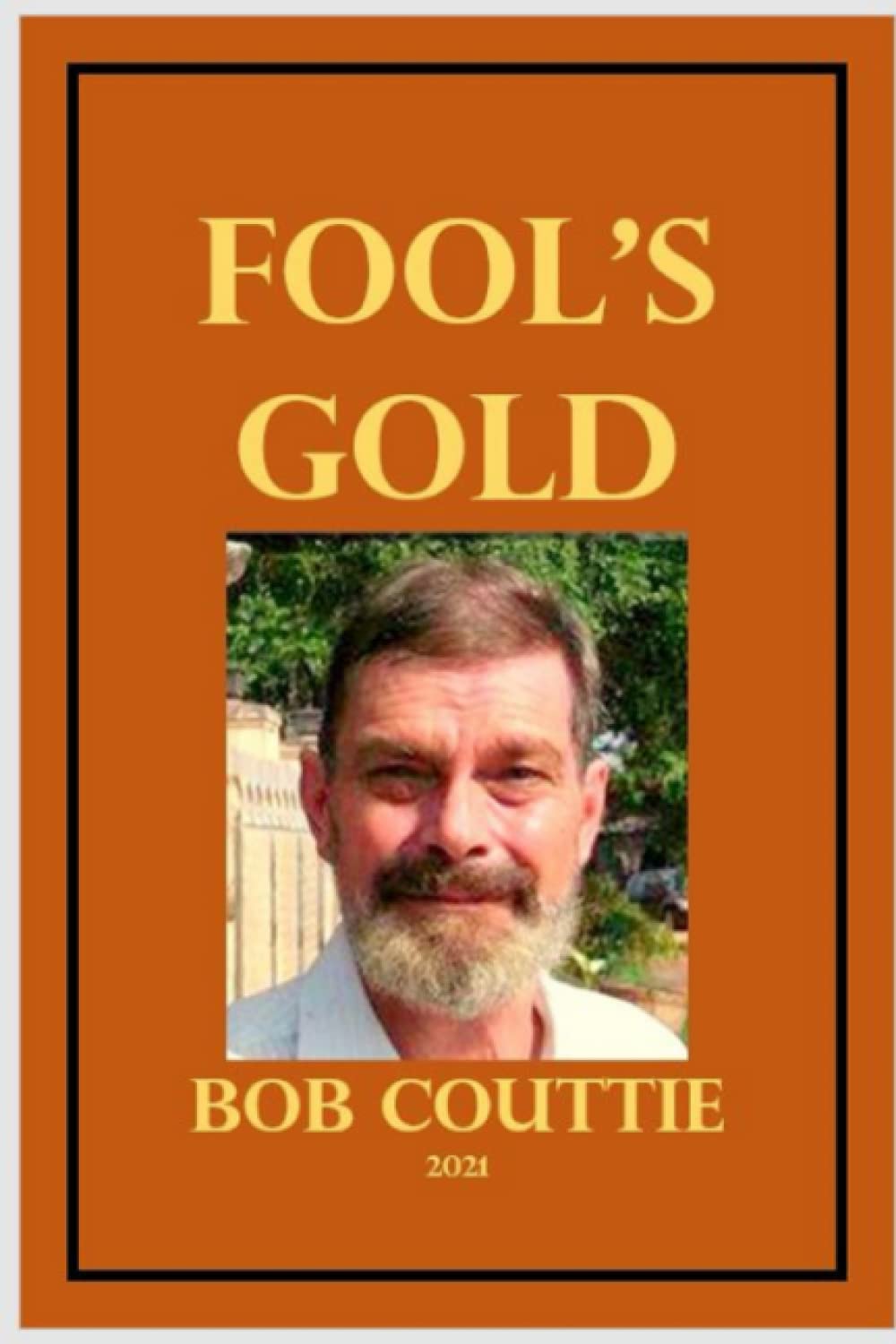



FOREWORD José Rizal once said, in a burst of anti-racist rhetoric, “Genius knows no country.” In the same vein, truth and scholarship know no nationalities. It is a fallacy to think that a Filipino writing about Philippine History but lacking the methodology and perspective is more of a scholar than a foreigner who writes about us and yet respectful of the historical method and respectful of our culture and people. And by the way, if we are against the racism of the West, don’t we realize that many times our misplaced nationalism and regionalism had made us racist as well? A good scholar is a good scholar whatever nationality he came from. Hence, I see Bob Couttie’s Fool’s Gold as a testament to Bob’s love for the Filipino people, despite being born British, in a time of so much historical distortion easily proliferated in the social media. Thus, the book is a powerful weapon, a ready reference. First, he has lived here for such a long time in various places including Subic and Balangiga (places important to the themes he has written extensively about). He is an author, actor and screenwriter who was one of those who wrote the film on the twilight of the US bases in the Philippines, Goodbye America. He is also the author of Hang The Dogs: The True Tragic History of the Balangiga Massacre. Second, Fool’s Gold was created respecting the intellectual capacity of the Filipino. The popular writer in him made him put together his prose as simple, uncomplicated and clear. It is readable for the ordinary folk who understands English and is not littered with unnecessary details some historians and historical writers, including myself, sometimes drown our works with. Yet, his arguments are fully documented and the way he wrote this book is in fact, a demonstration of how historical evidence—both primary and secondary—can be used to resolve historical controversies. Third, Fool’s Gold is superbly the most comprehensive one- volume summary of most historical myths in the Philippines, the best so far by anyone. You may see long works dealing with a myth or two or web articles and television shows listing them. I even recently gave a webinar on them. But Fool’s Gold is one comprehensive book where they are all tackled together along with the citations for the evidences to deal with them. But of course historians remind us that mere fact-checking is not enough. We do not stop at correcting errors of the past. Beyond trivia, these misconceptions and disinformation affected the attitudes of Filipinos towards many things, including about our own identity and how we view ourselves. Views about our ancestors affected how we deal with other people and how we faced our relationship with America, for example. In the end, truth is important and resolution of such historical blunders can lead us to a better understanding of ourselves. We cannot face the world if we do not know ourselves. In this work, one realizes that historical disinformation, misinformation and the so-called “fake news” is not a new phenomenon. They arise or are created to fulfill a certain need, or to express frustrations in certain period on our history. They are often pushed and proliferated by contemporary agenda and politics, and often fade away when the fad is gone. Thus Fool’s Gold is actually a message of hope that when the dust settles it is the evidence that will remain and endure. (more inside) By Michael Charleston “Xiao” B. Chua Filipino Public Historian 28 September 2020, 119th anniversary of the Battle of Balangiga Xiao Chua is a professorial lecturer at the De La Salle University Manila and is one of the most active public historians in the Philippines