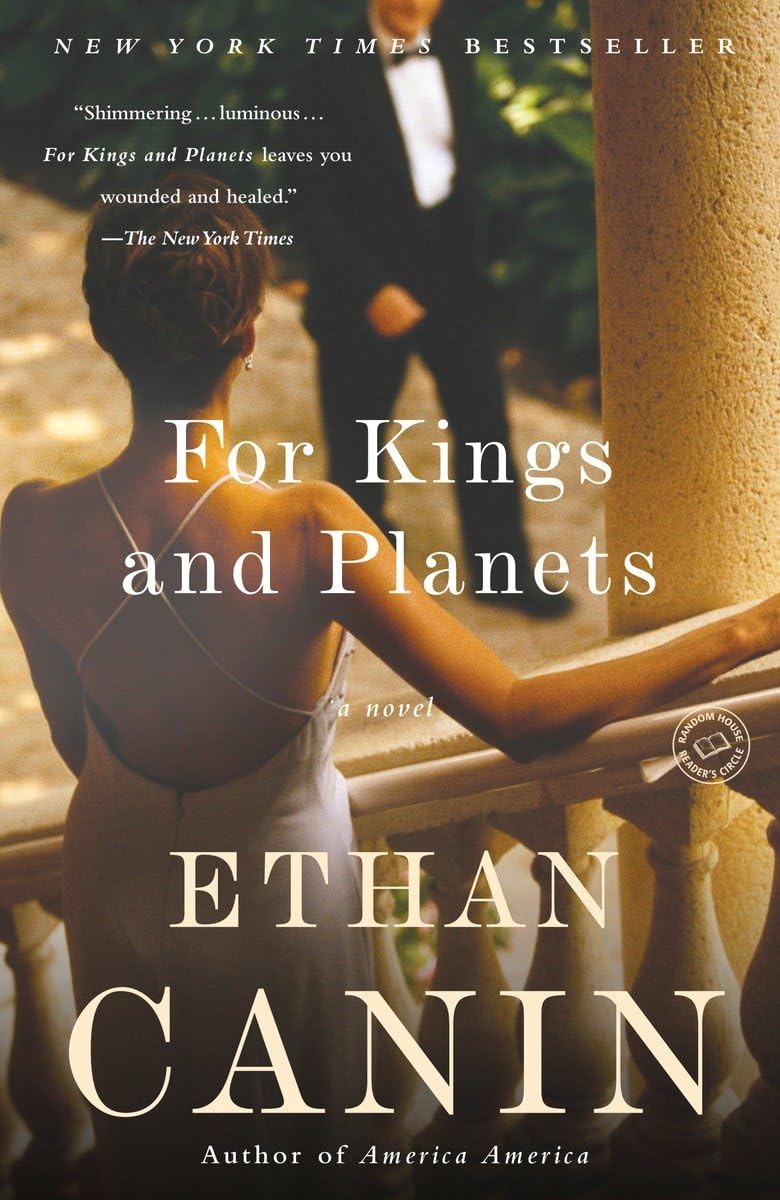



Ethan Canin, the acclaimed author of America America and The Palace Thief, is “one of the best fiction writers of his generation” (The Miami Herald). For Kings and Planets follows the lives of two young men and the woman they both love. Orno Tarcher arrives in New York City from Missouri, carrying with him the weight of his family’s small-town values. He meets Marshall Emerson, the charismatic scion of a worldly clan, a seductive and brilliant New Yorker who is revealed, as time passes, to be bent on destruction. This novel explores the conflicts of character at the heart of every life, the desire for grandeur and the lure of normalcy, and the tension between rivalry and friendship, fathers and sons, love and betrayal. “Shimmering . . . luminous . . . For Kings and Planets leaves you wounded and healed.”— New York Times “[Ethan Canin is] the most mature and accomplished novelist of his generation. For Kings and Planets stands head and shoulders above the crowd.”—Alan Cheuse, NPR’s All Things Considered “Breathtaking . . . outstanding . . . Scott Fitzgerald himself would have been honored by [Ethan Canin’s] company.”— Newsday “Brilliant . . . richly lyrical . . . an homage to the Golden Age of American Romanticism.”— San Francisco Chronicle “Masterful . . . a classic parable of the human condition.”—Publishers Weekly Ethan Canin is the author of six books, including the story collections Emperor of the Air and The Palace Thief and the novels For Kings and Planets and Carry Me Across the Water . He is on the faculty of the Iowa Writers’ Workshop and divides his time between Iowa and northern Michigan. He is also a physician. ONE I Years later, Orno Tarcher would think of his days in New York as a seduction. A seduction and a near miss, a time when his memory of the world around him--the shining stone stairwells, the taxicabs, the sea of nighttime lights--was glinting and of heroic proportion. Like a dream. He had almost been taken away from himself. That was the feeling he had, looking back. Smells and sounds: the roll and thunder of the number 1 train; the wind like a flute through the deck rafters of the Empire State Building; the waft of dope in the halls. Different girls, their lives coming back to him: hallways and slants of light. Daphne and Anne-Marie and especially Sofia. He remembered meeting Marshall Emerson on his second day at college, at dawn on the curb of 116th Street and Broadway, the air touched with a memory of heat that lingered in the barest rain. It had reminded him of home. New York: he'd driven with his parents, arriving in three days from Cook's Grange, Missouri, cabs honking and speeding by them as at last they pulled onto the West Side Highway late in the afternoon on the first day of September, 1974; the cornices of midtown skyscrapers ablaze in sunlight above his father's homburg as he inched along in the right lane. Hugging the wheel of the Chrysler like a man on a tractor. Orno was in the backseat, coming to Columbia University, the first in his family to go east for an education. He remembered his father, driving like a farmer. His mother in her flowered dress. He himself was in corduroy pants and a tie, upright in his seat with hopes of deeds and glory. That evening, after his parents left him, he wandered downstairs and sat on the dormitory steps in the warm air, eager to offer aid to anyone moving in. But three days remained before the start of registration and nobody appeared for him to help. He went for a walk in the direction of the Hudson instead, coming out at last onto the high bluffs. They reminded him of the Mississippi until at sunset the lights began to come on across the water. Streams of red and yellow on the throughways. Buildings clumped like stars. He returned to the dormitory again, still not having spoken to anyone and suddenly remembering that he was not to walk out alone after dark; he went upstairs to his room, where he read Look Homeward, Angel until he became used to the sounds of traffic and slept. Fear entered him and replaced his hope of glory, fear that he had erred badly. He remembered thinking: I am no longer among my own. The next morning he woke early, a habit from Missouri. He showered before dawn, left his hair wet, and walked down to the west gate of campus. On the park bench the guard dozed and a young boy sat unbundling newspapers. A misty rain was settling, no more than a touch of cool on his skin. In the distance he heard a garbage truck shrieking and clanging as it came to intersections, muffled when it moved behind the apartments. Then he was aware that someone was saying his name: another student, possibly his own age, in a smoking jacket. Friendly in a sly way. "Well," he said. "Did I get it?" "My name?" said Orno. "Yes you did. How'd you know?" "The book of pictures they gave us. The face book." "You're a freshman, too?" "Yes, I'm embarrassed to say." He put out his hand. "Marshall Emerson." "Orno Ta