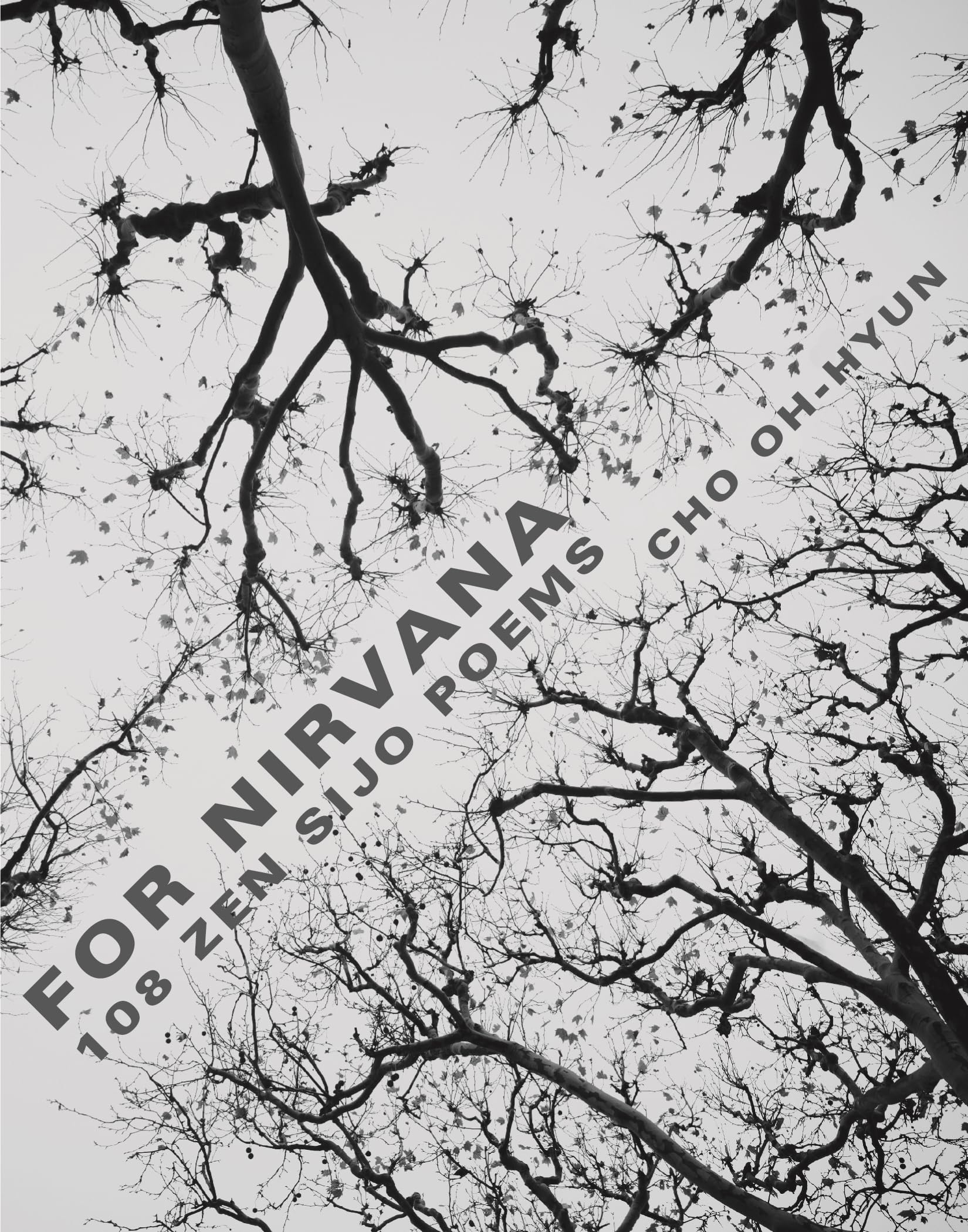



For Nirvana features exceptional examples of the poet Cho Oh-Hyun's award-winning work. Cho Oh-Hyun was born in Miryang, South Gyeongsang Province, Korea, and has lived in retreat in the mountains since becoming a novice monk at the age of seven. Writing under the Buddhist name Musan, he has composed hundreds of poems in seclusion, many in the sijo style, a relatively fixed syllabic poetic form similar to Japanese haiku and tanka. For Nirvana contains 108 Zen sijo poems (108 representing the number of klesas , or "defilements," that one must overcome to attain enlightenment). These transfixing works play with traditional religious and metaphysical themes and include a number of "story" sijo, a longer, more personal style that is one of Cho Oh-Hyun's major innovations. Kwon Youngmin, a leading scholar of sijo, provides a contextualizing introduction, and in his afterword, Heinz Insu Fenkl reflects on the unique challenges of translating the collection. In his Translator's Afterword, Heinz Insu Fenkl describes his astonishing encounter with the poems in this collection―from dream encounter with the poet, to the poems, then the poet himself. Extraordinary workings of the three-line sijo form into the spaces of Zen practice, the poems call us to see! -- David McCann, Harvard University Reading these translations of Cho Oh-hyun's Zen sijo is like shining a light on a carefully cut, many-faceted stone. The poems are concentrated, understated, and effortlessly colloquial, both immediately accessible and, paradoxically, mysterious. The Zen nature of the poems' inquiries and observations―with their allusiveness and open-endedness―bear up under many readings, defying prized Western rationality and yielding a surprisingly rich range of tones, moods, and insights. -- Elizabeth Spires, poet and author of The Wave-Maker and Now the Green Blade Rises [Cho Oh-Hyun] has created a new tradition of Korean sijo poetry. -- Choi Yearn-hong ― The Korea Times While some of the poems embrace the kind of open-ended imagery commonly associated with Buddhist poetry, Cho innovates in this volume with narrative techniques that engage the senses and the imagination. ― World Literature Today Monk Cho. . . . is not simply another Zen Buddhist, like those I found in the Korean history. Rather, he is his own Zen monk writing his own style of sijo. -- Yearn Hong Choi ― Korean Quarterly Patience here is a virtue, for the more time one spends with these poems, the more they seem to reveal, not merely about the Zen philosophy of the one who wrote them, but about the inner nature of the one who reads them as well. To simply read this collection of poems takes less than an hour. To gain all that might be gained from them would no doubt be the work of a lifetime. ― Koreana Cho Oh-Hyun is in retreat at Baekdamsa Temple at Mt. Seoraksan. The lineage holder of the Mt. Gaji school of Korean Nine Mountains Zen, he received the Cheong Chi-yong Literary Award for Distant Holy Man in 2007, and translations of his work have appeared in Asymptote , the Buddhist Poetry Review , Asia Literary Review , Azalea , and the Adirondack Review . Heinz Insu Fenkl is associate professor of English and Asian studies at SUNY New Paltz. He is the author of Memories of My Ghost Brother and is working on a translation of Yi Mun-yol's novella Meeting with My Brother .