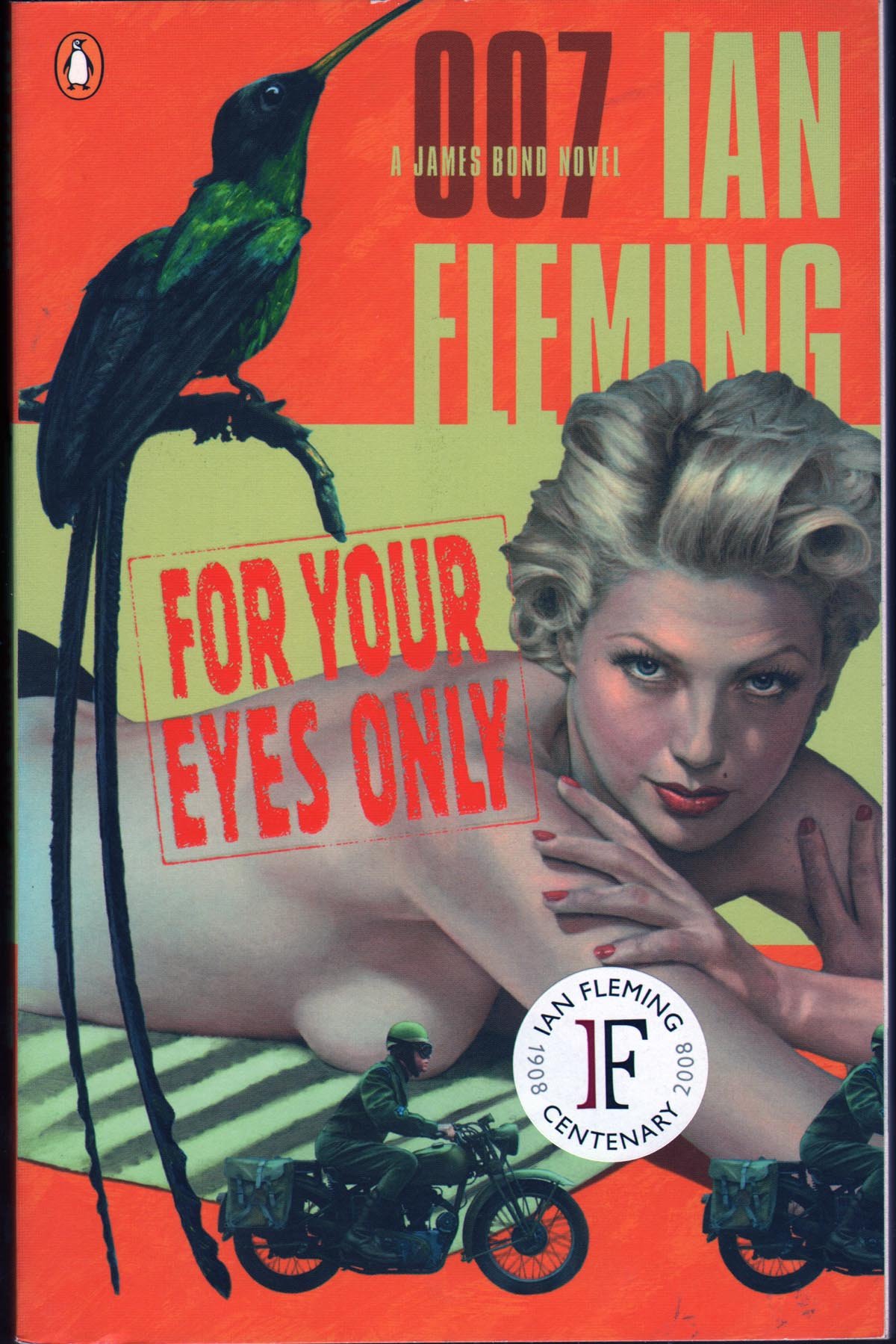



"Bond watched her as she reached the edge of the tables and came up the aisle. It was hopeless. She was coming to meet someone—her lover. She was the sort of woman who always belongs to somebody else. What damnable luck! Before Bond could pull himself together, the girl had come up to his table and sat down. ‘I’m sorry I’m late. We’ve got to get moving at once. You’re wanted at the office.’ She added under her breath: ‘Crash dive.’" Sudden emergencies and beautiful girls who aren’t quite what they seem and are the stock-in-trade of James Bond. And when 007 is on the case there’s only one thing you can be sure of—the result will be thrilling. And whether he’s dealing with the assassination of a Cuban thug in America, the destruction of an international heroin ring, or sudden death in the Seychelles, Bond gets the job done. In his own suave and unmistakable style… Ian Fleming (1908-1964), creator of the world's best-known secret agent, is the author of fourteen James Bond books. Born in London in 1908 and educated at Eton and Sandhurst, he became the Reuters Moscow correspondent in 1929. In the spring of 1939, Fleming went back to Moscow as a special correspondent for the London Times . In June of that same year, he joined Naval Intelligence and served throughout World War II, finally earning the rank of Commander, RNVSR (Sp.). Much of the James Bond material was drawn directly from Fleming's experiences as an intelligence officer. Later, Fleming became a consultant on foreign affairs for the London Sunday Times , by which time he had become far better known as the creator of James Bond. 1. FROM A VIEW TO A KILL The eyes behind the wide black rubber goggles were cold as flint. In the howling speed-turmoil of a BSA M20 doing seventy, they were the only quiet things in the hurtling flesh and metal. Protected by the glass of the goggles, they stared fixedly ahead from just above the centre of the handlebars, and their dark, unwavering focus was that of gun muzzles. Below the goggles, the wind had got into the face through the mouth and had wrenched the lips back into a square grin that showed big tombstone teeth and strips of whitish gum. On both sides of the grin the cheeks had been blown out by the wind into pouches that fluttered slightly. To right and left of the hurtling face under the crash helmet, the black gauntlets, broken-wristed at the controls, looked like the attacking paws of a big animal. The man was dressed in the uniform of a dispatch-rider in the Royal Corps of Signals, and his machine, painted olive green, was, with certain modifications to the valves and the carburettor and the removal of some of the silencer baffles to give more speed, identical with a standard British Army machine. There was nothing in the man or his equipment to suggest that he was not what he appeared to be, except a fully loaded Luger held by a clip to the top of the petrol tank. It was seven o'clock on a May morning and the dead straight road through the forest glittered with the tiny luminous mist of spring. On both sides of the road the moss- and flower- carpeted depths between the great oak trees held the theatrical enchantment of the royal forests of Versailles and St Germain. The road was D98, a secondary road serving local traffic in the St Germain area, and the motorcyclist had just passed beneath the Paris-Mantes autoroute already thundering with commuter traffic for Paris. He was heading north towards St Germain and there was no one else in sight in either direction, except, perhaps half a mile ahead, an almost identical figure - another Royal Corps dispatch-rider. He was a younger, slimmer man and he sat com-fortably back on his machine, enjoying the morning and keeping his speed to around forty. He was well on time and it was a beautiful day. He wondered whether to have his eggs fried or scrambled when he got back to HQ around eight. Five hundred yards, four hundred, three, two, one. The man coming up from behind slowed to fifty. He put his right gauntlet up to his teeth and pulled it off. He stuffed the gauntlet between the buttons of his tunic and reached down and unclipped the gun. By now he must have been big in the driving-mirror of the young man ahead, for suddenly the young man jerked his head round, surprised to find another dispatch-rider on his run at that time of the morning. He expected that it would be an American or perhaps French military police. It might be anyone from the eight NATO nations that made up the staff of SHAPE, but when he recognized the uniform of the Corps he was astonished and delighted. Who the hell could it be? He raised a cheerful right thumb in recognition and cut his speed to thirty, waiting for the other man to drift up alongside. With one eye on the road ahead and the other on the approaching silhouette in the mirror, he ran through the names of the British riders in the Special Service Transportation Unit at Headquarters Command. Albert, Sid, Wally - might be Wally,