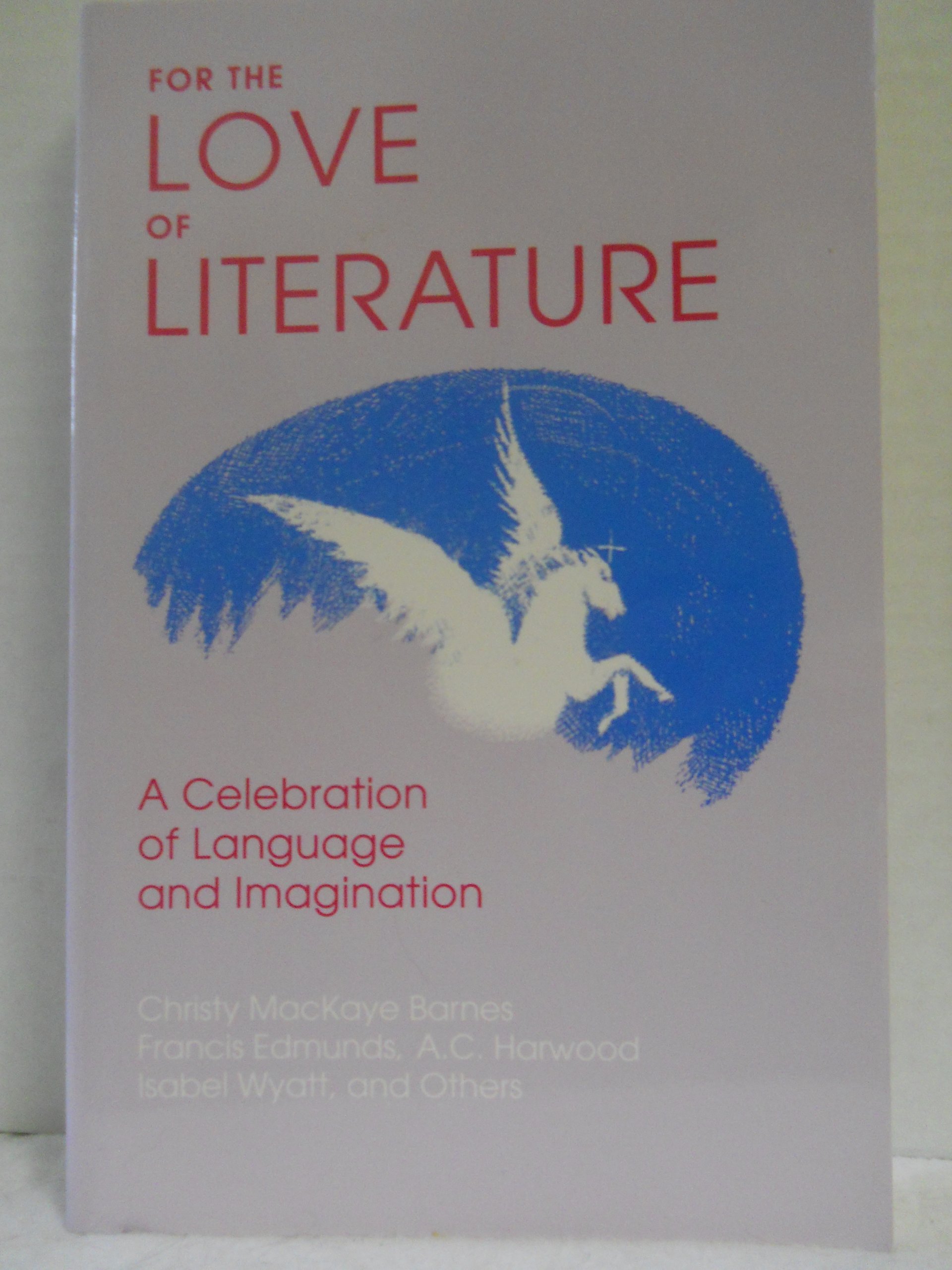
For the Love of Literature: A Celebration of Language & Imagination
$28.81
by Christy MacKaye Barnes



An unnoticed component of the present educational, social, and even ecological crises lies in the declining value given what we correctly call the “humanities.” The study of the living words of great authors―Homer, Dante, Chaucer, Shakespeare, the Romantic poets, the Russian novelists―no longer forms the basis of the education of the human soul. The imagination is disparaged, marginalized, politicized, and devalued. Young people are instead fed a monotonous diet of information, scientism, and technology. While these are certainly important and useful―maybe even necessary to our survival―once they become the basis for educating our children, the result is an assault on what it means to be human. Built around the work of Christy MacKaye Barnes, the themes of this collection include the training of imagination, speech, and poetry, and expanding human capacities through the study of great authors. The writers include many of the great first-generation English teachers in the Waldorf movement. Contents: Part One - Christy MacKaye Barnes, nine essays, including: - “Can the Imagination Be Trained?” - “The Crisis of the Word Today” - “Why Write?” - “Schooling Capacities through the Study of Great Authors” - “Backgrounds for Russian Literature” - Part Two - Adam Bittleston, “The Future of the English Language” - L. Francis Edmunds, “Literature in the Upper School” - Linda Sawers, “In the Footsteps of Dante” - Isabelle Wyatt, “Chaucer and the Modern Consciousness” - A. C. Harwood, “Fair Mountain and Fine City” - Adam Bittleston, “Shakespeare’s Troubled Kings” - Ursula Grahl, “In Quest of the Holy Grail” - L. Francis Edmunds, “The Trials of Parsifal” - Hugh Hetherington, “Grail Mountain and Garden of Marvels” - Eileen Hutchins, “Wolfram and Wagner” - Adam Bittleston, “Christopher Fry and the Riddle of Evil” - Susan Demanett, “Questing toward a True Understanding of Grammar” - Dorit Winter, “We Love Grammar” This collection is essential for anyone interested in the Waldorf curriculum and in restoring a real study of literature for young people. Christy MacKaye Barnes was born in New Hampshire and went to boarding school in Cambridge, Massachusetts. After two years at college, she traveled with her sister Arvia to Europe and, in Dornach, joined the Anthroposophical Society. When she returned to the U.S., she published a book of poems, Wind-in-the-Grass. She married Henry Barnes in 1939 and, a year later during a visit with Marie Steiner, received a diploma for the art of speech. Later, she played a part in Rudolf Steiner's Portal of Initiation, directed by Hans Pusch. She went on to become a Waldorf teacher, the editor of Journal for Anthroposophy, a nd numerous other activities. She and Henry moved to Hillsdale, New York, where they were instrumental in establishing the community in Hawthorne Valley/Harlemville. Christy gradually assumed management of Adonis Press, which has published two of her books: A Wound Awoke Me (1994) and Arvia MacKaye Ege: Pioneer for Anthroposophy (1995). She died in 2002. Douglas Gerwin, Ph.D., is Director for Anthroposophy, including Chair of its Waldorf High School Teacher Education Program, and Co-director of the Research Institute for Waldorf Education. A Waldorf graduate himself, Dr. Gerwin has taught for more than twenty-five years at university and high school levels in subjects ranging from biology and history to German and music. He is editor of For the Love of Literature: A Celebration of Language and Imagination; Genesis of a Waldorf High School; The Andover Proceeding: Tapping the Wellsprings of Health in Adolescence; and Who Shall Teach the Teachers: The Christ Impulse in Waldorf Education, as well as author of various articles on adolescence and the Waldorf curriculum. He is also coauthor the Survey of Waldorf Graduates, the first comprehensive look at how North American Waldorf graduates fare in college and beyond. He lives in Amherst, Massachusetts, with his wife Connie, a Waldorf high school teacher. 5x10 inches 325 pages