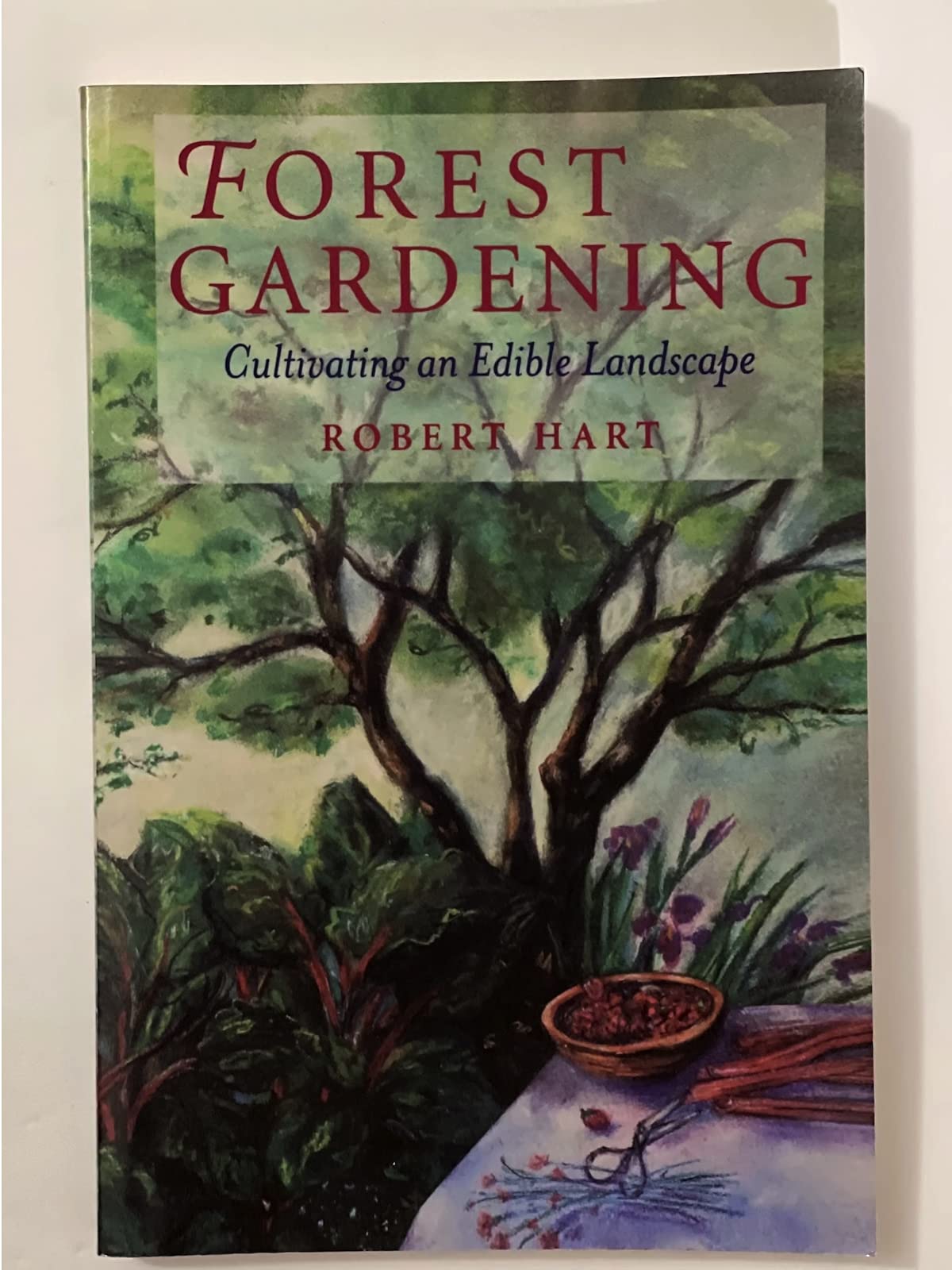



An English classic revised and expanded for North America Forest Gardening is a way of working alongside nature--an approach that results in great productivity with minimal maintenance, and a method for transforming even a small cottage garden into a diverse and inviting habitat for songbirds, butterflies, and other wildlife. Based on the model of a natural woodland, a forest garden incorporates a wide variety of useful plants, including fruit and nut trees, perennial herbs, and vegetables. Hart's book beautifully describes his decades of experience gardening in the Shropshire countryside, yet the principles of "backyard permaculture" he explores can be applied equally well in other locales across the planet, from tropical to temperate zones. Practical features of the book include: Design guidelines for creating your own perennial food-producing garden - Lists of recommended plants and varieties, keyed to different climates - An explanation of how plants in different levels or "stories" --from ground covers to full-sized trees--coexist and interact in a healthy and productive landscape. Robert Hart blends history, philosophy, anthropology, and seasonal gardening wisdom in a lucid sequence of essays, which together comprise a remarkable testament to the pleasures of "hands-off" as well as hands-on gardening. Forest Gardening is truly a book for our times, offering a fresh sensibility that will encourage and inspire ecological gardeners throughout the world. What exactly is a forest garden? British author and gardener Hart describes it as a miniature imitation of a natural forest, complete with a fruit and nut tree "canopy" and lower tiers of climbers, bushes, creepers, and assorted perennial vegetables and herbs. Such a garden may occupy half an acre or less and like the natural forest is largely self-regulating once established. In addition to self-sufficiency, it offers aesthetic rewards and provides a sanctuary for wildlife. In this book, originally published in Britain in 1991 and revised for a U.S. readership, the author describes his own forest garden in affectionate detail, as well as similar individual and community projects around the world. Both philosophical and practical, Hart discusses gardening, agroforestry, permaculture, the environment, and what constitutes a proper diet. At times he drifts away to romantic visions of a future postindustrial Green utopia, but for the most part his feet remain planted firmly in his beloved garden. Hart's personally annotated lists of trees and perennials include many varieties known and grown in North America. Suitable for both public and academic libraries.?William H. Wiese, Iowa State Univ. Lib., Ames Copyright 1996 Reed Business Information, Inc. A holistic approach encompassing health issues, spirituality, and environmental concerns governs Hart's philosophy of "forest gardening" --akin to multistory gardens maintained by certain indigenous societies. Hart and a partner have implemented just such a garden on a small farm in Shropshire, England, and Hart's ardent treatise champions a union of modern technological methods and machines with ecologically sound practices. Interplanting edible crops is utmost: herbs and fruiting shrubs, "fodder-bearing" trees, and a variety of perennial plants. Highlights include mention of other communities that have achieved great degrees of self-sufficiency, where a sacred view of man's connectedness to nature appears inextricably linked to low-maintenance symbiotic plantings, appreciation of handcrafted objects, a vegan diet, and independent lifestyle. Alice Joyce Library Journal- What exactly is a forest garden? British author and gardener Hart describes it as a miniature imitation of a natural forest, complete with a fruit and nut tree "canopy" and lower tiers of climbers, bushes, creepers, and assorted perennial vegetables and herbs. Such a garden may occupy half an acre or less and like the natural forest is largely self-regulating once established. In addition to self-sufficiency, it offers aesthetic rewards and provides a sanctuary for wildlife. In this book, originally published in Britain in 1991 and revised for a U.S. readership, the author describes his own forest garden in affectionate detail, as well as similar individual and community projects around the world. Both philosophical and practical, Hart discusses gardening, agroforestry, permaculture, the environment, and what constitutes a proper diet. At times he drifts away to romantic visions of a future postindustrial Green utopia, but for the most part his feet remain planted firmly in his beloved garden. Hart's personally annotated lists of trees and perennials include many varieties known and grown in North America. Suitable for both public and academic libraries. (William H. Wiese, Iowa State Univ. Lib., Ames) Booklist- A holistic approach encompassing health issues, spirituality, and environmental concerns governs Hart's philosophy of "forest gar