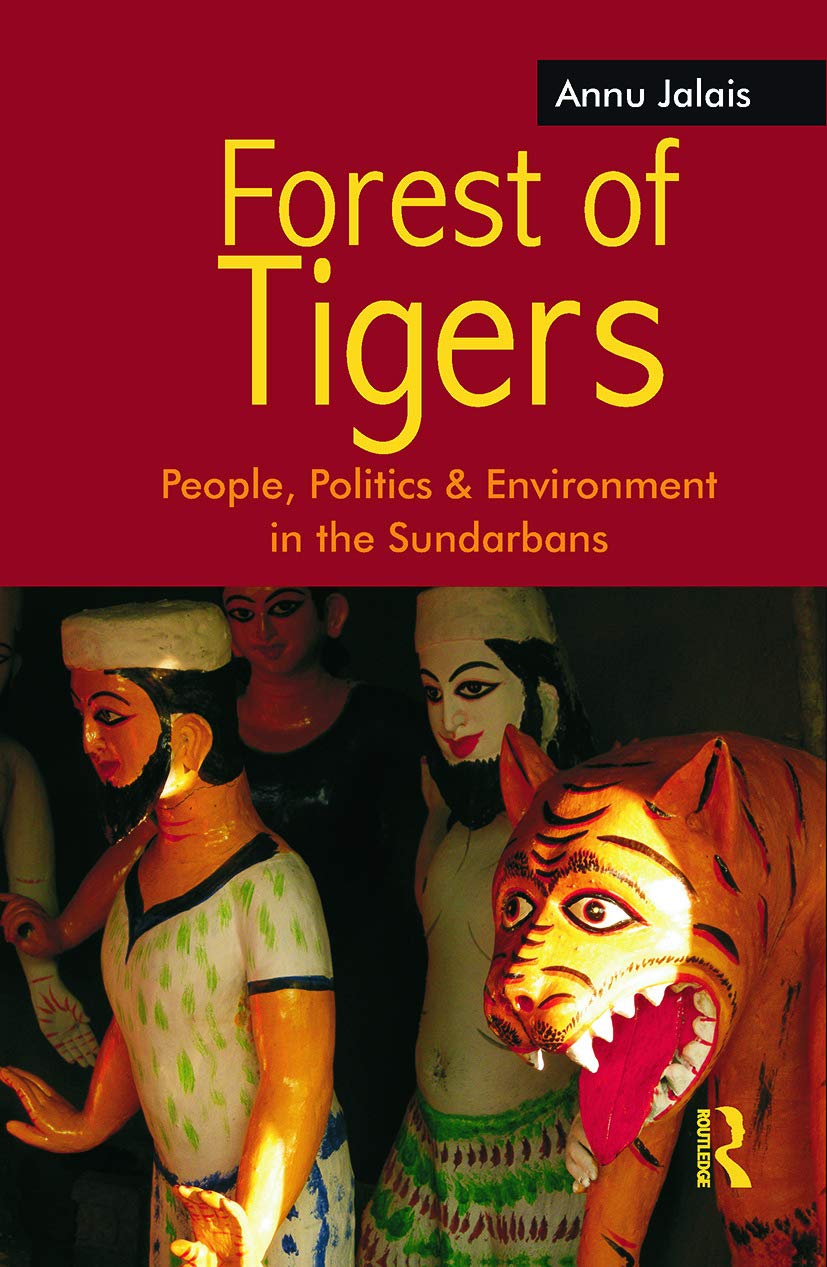



Acclaimed for its unique ecosystem and Royal Bengal tigers, the mangrove islands that comprise the Sundarbans area of the Bengal delta are the setting for this pioneering anthropological work. The key question that the author explores is: what do tigers mean for the islanders of the Sundarbans? The diverse origins and current occupations of the local population produce different answers to this question – but for all, ‘the tiger question’ is a significant social marker. Far more than through caste, tribe or religion, the Sundarbans islanders articulate their social locations and interactions by reference to the non-human world – the forest and its terrifying protagonist, the man-eating tiger. The book combines rich ethnography on a little-known region with contemporary theoretical insights to provide a new frame of reference to understand social relations in the Indian subcontinent. It will be of interest to scholars and students of anthropology, sociology, development studies, religion and cultural studies, as well as those working on environment, conservation, the state and issues relating to discrimination and marginality. "this is an excellent study, well researched, engagingly written - replete with anecdotes, local stories and graphic conversations - as well as insightfully linking the ethnographic context - focused around a family on the island of Satjelia - with wider political issues and events." - Brian Morris, Critique of Anthropology . "In detailing the relationships between islanders and tigers in the Sundarbans of West Bengal, India, anthropologist Annu Jalais's book frames a central concern of postcolonial ecocriticism; critiquing the ontological differentiation between human and non-human worlds. (...) Forest of Tigers proves an excellent text from outside literary academia for postcolonial ecocriticism." - Andrew Mahlstedt, Journal of Postcolonial Writing . "For layman and conservationists alike the Sundarbans conjures the image of the graceful Bengal tiger and the mysteries surrounding its man-eating ways. It is but rarely, one gets to know of the people of the Sundarban islands who share habitat with the big cats. This is why Annu Jalais' book is significant. (...)" - Sayantan Bera, Down to Earth . Forest of Tigers "focuses attention on the people of the Sundarbans rather than on its charismatic tigers and threatened mangrove forests. Well-written and informative, it is accessible to a wide audience. (...)" - Tigerlink . "(...) Well-written and informative, the book is accessible to a wide audience. Those familiar with Bengal history or, I suspect, having a background in ethnology or anthropology will have a distinct advantage, but there is much here to inform and intrigue the non-specialist. Readers who are primarily interested in the Sundarbans on account of its tigers and mangroves would do well to peruse the book for its insightful and enlightening investigations into the ways area residents situate themselves in relation to the forest and how they 'think with tigers.' (...)" - Julie Hughes, Seminar . In Forest of Tigers , Jalais lays out "the complex sense of shared identity Sundarbans islanders feel with the Bengal tiger. (...) The result is a rich ethnographic narrative that not only maps the diverse sociocultural influences in the region, including the encounter of Islam and Hinduism, but also uses contemporary anthropological theories to build a nuanced understanding of the ways islanders perceive themselves, their location in the network of islands, and the non-human species with which they share their environment. (...) - Maureen Nandini Mitra, Economic and Political Weekly . Annu Jalais is Assistant Professor, South Asian Studies, National University of Singapore.