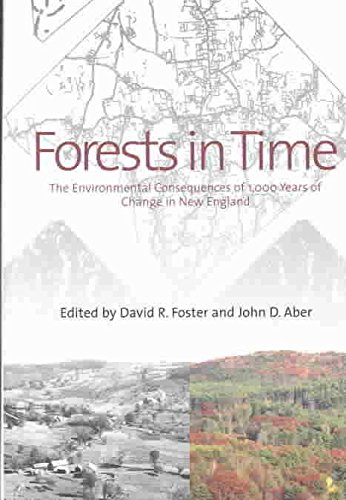
Forests in Time: The Environmental Consequences of 1,000 years of Change in New England
$127.00
by David R. Foster



This important book relates the history of natural and human-induced changes that have occurred in the past one thousand years in New England and explores the modern ecology of this largely forested landscape. Written by leading biological, physical, and social scientists, the book uniquely demonstrates that an understanding of landscape history is essential for the study of ecology and environmental management. After a discussion of the elements that initially shaped the land, the authors describe how the New England landscape changed drastically with the arrival of European settlers nearly four hundred years ago, as they cleared the land of forest and extensively farmed it. Observed patterns of forest regrowth following a shift in agriculture to the Midwest form the basis for explanations of changes in native wildlife populations and, more fundamentally, ecosystem structure and function. David R. Foster is director of the Harvard Forest at Harvard University and principal investigator of its Long Term Ecological Research program, one of twenty-five national centers for ecological research funded by the National Science Foundation. John D. Aber is a professor in the Institute for the Study of Earth, Oceans and Space and the Department of Natural Resources at the University of New Hampshire. A principal investigator for the Harvard Forest and Hubbard Brook Long Term Ecological Research sites, he is coauthor of Terrestrial Ecosystems. "David Foster and John Aber have produced a marvelous overview of ecological change in New England. Forests in Time represents the cutting edge of efforts to create a truly historical approach to ecological science and should be read by anyone who cares about the past, present, and future of terrestrial ecosystems."-William Cronon, author of Nature's Metropolis and Changes in the Land; "This volume provides a wonderful synthesis of how the New England landscape has responded to one thousand years of ecological change. It delivers compelling evidence of why historical studies are so relevant to our understanding of challenges as diverse as invasive exotic pests and pathogens, nitrogen dynamics, and climate change." - Norman Christensen, Duke University David R. Foster is professor of biology at Harvard University and director of the Harvard Forest and its Long-Term Ecological Research program, one of twenty-five national centers for ecological research funded by the National Science Foundation. John D. Aber is a professor in the Institute for the Study of Earth, Oceans and Space, and the Department of Natural Resources, at the University of New Hampshire. A principal investigator for the Harvard Forest and Hubbard Brook Long-Term Ecosystem Research sites, he is coauthor of Terrestrial Ecosystems.