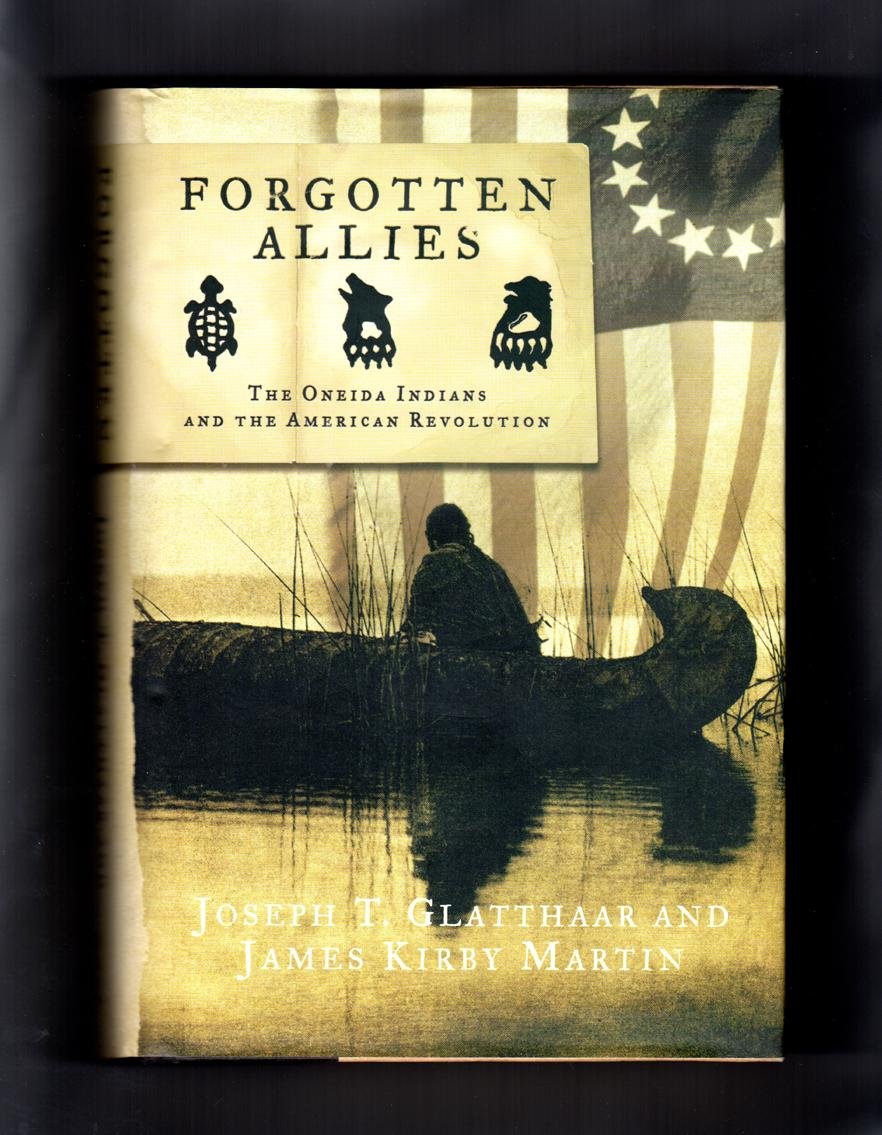
Forgotten Allies: The Oneida Indians and the American Revolution
$22.08
by Joseph T. Glatthaar



Tribal, violent, riven with fierce and competing loyalties, the American Revolution as told through the Oneida Indians, the only Iroquois Nation to side with the rebels, shatters the old story of a contest of ideas punctuated by premodern set-piece warfare pitting patriotic colonists against British Redcoats. With new detail and historical sweep, Joseph T. Glatthaar and James Kirby Martin offer a vivid account of the Revolution’s forgotten heroes, the allies who risked their land, their culture, and their lives to join in a war that gave birth to a new nation at the expense of their own. Not only capturing for the first time the full sacrifice of the Oneida in securing American independence, Forgotten Allies also provides details and insights into Oneida culture and how it was shaped, changed, and molded throughout many years of contact with the American colonists. Above all else, it depicts the valor and determination of an Indian nation that fought with all the resolve of the rebels only to be erased from America’s collective memory. A long-overdue corrective, Forgotten Allies makes certain that the Oneidas’ story is finally told. “This is a book that will surprise and delight anyone interested in American history. It reveals in vivid scrupulously researched detail a hitherto unknown side of the War for Independence.”—Thomas Fleming, author of Washington’s Secret War: The Hidden History of Valley Forge "Riveting from its deft opening of Lafayette's return, Forgotten Allies is a brilliant history of the Oneida Indian Nation and its complex participation in the American Revolution. Masterfully framing the cultural and political struggles of the time before plunging us into the American Revolution, this book has a message for every generation; history is relevant." —Jack Leustig, Producer, Director, Writer, Award-Winning CBS Television Documentary, 500 Nations "Two accomplished historians tell the sad, neglected, yet fascinating story, rich in detail and well written, of the Oneida, one major Indian group who backed the ‘winning’ side in the American Revolution." —John Shy, Professor Emeritus, University of Michigan “A vividly revealing chronicle of the Oneidas’ thankless role in the American Revolution.” — Chrispatsilelis, Houston Chronicle “Two scholars seamlessly combine forces to tell a little-known but important and ultimately shameful story from an unlit corner of the colonies’ battle for independence . . . Much research and erudition underlie a sad tale of fidelity betrayed.” —Kirkus Reviews Praise for Joseph T. Glatthaar's Forged In Battle : “The fullest account we have of the United States Colored Troops (USCT), those black soldiers and white officers who contributed so mightily to Union victory.”— Georgia Historical Quarterly Praise for James Kirby Martin's Benedict Arnold, Revolutionary Hero : "Both a biography and an extended meditation on the ironies of the Revolution, Benedict Arnold, Revolutionary Hero is in many ways a remarkable example of the historian's craft. . . . .[an] indispensable guide." — Los Angeles Times "Martin's thorough primary-source research—the best in any biography of Arnold to date—underpins convincing explanations for both Arnold's intense revolutionary zeal and his subsequent betrayal. The book offers essential lessons to modern military officers." — Journal of Military History Joseph T. Glatthaar is the author of six books and teaches history at the University of North Carolina, Chapel Hill. James Kirby Martin is the author of eleven books and teaches history at the University of Houston. Prologue : THE REVOLUTION’S JUBILEE, THE MARQUIS DE LAFAYETTE, AND SELECTIVE HISTORICAL MEMORY Not yet twenty years old, the Marquis de Lafayette, a starry-eyed member of the French nobility who had volunteered his services for the rebel cause, sailed to North America for the first time in 1777. For this young idealist, the American Revolution represented an opportunity to strike a blow for human liberty, fulfill his desire for personal glory, and secure a measure of revenge against his nation’s archrival, Great Britain. The Continental Congress, after much wrangling, had commissioned him a major general, hoping this appointment would further strengthen ties with France and become another reason for that nation to join the rebellious American patriots in a formal military alliance. George Washington took an instant liking to Lafayette, whose full name was Marie Joseph Paul Yves Roch Gilbert du Motier. Despite Lafayette’s youth and inexperience, Washington came to respect his abilities and soon entrusted him with important command responsibilities. Some of these assignments brought Lafayette into contact with members of the Oneida Indian nation, who were also informally allied with and fighting on the side of the American rebels. In January 1824, nearly forty-one years after the American Revolution officially ended, President James Monroe