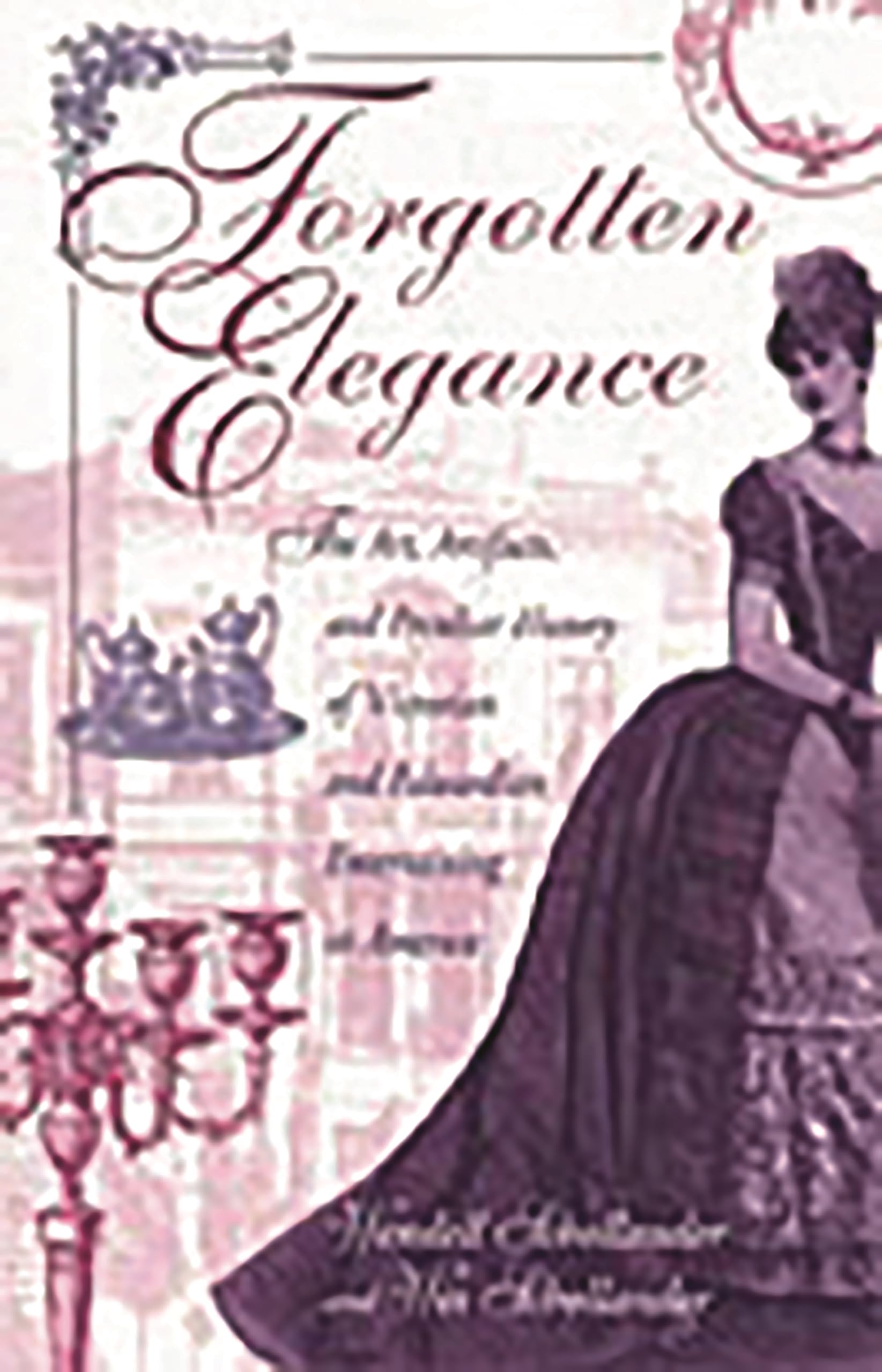
Forgotten Elegance: The Art, Artifacts, and Peculiar History of Victorian and Edwardian Entertaining in America
$58.17
by Wendell Schollander



History students and Victorian enthusiasts looking for comprehensive information on dining practices of Victorian America will find this book a vital resource. Revealing the history of 19th-century dining, clothing, and etiquette, the volume includes sample menus and explicit instructions explaining how to recreate a dinner, tea, breakfast, or lunch in the 21st century. Collectors of china, crystal, and silver will also find this book helpful because it provides a photograph of each piece of tableware that was used, with a history and description of the item. After explaining the different dining styles and the way they evolved into rituals of the Victorian era, a formal dinner is examined course by course. The Schollanders present the history and uses of various wines and show they were matched with different foods. They also explain the evolution of silver, crystal, and china pieces. Additionally the book includes an explanation of the seating order at the Victorian table, correct Victorian table manners, invitations and menu cards, correct dress for dinner guests, correct table settings, the role of servants, and step-by-step instructions for recreating a formal Victorian dinner, tea, breakfast, or lunch. At no other time in Western history did people have at their disposal so many food service and consumption utensils and so many carefully devised rules for their use as in the late nineteenth and early twentieth centuries. Britain under Victoria and Edward VII celebrated upward mobility but demanded social graces of all. As the present age begins to turn from informality to structure, interest in those old forms and customs has begun to resurface. The father-son team of Schollanders has prepared a guide to the dining etiquette of the Victorian era as well as an illustrated guide to its tableware. They explain the differences among the forks, knives, and spoons of the era as well as the plates, dishes, cups, saucers, platters, and glassware that evolved to meet the needs of chefs, servants, hosts, and diners. The Schollanders' work is a helpful reference tool for answering all sorts of silverware and chinaware identification questions as well as explaining each item's function. Mark Knoblauch Copyright © American Library Association. All rights reserved .,."a helpful reference tool for answering all sorts of silverware and chinaware identification questions as well as explaining each item's function."-Booklist ?...a helpful reference tool for answering all sorts of silverware and chinaware identification questions as well as explaining each item's function.?-Booklist ?[t]his book is a history lesson bound to inspire countless mealtime conversations about why the salad has been served first and whether or not the host should wear a hat. Hindsight lends a certain poignancy to any history lesson. Combined with the Schollanders' prodigious research, it affords Forgotten Elegance a sympathetic tenderness that would have been appreciated by those harried butlers, overworked cooks, and nervous party guests of yore.?-ForeWord ?For the conscientious reader, this book is a history lesson bound to inspire countless mealtime conversations about why the salad has been served first and whether or not the host should wear a hat.?-ForeWord "Ýt¨his book is a history lesson bound to inspire countless mealtime conversations about why the salad has been served first and whether or not the host should wear a hat. Hindsight lends a certain poignancy to any history lesson. Combined with the Schollanders' prodigious research, it affords Forgotten Elegance a sympathetic tenderness that would have been appreciated by those harried butlers, overworked cooks, and nervous party guests of yore."-ForeWord ..."a helpful reference tool for answering all sorts of silverware and chinaware identification questions as well as explaining each item's function."-Booklist "For the conscientious reader, this book is a history lesson bound to inspire countless mealtime conversations about why the salad has been served first and whether or not the host should wear a hat."-ForeWord "[t]his book is a history lesson bound to inspire countless mealtime conversations about why the salad has been served first and whether or not the host should wear a hat. Hindsight lends a certain poignancy to any history lesson. Combined with the Schollanders' prodigious research, it affords Forgotten Elegance a sympathetic tenderness that would have been appreciated by those harried butlers, overworked cooks, and nervous party guests of yore."-ForeWord WENDELL SCHOLLANDER is a practicing lawyer. He and his wife have collected Victorian etiquette books, silver, and porcelain over a period of twenty-five years. WES SCHOLLANDER is a student at Wake Forest Law School. In addition to growing up discussing the proper placement of forks at formal dinners, he has backpacked around the world, been named a Presidential Point of Light for conservation work, served as