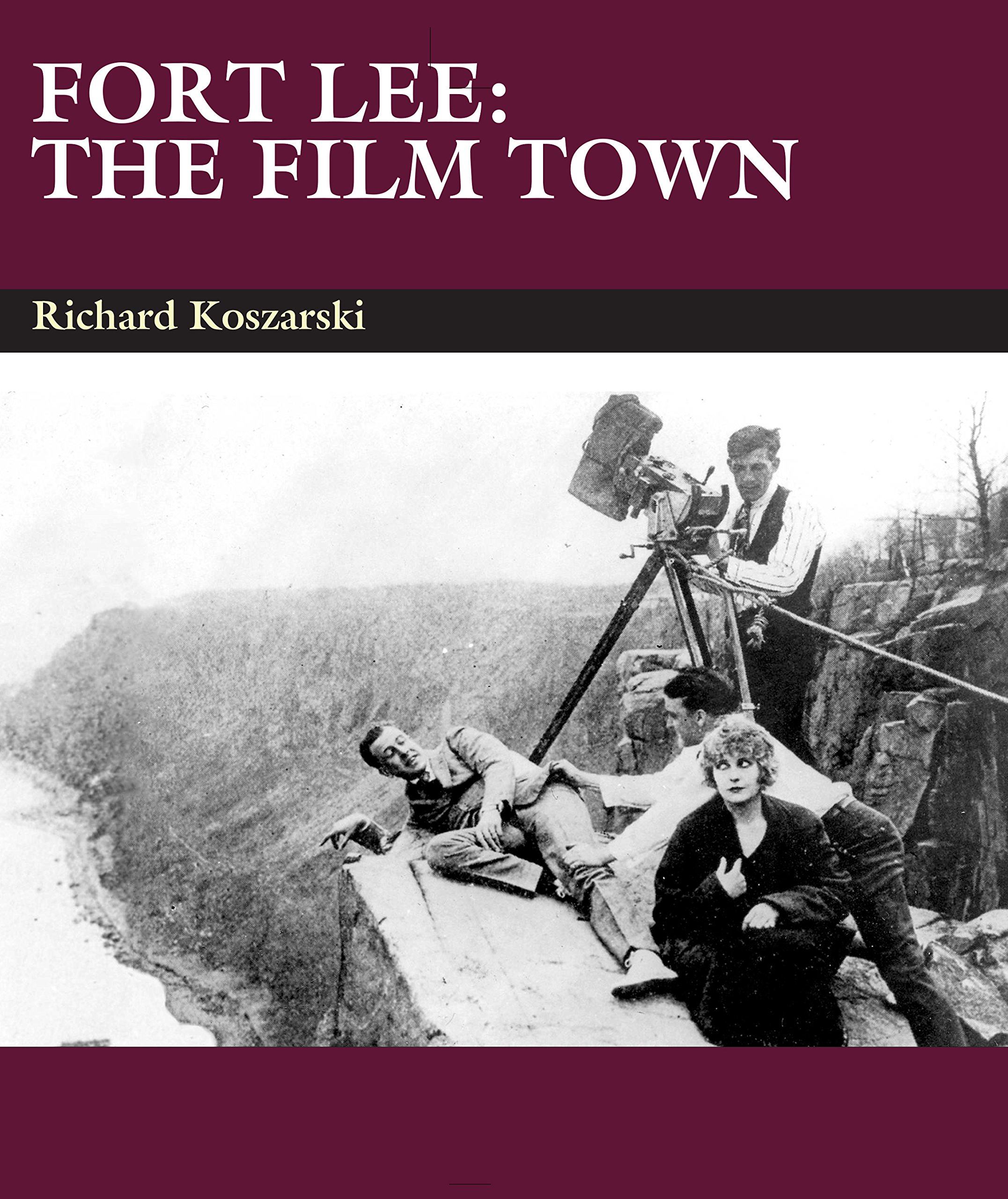



During the 1910s, motion pictures came to dominate every aspect of life in the suburban New Jersey community of Fort Lee. During the nickelodeon era, D.W. Griffith, Mary Pickford, and Mack Sennett would ferry entire acting companies across the Hudson to pose against the Palisades. Theda Bara, "Fatty" Arbuckle, and Douglas Fairbanks worked in the rows of great greenhouse studios that sprang up in Fort Lee and the neighboring communities. Tax revenues from studios and laboratories swelled municipal coffers. Then, suddenly, everything changed. Fort Lee, the film town once hailed as the birthplace of the American motion picture industry, was now the industry's official ghost town. Stages once filled to capacity by Paramount and Universal were leased by independent producers or used as paint shops by scenic artists from Broadway. Most of Fort Lee's film history eventually burned away, one studio at a time. Richard Koszarski re-creates the rise and fall of Fort Lee filmmaking in a remarkable collage of period news accounts, memoirs, municipal records, previously unpublished memos and correspondence, and dozens of rare posters and photographs―not just film history, but a unique account of what happened to one New Jersey town hopelessly enthralled by the movies. Distributed for John Libbey Publishing Richard Koszarski is a member of the Fort Lee Film Commission and Associate Professor of English and Cinema Studies at Rutgers University. He lives in Fort Lee, New Jersey. Fort Lee: The Film Town By Richard Koszarski Indiana University Press Copyright © 2004 John Libbey Publishing Ltd. All rights reserved. ISBN: 978-0-86196-652-3 Contents Introduction. City of Intrigue and Mystery by PaulSpehr, 2, Chapter 1 Fort Lee: Legend and Reality, 8, Chapter 2 Into the Woods, 22, Chapter 3 Biograph, 58, Chapter 4 'The Curtain Pole', 70, Chapter 5 Champion, 76, Chapter 6 Edgewater, Cliffside, Grantwood, Ridgefield ..., 84, Chapter 7 Éclair, 100, Chapter 8 Solax, 118, Chapter 9 Pathé, 142, Chapter 10 Willat-Triangle, 152, Chapter 11 Peerless-World, 168, Chapter 12 Cartoon Department, 192, Chapter 13 Fox, 198, Chapter 14 Brenon-Ideal, 220, Chapter 15 Paragon, 230, Chapter 16 The Film Town, 250, Chapter 17 Universal, 272, Chapter 18 Goldwyn, 286, Chapter 19 Selznick, 312, Chapter 20 Fort Lee Talks, 322, Chapter 21 Why Did the Studios Leave Fort Lee?, 330, Fort Lee and Its Films: Portfolio, 347, Index, 357, CHAPTER 1 Fort Lee: Legend and Reality STUDIO TOWN 1: Fort Lee, Movies' Battleground, and its Glamorous First Days Sleepy Borough Here Became Scene of Producers' War 1st Wild West Its 'Prairies' Long In Use Before The Studios Went Up By Edmund J. McCormick (from Bergen Evening Record, July 8-12, 1935) Sprawled out on the top of the majestic Palisades that wall the Hudson on the West, under the shadow of the George Washington Bridge from New York City is the little town of Fort Lee. Here in the shadows of New York skyscrapers are fertile fields that give to the town its principal industry, farming. Serving as a severe contrast to its rural life is a giant stretch of steel, the George Washington Bridge that joins the cliff town to New York City, pouring into the small town thousands of cars a day. At Fort Lee years ago when the colonies were fighting England in the war for independence was located one of the most formidable forts in the East, Fort Constitution. Battleground again Protected by the natural rock wall hundreds of feet high, the fort was one of the colonists' strongholds. It was here that General Nathaniel Greene, greatly outnumbered, put up a gallant fight, finally going down to defeat before England's Lord Cornwallis and where General Anthony Wayne was turned back in his attempt to capture the cliff fort. Years later the town was again to become a battleground. Quite a different struggle, the conflict was waged between shrewd businessmen fighting with film and camera for the life of a new born industry, motion pictures. In 1907 Sid Olcott, right hand man at Kalem's New York motion picture studio, discovered a new Wild West lying in the shadow ofNew York City. Around Fort Lee were acres of delicious scenery, dense woods, steep slopes, distant mountains, open plain marsh, sheer hundreds of feet of solid rock rising high above the Hudson, and to put the icing on the cake was the town itself: dirt roads, dirt sidewalks, and old fashioned houses could be found in plenty. When Olcott saw the cliff town he knew it was the spot for Kalem's western pictures, so the Kalem Company, with horses and tepees, came across the Hudson. Griffith came in 1908 In the trail of Kalem in 1908 came D.W. Griffith with the Biograph Company, bringing with him Lillian and Dorothy Gish, Mary Pickford and Mack Senett. The center of gathering for the companies on location was at Rambo's Hotel, situated on an ill kept dirt road called Rambo's Lane. On the upper floor of the small hotel w