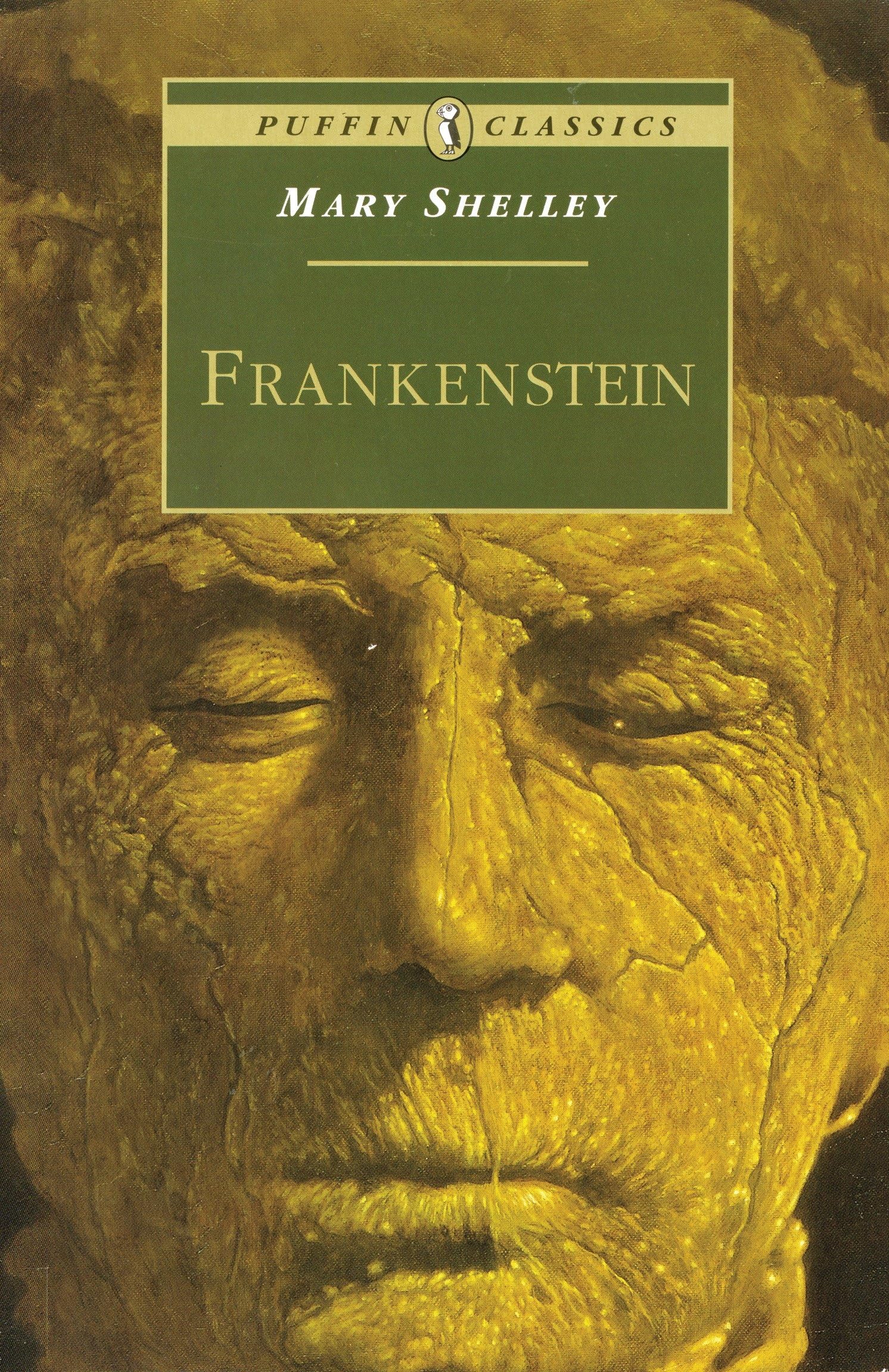



One of the best known horror stories ever. Victor Frankenstein, a Swiss scientist, has a great ambition: to create intelligent life. But when his creature first stirs, he realizes he has made a monster. A monster which, abandoned by his master and shunned by everyone who sees it, follows Dr Frankenstein with murder and horrors to the very ends of the earth. Mary Shelley's Frankenstein is one of the masterpieces of nineteenth-century Gothicism. While stay-ing in the Swiss Alps in 1816 with her lover Percy Shelley, Lord Byron, and others, Mary, then eighteen, began to concoct the story of Dr. Victor Frankenstein and the monster he brings to life by electricity. Written in a time of great personal tragedy, it is a subversive and morbid story warning against the dehumanization of art and the corrupting influence of science. Packed with allusions and literary references, it is also one of the best thrillers ever written. Frankenstein; Or, the Modern Prometheus was an instant bestseller on publication in 1818. The prototype of the science fiction novel, it has spawned countless imitations and adaptations but retains its original power. This Modern Library edition includes a new Introduction by Wendy Steiner, the chair of the English department at the University of Pennsylvania and author of The Scandal of Pleasure. Mary Shelley was born Mary Wollstonecraft Godwin in 1797 in London. She eloped to France with Shelley, whom she married in 1816. After Frankenstein, she wrote several novels, including Valperga and Falkner, and edited editions of the poetry of Shelley, who had died in 1822. Mary Shelley died in London in 1851. Mary Shelley was born Mary Wollstonecraft Godwin on August 30, 1797 in London, the daughter of William Godwin--a radical philosopher and novelist, and Mary Wollstonecraft--a renowned feminist and the author of Vindication of the Rights of Woman . She eloped to France with Shelley in 1814, although they were not married until 1816, after the suicide of his first wife. She began work on Frankenstein in 1816 in Switzerland, while they were staying with Lord Byron, and it was published in 1818 to immediate acclaim. She died in London in 1851. LETTER IV T o Mrs Saville, England . August 5th, 17–. So strange an accident has happened to us that I cannot forbear recording it, although it is very probable that you will see me before these papers can come into your possession. Last Monday ( July 31st) we were nearly surrounded by ice, which closed in the ship on all sides, scarcely leaving her the searoom in which she floated. Our situation was somewhat dangerous, especially as we were compassed round by a very thick fog. We accordingly lay to, hoping that some change would take place in the atmosphere and weather. About two o’clock the mist cleared away, and we beheld, stretched out in every direction, vast and irregular plains of ice, which seemed to have no end. Some of my comrades groaned, and my own mind began to grow watchful with anxious thoughts, when a strange sight suddenly attracted our attention, and diverted our solicitude from our own situations. We perceived a low carriage, fixed on a sledge and drawn by dogs, pass on towards the north, at the distance of half a mile; a being which had the shape of a man, but apparently of gigantic stature, sat in the sledge, and guided the dogs. We watched the rapid progress of the traveller with our telescopes until he was lost among the distant inequalities of the ice. This appearance excited our unqualified wonder. We were, as we believed, many hundred miles from any land; but this apparition seemed to denote that it was not, in reality, so distant as we had supposed. Shut in, however, by ice, it was impossible to follow his track, which we had observed with the greatest attention. About two hours after this occurrence we heard the ground sea; and before night the ice broke, and freed our ship. We, however, lay to until the morning, fearing to encounter in the dark those large loose masses which float about after the breaking up of the ice. I profited of this time to rest for a few hours. In the morning, however, as soon as it was light, I went upon deck and found all the sailors busy on one side of the vessel, apparently talking to some one in the sea. It was, in fact, a sledge, like that we had seen before, which had drifted towards us in the night on a large fragment of ice. Only one dog remained alive; but there was a human being within it, whom the sailors were persuading to enter the vessel. He was not as the other traveller seemed to be, a savage inhabitant of some undiscovered island, but an European. When I appeared on deck, the master said, ‘Here is our captain, and he will not allow you to perish on the open sea.’ On perceiving me, the stranger addressed me in En-glish, although with a foreign accent. ‘Before I come on board your vessel,’ said he, ‘will you have the kindness to inform me whither you are bound?’ You may conceive my aston