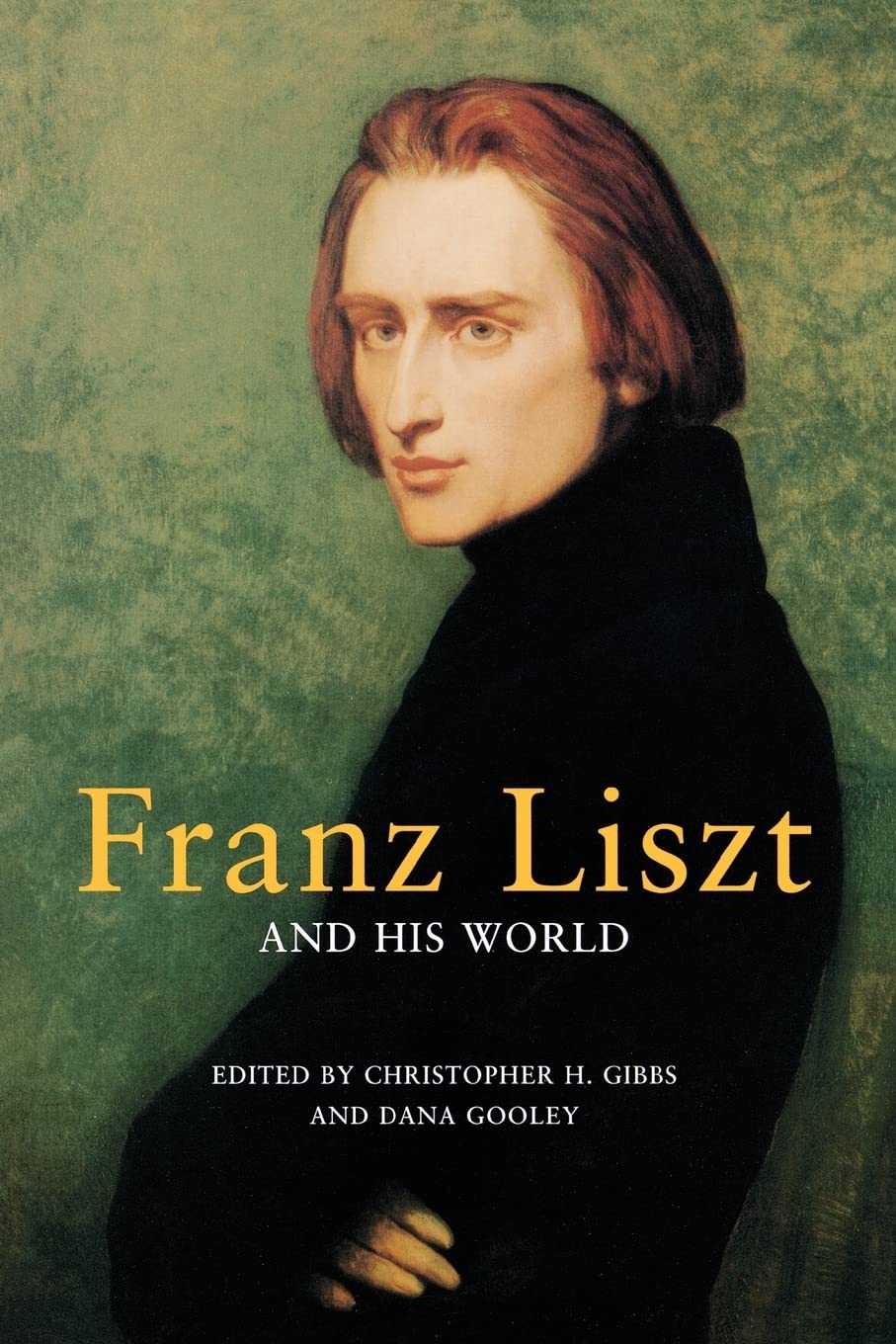



No nineteenth-century composer had more diverse ties to his contemporary world than Franz Liszt (1811-1886). At various points in his life he made his home in Vienna, Paris, Weimar, Rome, and Budapest. In his roles as keyboard virtuoso, conductor, master teacher, and abbé, he reinvented the concert experience, advanced a progressive agenda for symphonic and dramatic music, rethought the possibilities of church music and the oratorio, and transmitted the foundations of modern pianism. The essays brought together in Franz Liszt and His World advance our understanding of the composer with fresh perspectives and an emphasis on historical contexts. Rainer Kleinertz examines Wagner's enthusiasm for Liszt's symphonic poem Orpheus ; Christopher Gibbs discusses Liszt's pathbreaking Viennese concerts of 1838; Dana Gooley assesses Liszt against the backdrop of antivirtuosity polemics; Ryan Minor investigates two cantatas written in honor of Beethoven; Anna Celenza offers new insights about Liszt's experience of Italy; Susan Youens shows how Liszt's songs engage with the modernity of Heinrich Heine's poems; James Deaville looks at how publishers sustained Liszt's popularity; and Leon Botstein explores Liszt's role in the transformation of nineteenth-century preoccupations regarding religion, the nation, and art. Franz Liszt and His World also includes key biographical and critical documents from Liszt's lifetime, which open new windows on how Liszt was viewed by his contemporaries and how he wished to be viewed by posterity. Introductions to and commentaries on these documents are provided by Peter Bloom, José Bowen, James Deaville, Allan Keiler, Rainer Kleinertz, Ralph Locke, Rena Charnin Mueller, and Benjamin Walton. "The book is eminently successful, not least because of Leon Botstein's magisterial concluding essay, which is perhaps the best summary of the composer's cultural legacy to have appeared in English. . . . Apparently Liszt, of all 19th-century composers, is served particularly well by the collection format--perhaps due to the remarkable range of his activities." ― Choice "This valuable compendium of essays...seeks to explain Liszt's extravagant and sweeping musical presence in Europe within a broader historical context...A compassionately put together tome, its modestly-priced 587 pages are more than deserving of a place in the Liszt fan's bookcase." ---Mark Tanner, Classical Music Magazine "This volume is by far the most invigorating and useful anthology of Liszt studies in print." ---David Trippett, MLA Notes Christopher H. Gibbs is James H. Ottaway Jr. Professor of Music at Bard College and Artistic Co-Director of the Bard Music Festival. He is the author of The Life of Schubert and the editor of The Cambridge Companion to Schubert . Dana Gooley is Assistant Professor of Music History at Case Western Reserve University and the author of The Virtuoso Liszt . Franz Liszt AND HIS WORLD PRINCETON UNIVERSITY PRESS Copyright © 2006 Princeton University Press All right reserved. ISBN: 978-0-691-12902-0 Contents Acknowledgments.........................................................................................................................................................xiPermissions and Credits.................................................................................................................................................xiiiPreface.................................................................................................................................................................xvLiszt, Italy, and the Republic of the Imagination ANNA HARWELL CELENZA.................................................................................................3Heine, Liszt, and the Song of the Future SUSAN YOUENS..................................................................................................................39The Battle Against Instrumental Virtuosity in the Early Nineteenth Century DANA GOOLEY.................................................................................75Prophet and Populace in Liszt's "Beethoven" Cantatas RYAN MINOR........................................................................................................113Liszt, Wagner, and Unfolding Form: Orpheus and the Genesis of Tristan und Isolde RAINER KLEINERTZ......................................................................231Publishing Paraphrases and Creating Collectors: Friedrich Hofmeister, Franz Liszt, and the Technology of Popularity JAMES DEAVILLE.....................................255Liszt on the Artist in Society INTRODUCED AND TRANSLATED BY RALPH P. LOCKE.............................................................................................291The First Biography: Joseph d'Ortigue on Franz Liszt at Age Twenty-Three INTRODUCED AND EDITED BY BENJAMIN WALTON TRANSLATED BY VINCENT GIROUD.........................303Ludwig Rellstab's Biograp