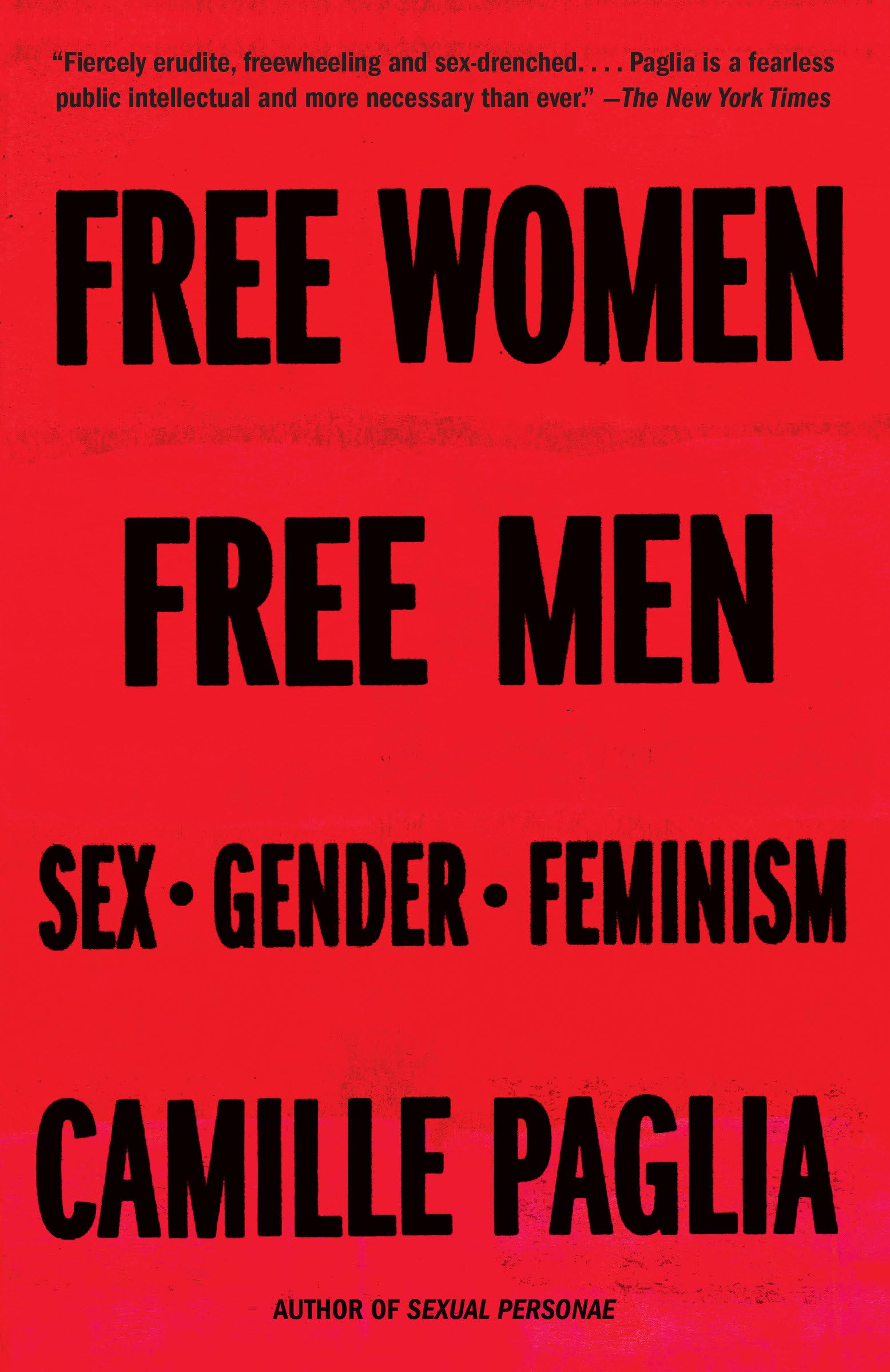



Ever since the release of her seminal first book, Sexual Personae , Camille Paglia has remained one of feminism's most outspoken, independent, and searingly intelligent voices. Now, for the first time, her best essays on the subject are gathered together in one concise volume. Whether she’s calling for equal opportunity for American women (years before the founding of the National Organization for Women), championing a more discerning standard of beauty that goes beyond plastic surgery’s quest for eternal youth, lauding the liberating force of rock and roll, or demanding free and unfettered speech on university campuses and beyond, Paglia can always be counted on to get to the heart of matters large and small. At once illuminating, witty, and inspiring, these essays are essential reading that affirm the power of men and women and what we can accomplish together. “Fiercely erudite, freewheeling and sex-drenched . . . Paglia is a fearless public intellectual and more necessary than ever.” — The New York Times “Polemical, thought-provoking, enraging, funny, and brave. And today [Paglia’s essays] sound prescient.” — VICE “Compelling. . . . Thought-provoking. . . . Put[s] an intellectual spin on lowbrow entertainment and turn[s] more obtuse academic topics into something relatable and enthralling.” — BUST “Inspirational in its tone and its message that freedom belongs to both sexes. . . . Paglia is a brilliant thinker on culture and human nature.” — The New Criterion “[Paglia] is one of the most fascinating (and individualistic) writers on feminism and gender extant.” — Buffalo News “Feminist and culture critic Paglia is at her feisty, full-throated best in this series of short manifestos that spans her career. . . . One does not have to agree with her theories about masculinity, femininity, and sex to enjoy Paglia’s bracing intellect and scrappy attitude.” — Publishers Weekly “The best single-volume introduction to Paglia’s thought. . . . Presented in a stunning prose style. . . . No one with the slightest interest in its issues can afford to overlook Paglia’s treatment of them here, which compels the consideration of her shrillest critic and ardent devotee alike.” — American Conservative “Impressive. . . . [Paglia] uses new insight to dissect issues relating to feminism. . . . She argues for feminism to become an umbrella of people with differing political views, sexual orientations, and religions who seek to strengthen women. . . . Intriguing and thought provoking for readers interested in different perspectives of feminism.” — Library Journal Camille Paglia is the University Professor of Humanities and Media Studies at the University of the Arts in Philadelphia. A regular contributor to Salon.com, she is the author of Glittering Images ; Break, Blow, Burn; Vamps & Tramps ; Sex, Art, and American Culture ; and Sexual Personae. 1 Sex and Violence, or Nature and Art In the beginning was nature. The background from which and against which our ideas of God were formed, nature remains the supreme moral problem. We cannot hope to understand sex and gender until we clarify our attitude toward nature. Sex is a subset to nature. Sex is the natural in man. Society is an artificial construction, a defense against nature’s power. Without society, we would be storm-tossed on the barbarous sea that is nature. Society is a system of inherited forms reducing our humiliating passivity to nature. We may alter these forms, slowly or suddenly, but no change in society will change nature. Human beings are not nature’s favorites. We are merely one of a multitude of species upon which nature indiscriminately exerts its force. Nature has a master agenda we can only dimly know. Human life began in flight and fear. Religion rose from rituals of propitiation, spells to lull the punishing elements. To this day, communities are few in regions scorched by heat or shackled by ice. Civilized man conceals from himself the extent of his subordination to nature. The grandeur of culture, the consolation of religion absorb his attention and win his faith. But let nature shrug, and all is in ruin. Fire, flood, lightning, tornado, hurricane, volcano, earthquake—anywhere at any time. Disaster falls upon the good and bad. Civilized life requires a state of illusion. The idea of the ultimate benevolence of nature and God is the most potent of man’s survival mechanisms. Without it, culture would revert to fear and despair. Sexuality and eroticism are the intricate intersection of nature and culture. Feminists grossly oversimplify the problem of sex when they reduce it to a matter of social convention: readjust society, eliminate sexual inequality, purify sex roles, and happiness and harmony will reign. Here feminism, like all liberal movements of the past two hundred years, is heir to Rousseau. The Social Contract (1762) begins: “Man is born free, and everywhere he is in chains.” Pitting benign Romantic nature against