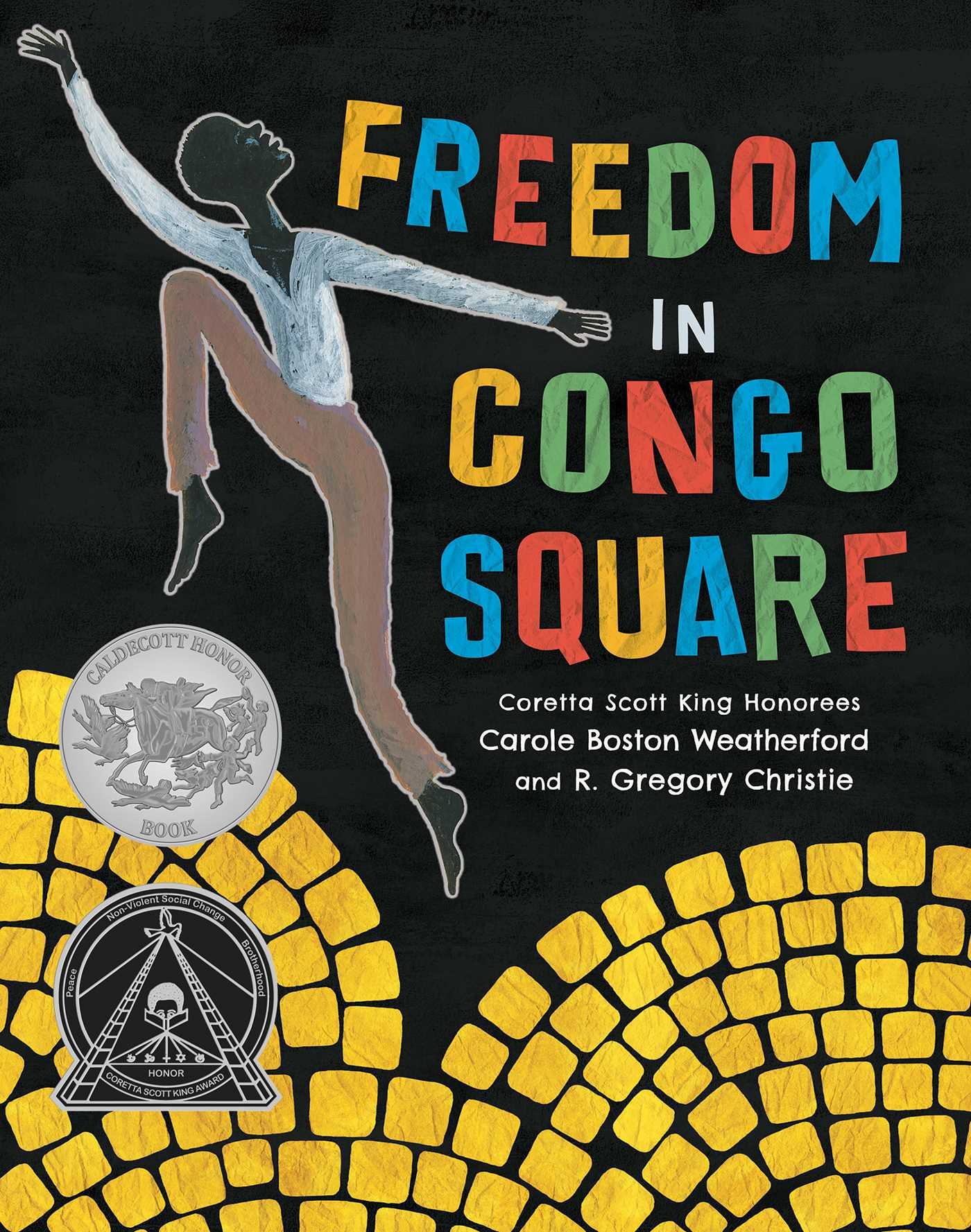



Winner of a Caldecott Honor and a Coretta Scott King Illustrator Honor A Kirkus Reviews Best Book of 2016 A School Library Journal Best Book of 2016: Nonfiction Starred reviews from School Library Journal , Booklist , Kirkus Reviews , and The Horn Book Magazine A Junior Library Guild Selection This poetic, nonfiction story about a little-known piece of African American history captures a human's capacity to find hope and joy in difficult circumstances and demonstrates how New Orleans' Congo Square was truly freedom's heart. Mondays, there were hogs to slop, mules to train, and logs to chop. Slavery was no ways fair. Six more days to Congo Square. As slaves relentlessly toiled in an unjust system in 19th century Louisiana, they all counted down the days until Sunday, when at least for half a day they were briefly able to congregate in Congo Square in New Orleans. Here they were free to set up an open market, sing, dance, and play music. They were free to forget their cares, their struggles, and their oppression. This story chronicles slaves' duties each day, from chopping logs on Mondays to baking bread on Wednesdays to plucking hens on Saturday, and builds to the freedom of Sundays and the special experience of an afternoon spent in Congo Square. This book includes a forward from Freddi Williams Evans (freddievans.com), a historian and Congo Square expert, as well as a glossary of terms with pronunciations and definitions. Gr 1–3—This vibrant picture book examines Congo Square in New Orleans. A foreword and author's note explain how, historically, slaves in Louisiana were allowed Sunday afternoons off. This custom continued after the territory joined the United States, although in time, New Orleans established one location for all slaves to gather: an area that became known as Congo Square. This unique practice helped enslaved and free Africans maintain cultural traditions. The impact was felt far beyond New Orleans as musicians, dancers, and singers developed, explored, and shared rhythms that eventually grew into jazz music. The text is realistic but child appropriate. Couplets count down the days to Sunday in a conversational tone ("Slavery was no ways fair./Six more days to Congo Square."). The writing is accompanied by folk art-style illustrations, with paint applied in thick layers. Some images, such as faces, are more detailed, while others are presented as silhouettes. Collage with painted elements is incorporated on occasion. The architecture portrayed evokes the New Orleans setting. Bright colors suggest the exuberance displayed at Congo Square. Spreads where the slaves are finally able to sing, dance, and express emotion contrast effectively with the forced restraint of those depicting the work week. VERDICT Unique in its subject and artistic expression, this beautiful book belongs in most collections.—Lucinda Snyder Whitehurst, St. Christopher's School, Richmond, VA Gr 1-3 This vibrant picture book examines Congo Square in New Orleans. A foreword and author's note explain how, historically, slaves in Louisiana were allowed Sunday afternoons off. This custom continued after the territory joined the United States, although in time, New Orleans established one location for all slaves to gather: an area that became known as Congo Square. This unique practice helped enslaved and free Africans maintain cultural traditions. The impact was felt far beyond New Orleans as musicians, dancers, and singers developed, explored, and shared rhythms that eventually grew into jazz music. The text is realistic but child appropriate. Couplets count down the days to Sunday in a conversational tone ("Slavery was no ways fair./Six more days to Congo Square."). The writing is accompanied by folk art style illustrations, with paint applied in thick layers. Some images, such as faces, are more detailed, while others are presented as silhouettes. Collage with painted elements is incorporated on occasion. The architecture portrayed evokes the New Orleans setting. Bright colors suggest the exuberance displayed at Congo Square. Spreads where the slaves are finally able to sing, dance, and express emotion contrast effectively with the forced restraint of those depicting the work week. VERDICT: Unique in its subject and artistic expression, this beautiful book belongs in most collections. ― School Library Journal in a STARRED REVIEW Count down the days until Sunday, a day for slaves in New Orleans to gather together and remember their African heritage. In rhyming couplets, Weatherford vividly describes each day of nonstop work under a "dreaded lash" until Sunday, when slaves and free blacks could assemble in Congo Square, now a part of New Orleans' Louis Armstrong Park and on the National Register of Historic Places. Musicians "drummed ancestral roots alive" on different traditional instruments, and men and women danced. They also exchanged information and sold wares. The poetry is p