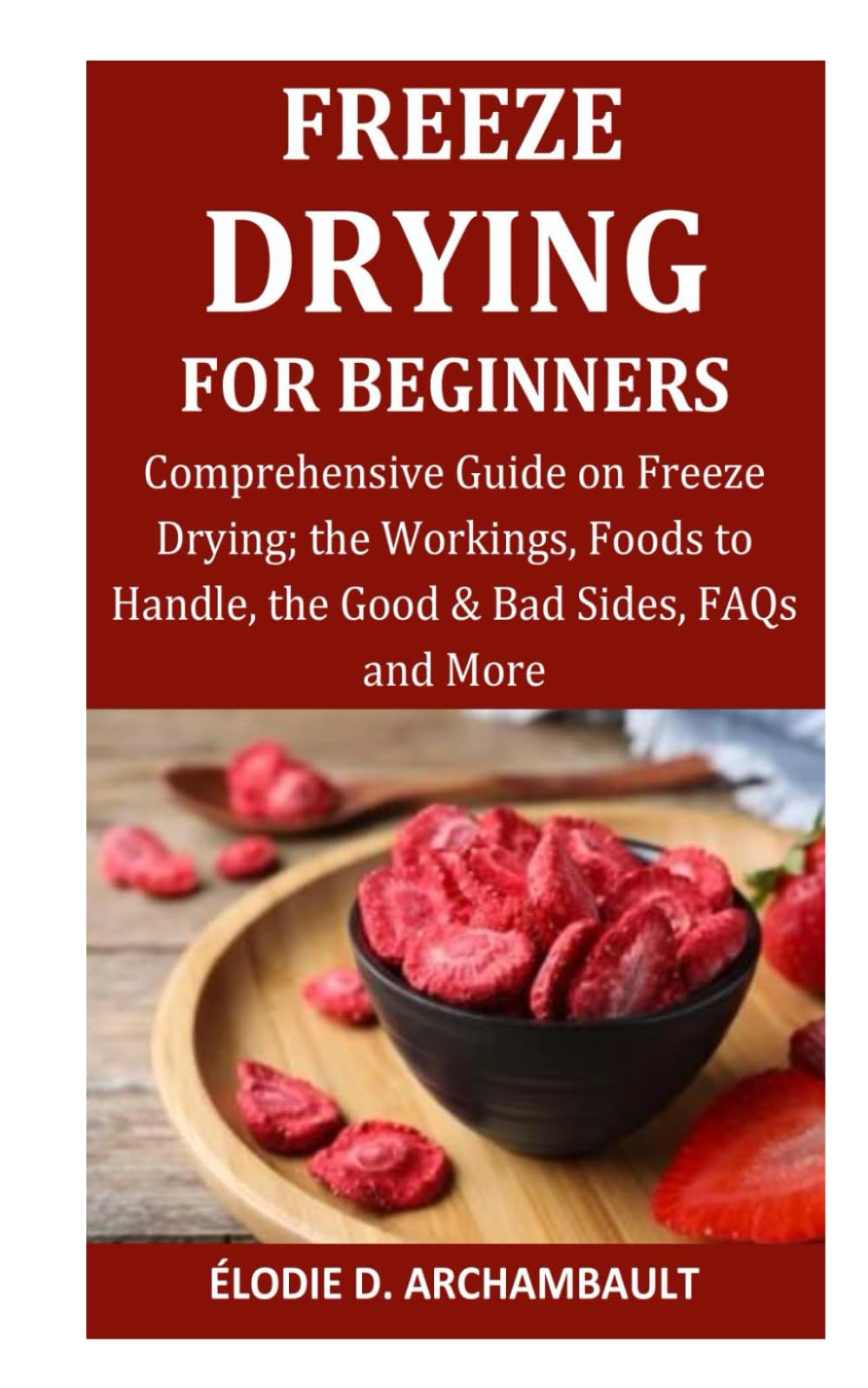
Freeze Drying for Beginners: Comprehensive Guide on Freeze Drying; the Workings, Foods to Handle, the Good & Bad Sides, FAQs and More
$11.35
by ÉLODIE D. ARCHAMBAULT



Freeze Drying for Beginners: Comprehensive Guide on Freeze Drying; the Workings, Foods to Handle, the Good & Bad Sides, FAQs and More One method of low-temperature dehydration is freeze drying, which goes by a few names: lyophilization, cryodesiccation, and freezing the product. Then, the pressure is lowered, and the ice is removed by sublimation. In Contrast this is with the usual practices of dehydration, which include heating water to the point where it evaporates. The rehydrated product keeps a lot of its original characteristics because processing is done at a low temperature. Even after being freeze-dried, solids like strawberries retain their same shape. Combining excipients (i.e., inactive substances) optimizes the qualities of the final product while drying a liquid product, which is common in pharmaceutical applications. Freeze drying is most commonly used in the following fields: biology (for things like bacteria and yeasts), medicine (for things like surgical transplants), processing foods (for things like coffee), and preservation. Why freeze-dry? Freeze drying's main purpose is sublimation to preserve a sample's biological and chemical structure. After completion, the sample might be tested, preserved, or eaten. Freeze drying has endless laboratory uses. Besides, one can eat healthily by selecting freeze-dried foods. The many advantages of freeze-drying have made it one of the foremost popular ways of dehydration. That is to say, one of the greatest ways to preserve color, flavor, as well as structure while retaining the action of valuable plant ingredients including phytochemicals and minerals is by freeze-drying. For that reason, it is extensively utilized in the manufacturing of upscale culinary items. And research has shown that freeze-drying preserves more antioxidants, including ascorbic acid, vitamin C, flavonoids, and anthocyanins, than any other drying process. Also, eliminating water from a product makes it lighter and smaller, which makes it more convenient to store and ship. Essentially, the process of freeze-drying transforms ice into vapour, therefore removing the product's water content. This three-stage procedure not only increases the product's shelf life, but also maintains its nutritional content, flavor, and visual appeal. And if you're a lover of freeze-drying, then this mind-blowing guide will show you all you need to know about freeze-drying, the steps, types, errors to avoid and more. Click the BUY NOW button with speed if you want to get your book immediately!