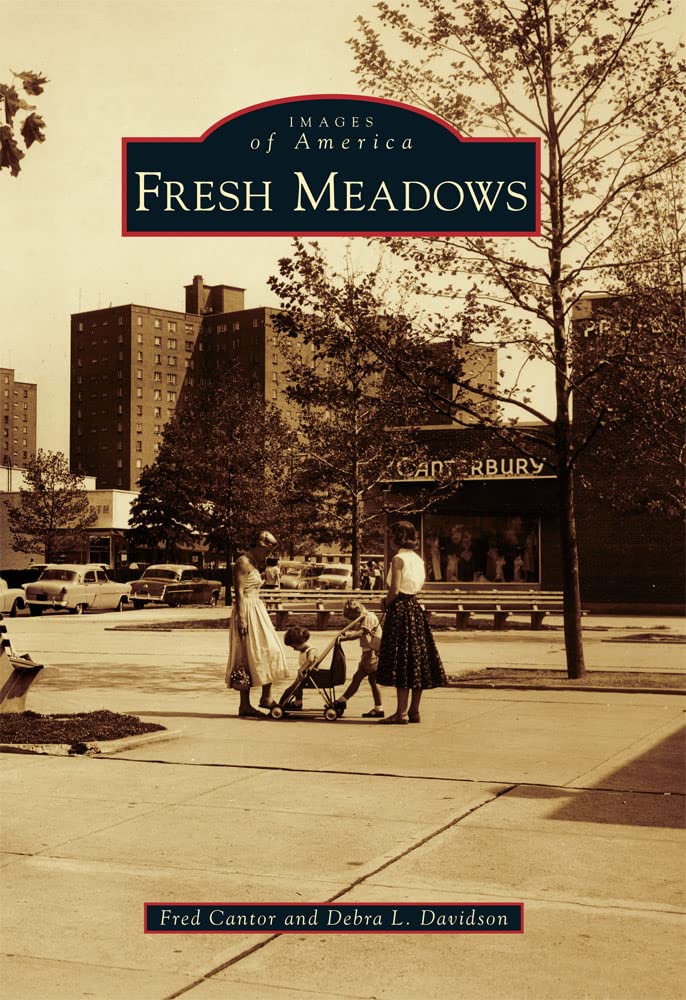



This volume about Fresh Meadows, Queens captures the optimism of the postwar era by illustrating how middle-class families thrived in an environment that combined the best aspects of urban and suburban living. Located in northeast Queens, Fresh Meadows grew up around a housing development of the same name, built for World War II veterans. The site plan for the development not only provided an array of green open space, but it also enabled residents to enjoy a variety of services within walking distance. The development became the centerpiece of a brand-new neighborhood, which had been the site of a country club and farmland. In 1949, renowned urban and architecture critic Lewis Mumford hailed the Fresh Meadows housing development as ""perhaps the most positive and exhilarating example of large-scale community planning in this country."" "From the Art Deco marquee of the Utopia Theater to the marble interior of the Horn & Hardart restaurant, decades-old snapshots have inspired two former residents to preserve local history in a new book." New York Daily News "With firsthand knowledge of the subject matter, Cantor and Davidson meticulously detail the history of Fresh Meadows....With the use of rare and never before seen photographs...Cantor and Davidson successfully show the unique blend of urban and suburban living." Queens Gazette 100% of the authors' royalties are going to the Queens Library Foundation for the benefit of the Fresh Meadows public library branch. Fred Cantor is an attorney whose family was part of the first wave of residents in the Fresh Meadows development. Debra L. Davidson is a market researcher whose father owned a popular delicatessen on Fresh Meadow Lane. The photographs in Fresh Meadows were selected from a number of sources, ranging from past and present residents to a variety of photograph archives.