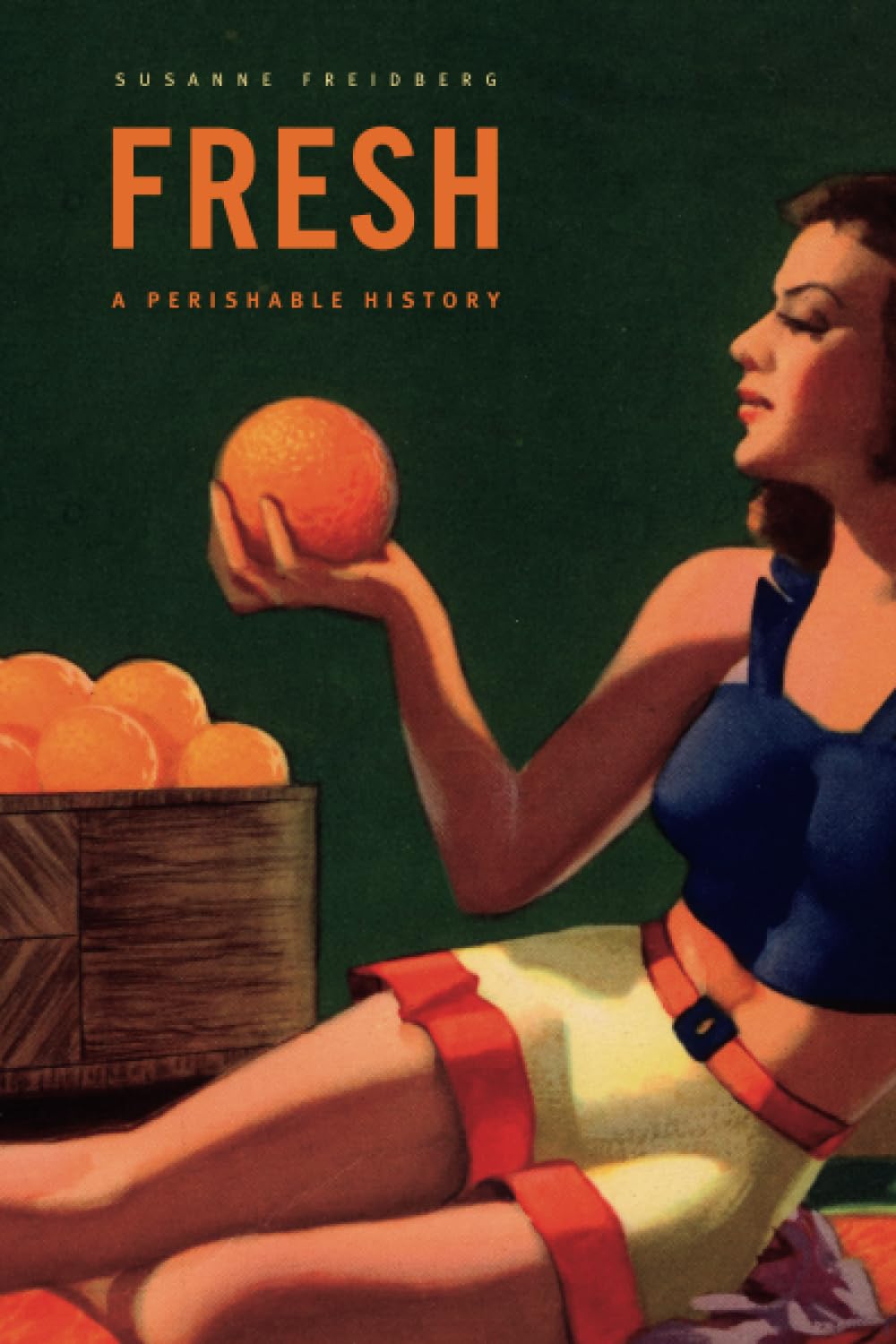



That rosy tomato perched on your plate in December is at the end of a great journey―not just over land and sea, but across a vast and varied cultural history. This is the territory charted in Fresh . Opening the door of an ordinary refrigerator, it tells the curious story of the quality stored inside: freshness. We want fresh foods to keep us healthy, and to connect us to nature and community. We also want them convenient, pretty, and cheap. Fresh traces our paradoxical hunger to its roots in the rise of mass consumption, when freshness seemed both proof of and an antidote to progress. Susanne Freidberg begins with refrigeration, a trend as controversial at the turn of the twentieth century as genetically modified crops are today. Consumers blamed cold storage for high prices and rotten eggs but, ultimately, aggressive marketing, advances in technology, and new ideas about health and hygiene overcame this distrust. Freidberg then takes six common foods from the refrigerator to discover what each has to say about our notions of freshness. Fruit, for instance, shows why beauty trumped taste at a surprisingly early date. In the case of fish, we see how the value of a living, quivering catch has ironically hastened the death of species. And of all supermarket staples, why has milk remained the most stubbornly local? Local livelihoods; global trade; the politics of taste, community, and environmental change: all enter into this lively, surprising, yet sobering tale about the nature and cost of our hunger for freshness. “ Fresh is an engagingly original way of looking at food history, both thought-provoking and entertaining.” ― Mark Kurlansky, author of The Big Oyster: History on the Half Shell “This is the right book at the right time. Freidberg provides a masterful account of the complex web of labor practices, technological innovations, corporate controls and consumer choices that have produced the items that confront us each time we open the refrigerator door. Fresh successfully uses the stuff of everyday life to explain complex historical, cultural, and social phenomena. After reading this compelling work, you'll never look at a carton of eggs the same way again.” ― Carolyn de la Peña, University of California, Davis “In this lively and compelling book, Freidberg unearths the secrets within our refrigerators as she explores what is natural and unnatural about freshness. How have commerce and industry shaped our seasonless abundance? Where did the fruit grow? How far have the beef and fish traveled? Whose labor and risks do the vegetables hide? Fresh shows why such questions matter as it reveals how our notions and expectations of fresh food changed over the last century. It challenges us to look differently at our food.” ― Pamela Walker Laird, author of Pull and Advertising Progress “Freidberg opens the fridge on a world few have considered: how the advent of cold storage subverted ideas of freshness, shifted power from consumers and producers to middlemen, and virtually eliminated seasonality. We all like lettuce in February, but Freidberg's ingenious and spirited Fresh serves to remind us of its technological, environmental, and social cost.” ― Elizabeth Royte, author of Bottlemania and Garbage Land “In this highly readable and sophisticated book, Freidberg traces the ambiguous history of freshness in food. Despite its 'natural' associations, freshness has been produced, engineered, marketed, and valued in a variety of ways over the course of the last century. Broadly accessible, richly comparative, and written with flair, Fresh will appeal to a wide audience.” ― Julie Guthman, author of Agrarian Dreams: The Paradox of Organic Farming in California “ Fresh paints a fascinating picture of our changing views of perishable food...It is the historical detail of Fresh that throws so much light on why we now eat the way we do...Freidberg writes elegantly and goes beyond the technical to draw out this paradox at the heart of today's culture of consumption: we have ended up with a food system that promotes both novelty and nostalgia, obsolescence and shelf life, indulgence and discipline.” ― Felicity Lawrence , The Guardian “Freidberg--tracking the movement of beef, eggs, fruit, vegetables, milk and fish from source to table--shows how technology, abetted by modern public relations, has changed the way we eat...Freidberg writes with wit and clarity, and her sense of humor extends to her choice of illustrations.” ― Aram Bakshian Jr. , Wall Street Journal “Few can read this thought-provoking book without thinking that although the benefits of modern food production are real, they are bought at an extravagant price. We could, if we tried, be more sensible in our demands on farmers, more resistant to the lures of advertisers, more thoughtful about the origins of our food, and more alert to the effects food production has on the environment and the people who produce it. Ms. Fre