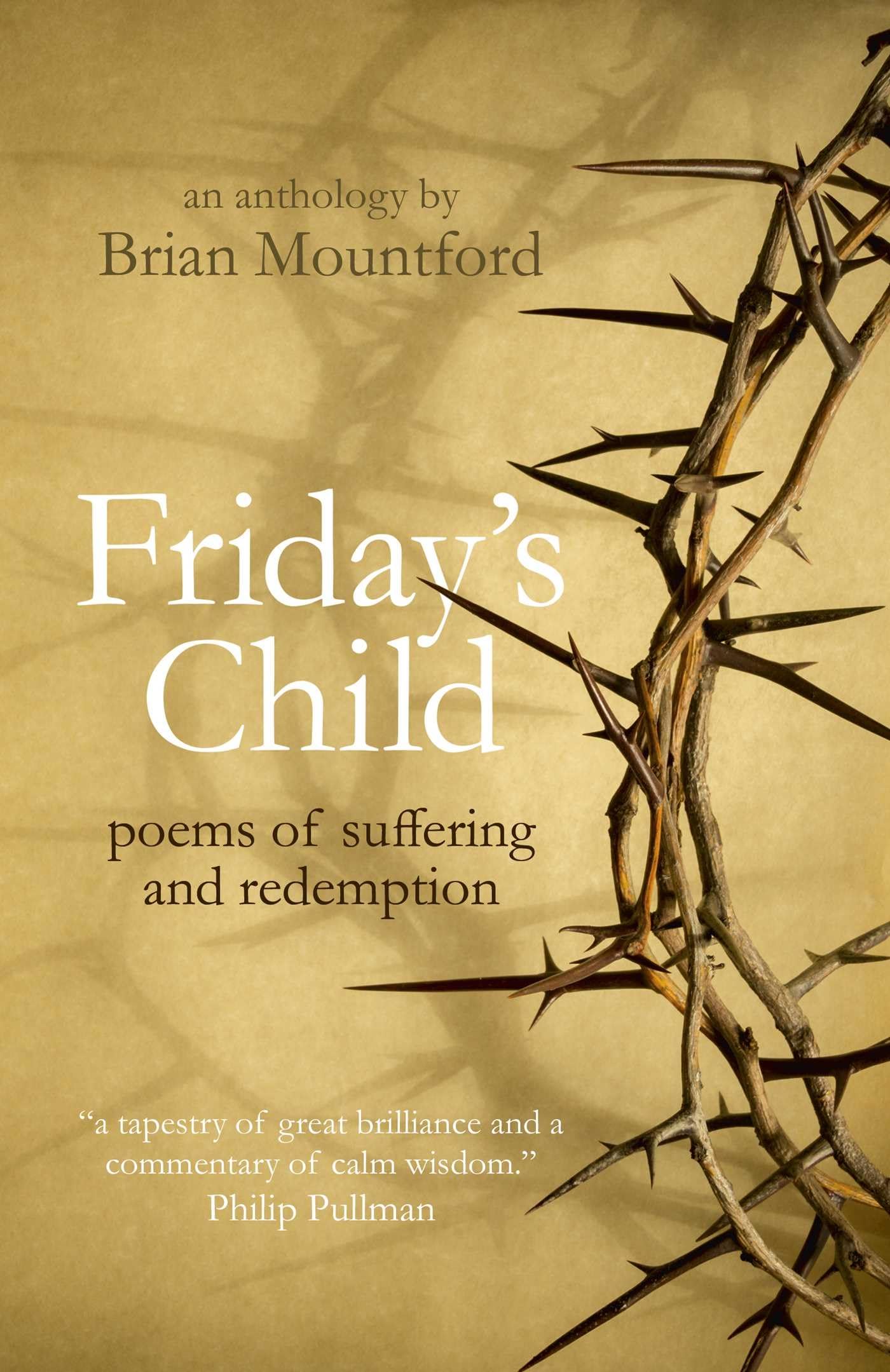



Brian Mountford has chosen thirty five poems which explore the human experience of suffering and redemption, accompanied by his own thoughtful and witty commentary. The collection contains secular and sacred pieces in equal measure and came into being as part of a programme to bring a sense of seriousness, in a non prescriptive, open-ended way to the Easter holiday crowds in the University Church, Oxford, where the poems were read on Good Friday with dignity and panache by senior school children. The selection has not been augmented in any kind of attempt to provide a fully representative anthology, but kept exactly as it evolved in response to this specific need. Interested in the clash between religious faith and the atheist/agnostic critique, Brian Mountford MBE has worked in Oxford for 30 years. He is a Fellow of St Hilda's College and an established speaker on contemporary religious issues, leadership, and in 2018 will be acting Chaplain of Corpus Christi College, Oxford. Friday's Child Poems of Suffering and Redemption By Brian Mountford John Hunt Publishing Ltd. Copyright © 2017 Brian Mountford All rights reserved. ISBN: 978-1-78535-741-1 Contents Introduction, 1. The Tyger William Blake, 2. Prayer Carol Anne Duffy, 3. Lovest thou me? William Cowper, 4. Ambulances Philip Larkin, 5. Redemption George Herbert, 6. The Musician RS Thomas, 7. The Crown of Thorns Athelstan Riley, 8. Christians and Pagans Dietrich Bonhoeffer, 9. Friday's Child W H Auden, 10. At a Calvary near Ancre Wilfred Owen, 11. The Explosion Philip Larkin, 12. Anthem Leonard Cohen, 13. Woefully Arrayed John Skelton, 14. The Crucifixion from The York Pageant of the Pinners and Painters, 15. Friday Elizabeth Jennings, 16. When I survey the wondrous cross Isaac Watts, 17. And death shall have no dominion Dylan Thomas, 18. The Road not taken Robert Frost, 19. Greater Love Wilfred Owen, 20. The Hippopotamus T S Eliot, 21. Meditation 17 John Donne, 22. Digging Seamus Heaney, 23. God's Grandeur Gerard Manley Hopkins, 24. Murder in the Cathedral Thomas' Sermon T S Eliot, 25. Corpus Christi Carol, 26. This Bread I Break Dylan Thomas, 27. Triptych Andrew Motion, 28. from Psalm 22, 29. The Moon in Lleyn R S Thomas, 30. Love George Herbert, 31. Good Friday Sermon Lancelot Andrewes, 32. The Quality of Mercy (Merchant of Venice) William Shakespeare, 33. Tomorrow and tomorrow (Macbeth) William Shakespeare, 34. Good Friday Riding Westward John Donne, 35. Pontius Pilate discusses the Proceedings of the Last Judgement Vassar Miller, 36. Collect for Ash Wednesday, 37. Prayer of St Francis of Assisi, 38. Collect for Sunday Next Before Easter, 39. Prayer of St Teresa, 40. Prayer of St Richard of Chichester, CHAPTER 1 The Tyger by William Blake (1757-1827) Tyger! Tyger! burning bright In the forests of the night, What immortal hand or eye Could frame thy fearful symmetry? In what distant deeps or skies Burnt the fire of thine eyes? On what wings dare he aspire? What the hand dare seize the fire? And what shoulder, & what art, Could twist the sinews of thy heart? And when thy heart began to beat, What dread hand? & what dread feet? What the hammer? what the chain? In what furnace was thy brain? What the anvil? what dread grasp Dare its deadly terrors clasp? When the stars threw down their spears, And watered heaven with their tears, Did he smile his work to see? Did he who made the Lamb make thee? Tyger! Tyger! burning bright In the forests of the night, What immortal hand or eye Dare frame thy fearful symmetry? Most famous now for his poem, 'And did those feet in ancient time', in its musical setting by Parry sung at cricket matches and weddings, William Blake was a poet, mystic, and painter. 'Tyger, Tyger' is from Songs of Innocence and Experience and falls heavily on the experience side of the scales, with 'The Lamb' as its counterbalance on the side of innocence. 'Little Lamb who made thee Dost thou know who made thee?' Why would this poem be chosen for Good Friday? Because the creation of a streamlined killing machine tiger symbolises the problem of evil. How can a loving, powerful, creator God allow suffering in the world? The rhythm of the poem has the clank of a blacksmith's hammer hitting the anvil. But what I like most is that it consists entirely of unanswered questions. This is no sceptical modernist writing, though. It is a visionary Christian poet of 225 years ago. The fact of these questions is not a declaration of doubt, but a positive readiness to challenge God with an essential paradox of religion (and also of life) that violence and passivity are part of the human condition and part of the physical creation itself. For example, the force of gravity enables life, yet it is a major threat to life. God is in the heat and hazard of the forge as well as in the still small voice of calm. To question faith is not to deny Christ, but to look fo