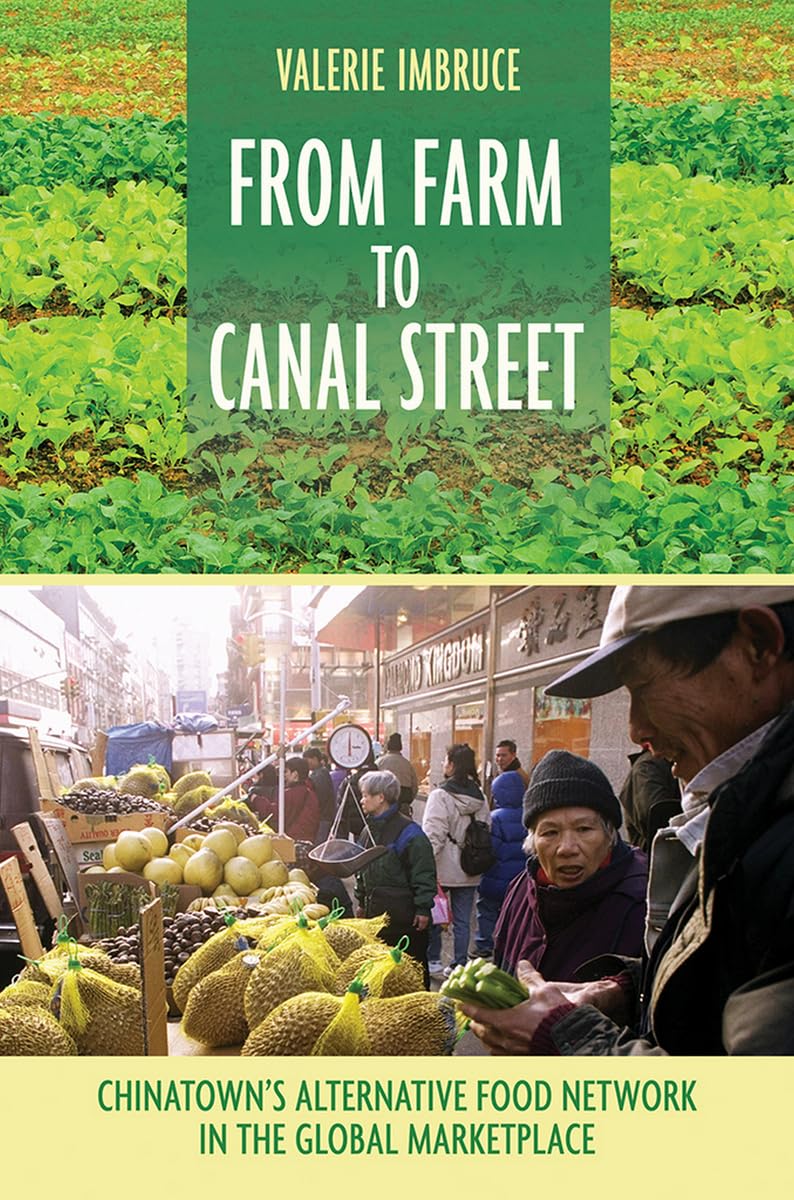
From Farm to Canal Street: Chinatown's Alternative Food Network in the Global Marketplace
$13.91
by Valerie Imbruce



Instructors of courses in food systems: this book belongs in your syllabus. It is essential reading for anyone interested in who produces food for urban areas and how it gets into cities. ― Marion Nestle â• Food Politics On the sidewalks of Manhattan’s Chinatown, you can find street vendors and greengrocers selling bright red litchis in the summer and mustard greens and bok choy no matter the season. The neighborhood supplies more than two hundred distinct varieties of fruits and vegetables that find their way onto the tables of immigrants and other New Yorkers from many walks of life. Chinatown may seem to be a unique ethnic enclave, but it is by no means isolated. It has been shaped by free trade and by American immigration policies that characterize global economic integration. In From Farm to Canal Street , Valerie Imbruce tells the story of how Chinatown’s food network operates amid—and against the grain of—the global trend to consolidate food production and distribution. Manhattan’s Chinatown demonstrates how a local market can influence agricultural practices, food distribution, and consumer decisions on a very broad scale. Imbruce recounts the development of Chinatown’s food network to include farmers from multimillion-dollar farms near the Everglades Agricultural Area and tropical "homegardens" south of Miami in Florida and small farms in Honduras. Although hunger and nutrition are key drivers of food politics, so are jobs, culture, neighborhood quality, and the environment. Imbruce focuses on these four dimensions and proposes policy prescriptions for the decentralization of food distribution, the support of ethnic food clusters, the encouragement of crop diversity in agriculture, and the cultivation of equity and diversity among agents in food supply chains. Imbruce features farmers and brokers whose life histories illuminate the desires and practices of people working in a niche of the global marketplace. Instructors of courses in food systems: this book belongs in your syllabus. It is essential reading for anyone interested in who produces food for urban areas and how it gets into cities. -- Marion Nestle ― Food Politics Unlike the majority of local food literature that mostly advocates farmers' markets, community-supported agriculture, and Co-op stores, Imbruce boldly chooses Chinatown's food network, a non-mainstream alternative food system, as her research topic.... This book would be appropriate for policymakers and practitioners who work with food and community policies. ― Agriculture and Human Values Valerie Imbruce reveals why Chinatown produce markets are so abundant and of such high quality and how they support small farmers and feed food lovers of modest to low incomes. In the face of agribusiness, the global patenting of seeds, and huge chain supermarkets, From Farm to Canal Street offers stunning insights about alternative, translocal network of producers in the Americas supplying urban markets with fresh, quality fruits and veggies. Imbruce effectively challenges cynicism and wrong-headed assumptions about what is possible in alternative food systems. This game-changing book opens up new horizons for policy debates and food justice strategies. -- John Kuo Wei Tchen, New York University, author of New York before Chinatown: Orientalism and the Shaping of American Culture, 1776–1882 Valerie Imbruce is Grant Writer for Strategic Research Initiatives at Binghamton University–The State University of New York.