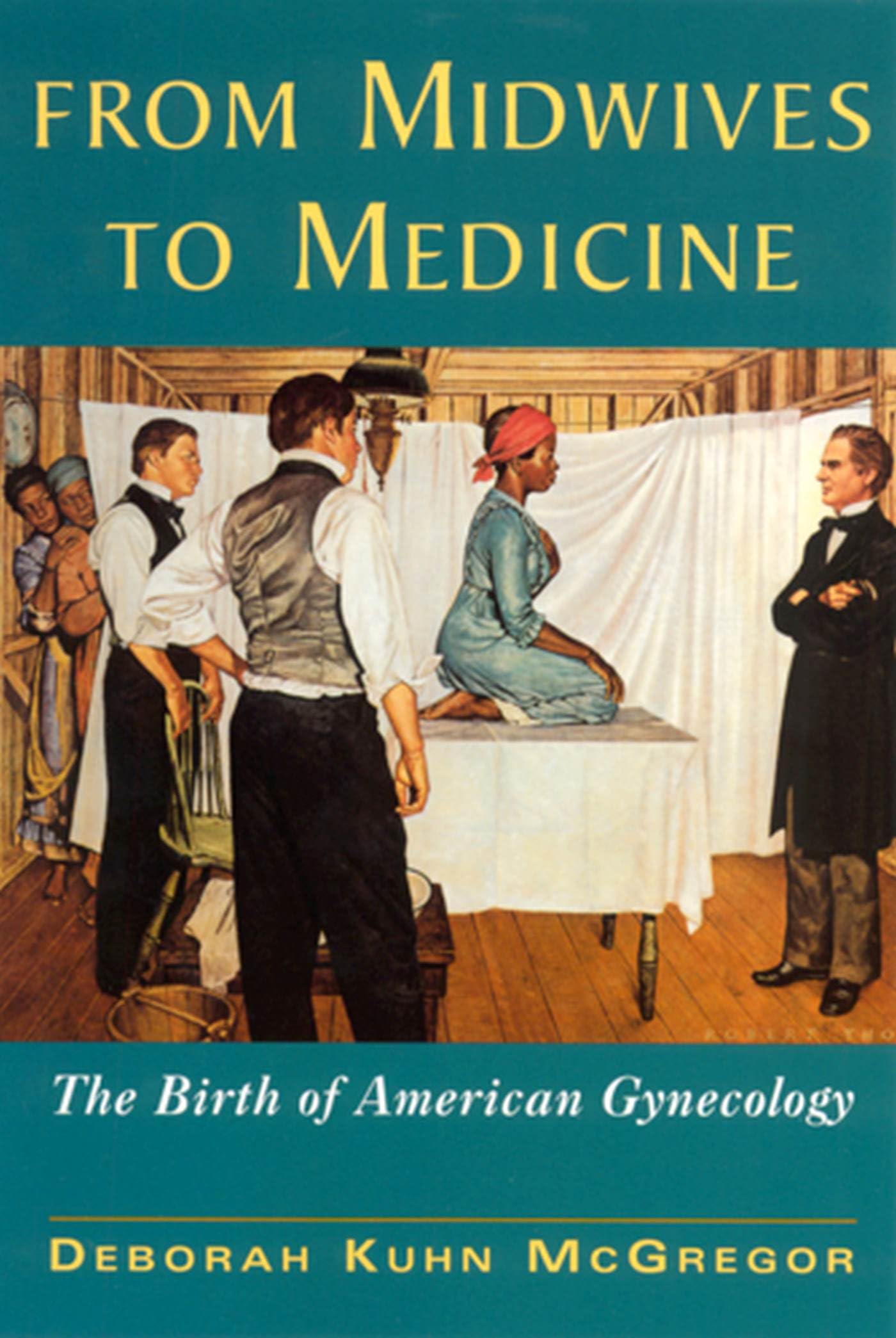
From Midwives to Medicine: The Birth of American Gynecology
$40.95
by Deborah Kuhn McGregor



From Midwives to Medicine examines the development of modern medical treatment of women and the related history of women's health in the mid-1800s. McGregor looks not only at the medical figures who devised and practiced the innovative therapist, but also at the history of the patient experience in the development and the professionalization of a medical specialty. In exploring the controversial career of J. Marion Sims, "the father of gynecology," and the history of the Woman's Hospital of the State of New York, McGregor chronicles the emergence of a practice involving previously untried medical techniques and the use of experimentation on patients according to a social hierarchy based on race and sex. Using patient records and archival material from the female governors and administrators at the hospital, From Midwives to Medicine shows how a new medical practice developed out of the changing patterns and historical experiences of childbirth, as well as out of the context of the social relations of the sexes. Sim's patients were slave women in the antebellum South, poor Irish immigrants in the industrial North, and upper-class white. Protestant, Manhattan socialites who sought help for their "hysterical" symptoms. During his career, which began in the South and flourished at the Women's Hospital in New York. Sims performed and perfected his technique to "cure" vesico-vaginal fistulas, the tears of childbirth, from which so many women suffered. But Sims achieved these successes on the operating table only after years of practicing his "silver suture" technique on unanesthetized slave women, who he believed "by the nature of their race... had a specific physiological tolerance for pain unknown to whites." Although the bookÆs topic and arguments are intriguing, it has serious flaws that detract from its overall effectiveness. We can agree with McGregorÆs arguments that æall too oftenÆ medical history has failed to take into accounts æthe relevance of social hierarchyÆ (220), but her sources prevent her from fully developing a response to this critique. ― Journal of the Early Republic [McGregorÆs] book is about . . the birth of U.S. gynecology, and the central role played by J. Marion Sins M.D., and the WomenÆs Hospital of New York City. . . . This is an interesting and detailed account of the development of gynecology in the United States and the role that gender, class, and race played in this development. Those interested in the history of 19th-century American medicine, particularly surgery and gynecology, will find it useful. ― Journal of the American Medical Association McGregor spotlights how the specialty of gynecology rested on the availability of enslaved African American women to serve as subjects for repeated surgical experiments. . . . [McGregorÆs] reinterpretation of [J. Marion] Sims is important. Sims did not heroically solve a surgical problem alone; advances in gynecological surgery built on both the suffering of women who served as clinical subjects and the finances and work of female reformers who built specialty hospitals. ― Journal of American History This innovative study of the early years of American gynecological practice deftly weaves together the career of J. Marion Sims and his medical contemporaries with accounts of female reform and institution-building, the haphazard story of surgical innovation, and, most importantly, the fraught historical intersections of gender, race, and class. -- Regina Morantz-Sanchez ― author of Conduct Unbecoming aWoman": Gynecology on Trial in Turn-of-the-Century From Midwives to Medicine examines the development of modern medical treatment of women and the related history of women's health in the mid-1800s. McGregor looks not only at the medical figures who devised and practiced the innovative therapist, but also at the history of the patient experience in the development and the professionalization of a medical specialty. In exploring the controversial career of J. Marion Sims, "the father of gynecology." And the history of the Woman's Hospital of the State of New York. McGregor chronicles the emergence of a practice involving previously untried medical techniques and the use of experimentation on patients according to a social hierarchy based on race and sex. Using patient records and archival material from the female governors and administrators at the hospital. From Midwives to Medicine shows how a new medical practice developed out of the changing patterns and historical experiences of childbirth, as well as out of the context of the social relations f the sexes. Sim's patients were slave women in the antebellum South, poor Irish immigrants in the industrial North, and upper-class white. Protestant, Manhattan socialites who sought help for their "hysterical" symptoms. During his career, which began in the South and flourished at the Women's Hospital in New York. Sims performed and perfected his technique to "cure" vesico-vaginal