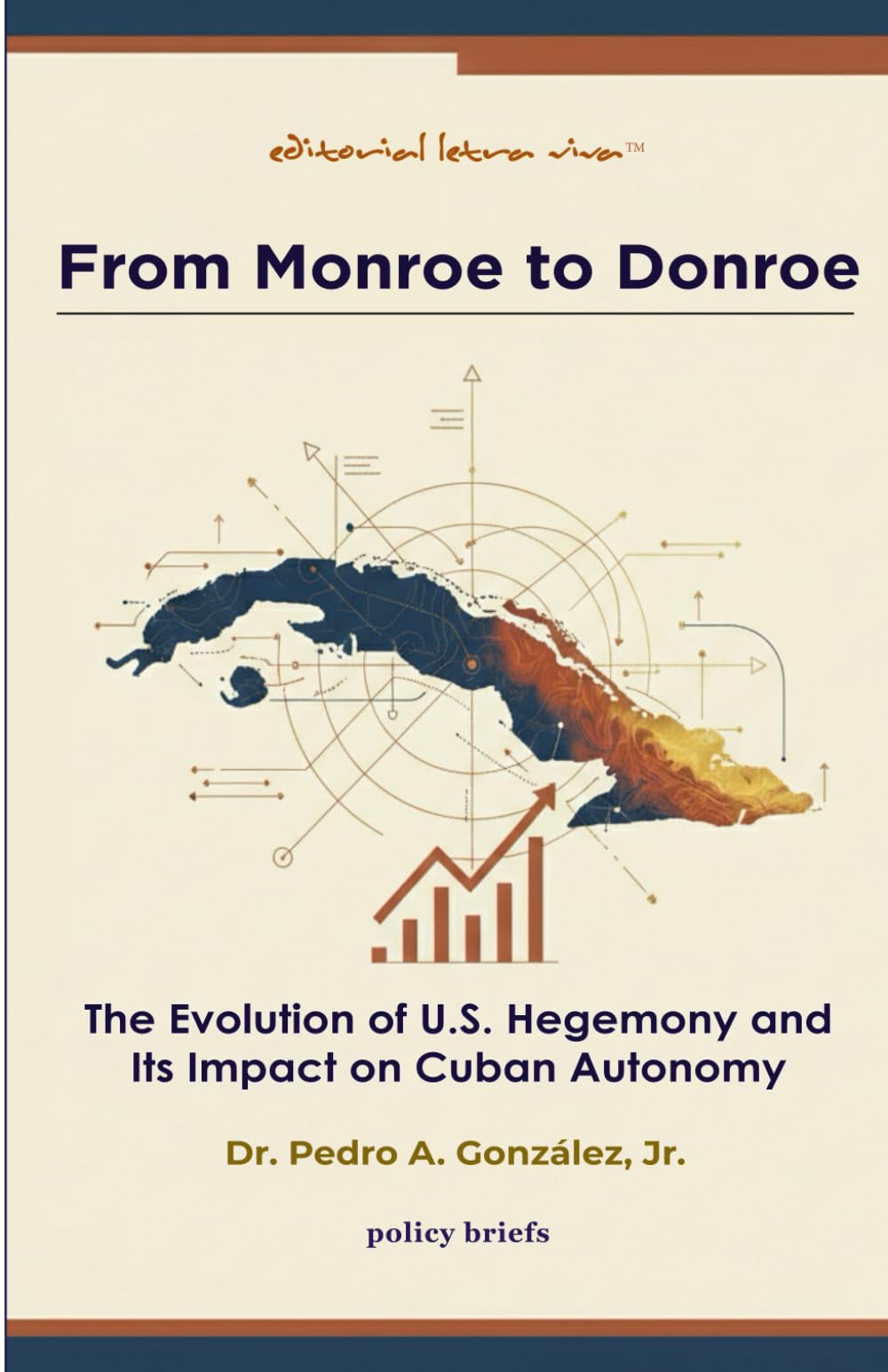
From Monroe to Donroe: The Evolution of U.S. Hegemony and Its Impact on Cuban Autonomy
$79.00
by Pedro A González Jr



This book offers a comprehensive analysis of Cuba’s pivotal moment in 2026, as the nation faces an unprecedented humanitarian crisis and the prospect of transformative economic and political change. It explores the evolution of U.S. hegemony—from the Monroe Doctrine to the contemporary “Donroe Doctrine”—and its profound impact on Cuban autonomy, especially in the wake of recent U.S. military actions in Venezuela and heightened American pressure on Cuba. The author details Cuba’s transition toward a market-oriented economy, highlighting both opportunities and risks. Key sectors for investment include tourism, agriculture, renewable energy, and biotechnology. However, the book underscores six core threats: corruption, inequality, geopolitical escalation, refugee flows, civil unrest, and food insecurity. With 89% of Cubans living in extreme poverty, 97% unable to access medicines, and 78% wishing to emigrate, the urgency for reform is clear. The book proposes a phased policy roadmap—legal foundations, institutional capacity building, public engagement, and ongoing monitoring—drawing on international best practices and comparative models from Israel, India, Ireland, and the Philippines. It emphasizes the critical role of civil society and the Cuban diaspora (over 2.5 million people) as engines for national renewal, investment, and innovation. Through detailed tables, case studies, and actionable recommendations, the book advocates for comprehensive engagement by the U.S. and international partners, prioritizing transparency, inclusivity, and resilience. It concludes that Cuba’s success depends on overcoming historical grievances, fostering political will, and embracing both domestic and diaspora contributions to build a stable, prosperous future within a new hemispheric order.